Library Section
Weevils
Why do I have weevils? Weevils prefer warm, moist environments. Some species live among plants and lay their eggs in rolled-up leaves, while others feed and breed within stored food products like cereal grains. Weevils …
At a glance
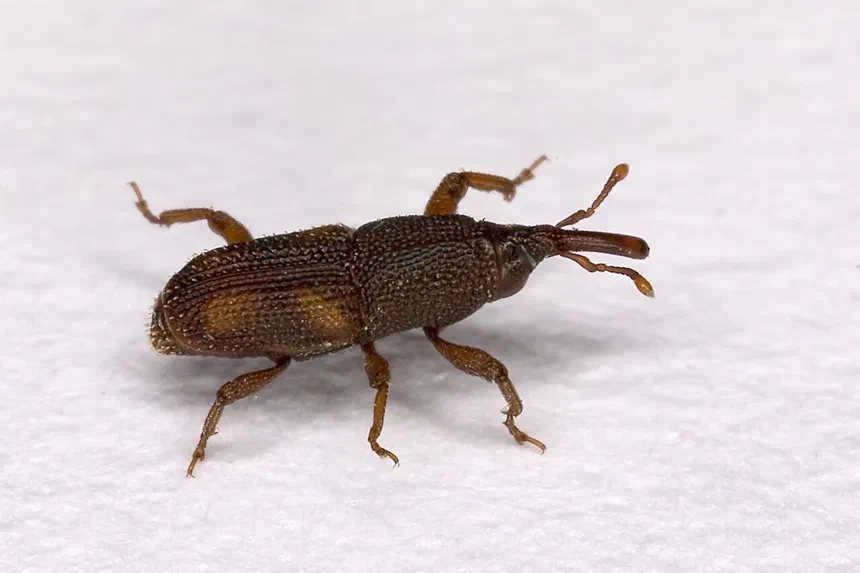
Image: picture taken by Olaf Leillinger — CC BY-SA 2.5 · source
Why do I have weevils?
Weevils prefer warm, moist environments. Some species live among plants and lay their eggs in rolled-up leaves, while others feed and breed within stored food products like cereal grains. Weevils usually invade homes seeking food or shelter. Some of the most common Canadian weevils include the sweet potato weevil, rose weevil, alfalfa weevil, rice weevil, granary weevil, strawberry and black vine root weevils. Female weevils lay their eggs in their food source of choice, so that the emerging larvae can feed voraciously when they hatch.
Weevils Diet and Lifecycle
Diet
As herbivorous creatures, weevils feed on various parts of plants, from leaves and stems to roots and fruits. Stored grains and flour can also be significant food sources for certain species. Different species of weevils have specialised diets and attack particular plants or food products.
Life Cycle
Female weevils can lay over 150 eggs in their lifetimes. Once the eggs hatch, weevil larvae feed voraciously on whatever plant-based food source is nearby. After some time, weevils morph into sexually mature adults with hard outer shells. Larvae are generally lighter in colour and appear as small, fleshy, maggot-like creatures. While the average weevil measures less than 6 mm in length, some species can grow quite large.
How worried should I be about weevils?
Weevils damage stored foods, by boring into them to lay eggs. This increases the heat and humidity inside the packages they infest, which facilitates the growth of mold and fungus. As weevil infestations take place almost entirely inside packages of stored foods, they can be hard to detect and even harder to eradicate. To truly end your weevil infestation, you will need to the help of a professional insect control service, especially if dealing with weevils in the grain and agriculture industry.
How can I prevent weevils invading?
Check for weevil grubs in stored food, Monitor grains for mould and humidity, Choose insect-resistant foliage and trees, Store food in tightly sealed containers
Browse This Section
Every guide in Weevils
Use these links to move quickly between closely related pages in the same section.
Bean Weevil Facts & Information
What You Can Do These weevils may enter homes in search of food. Because they are attracted to light, bean weevils can …
Black Vine Weevil Facts & Information
What You Can Do Pesticides may be sprayed upon the leaves of infected plants in order to address adult specimens. …
Boll Weevil Facts & Information
Appearance Color: Boll weevils are black, reddish-brown, or gray in color. Size: These weevils measure an average of 6 …
Cowpea Weevil Facts & Information
What You Can Do Eliminating an infestation of cowpea weevils in a home begins with a careful inspection. Find all of the …
Flour Weevil Facts & Information
Appearance Contrary to its name, the flour weevil is not a true weevil. The insect that is usually called the flour …
Granary Weevil Facts & Information
Appearance Granary weevils are typically brown in color and measure up to 5 mm in length. They feature highly pronounced …
Rice Weevil Facts & Information
Appearance Adult rice weevils measure approximately 4 mm in length and are reddish brown in color. Their wings feature …
Rose Weevil Facts & Information
What You Can Do In order to control rose weevil populations, it is necessary to identify them immediately. Noting which …
White Pine Weevil Facts & Information
What You Can Do A comprehensive pest control plan is necessary to combat white pine weevil infestations. Direct control …