Termites Guide
Southeastern Drywood Termite Facts & Information
Appearance Southeastern drywood termites are similar in appearance to other species of drywood termites. Therefore, the appearance of these termites is best associated with the damage they do to wood – eating across the …
At a glance
Appearance
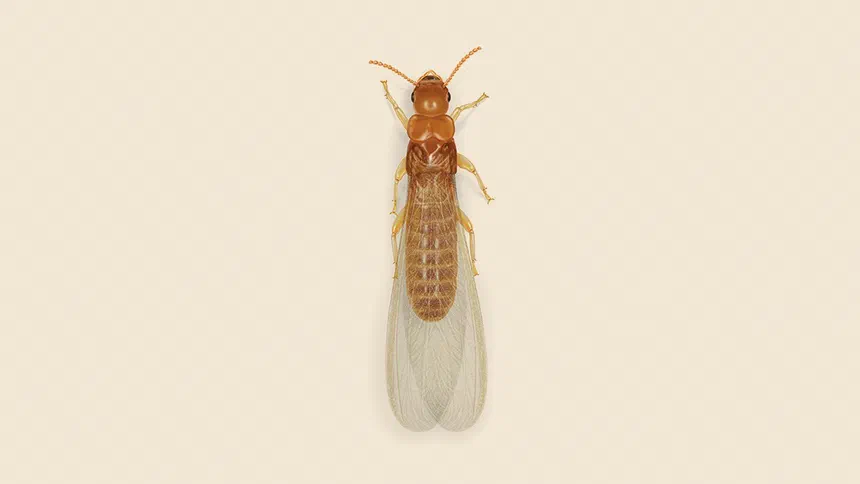
Southeastern drywood termites are similar in appearance to other species of drywood termites. Therefore, the appearance of these termites is best associated with the damage they do to wood – eating across the grain of the wood rather than eating with the grain of the wood. In addition, their galleries constructed inside infested wood are very smooth and contain no soil, unlike subterranean termite mud tubes. Also, drywood termites produce fecal pellets that are oval-shaped, have six concave sides and are pushed out through kick-out holes located in the infested wood.
Behavior
These termites live in much drier wood than subterranean termites. In fact, southeastern drywood termites will infest and consume wood that is sound and without decay. Drywood termite colonies are not large and usually have only several thousand members compared to over a million for some subterranean termites. As the insects make do without the moisture found within soil, there are no mud tubes present with drywood termites.
Reproduction
Southeastern drywood termite alates swarm at night from the early spring to fall months and are attracted to lights. Reproduction is much the same as other drywood termite species such as the western drywood termite and the West Indian drywood termite.
Signs of Infestation
Signs of an infestation are shed wings and dead swarmers, plus the appearance of drywood fecal pellets that have piled up underneath infested wood.
Distribution
This species ranges from South Carolina to Florida and west to eastern Texas and is the most widely distributed drywood termite species in the southeastern United States.