Eastern Subterranean Termite Facts & Information
Identification
Appearance
Eastern subterranean termites are social insects that organize into very functional colony structures. Each colony member or caste performs very specific and specialized functions for the overall success of the colony. These colonies are made up of three castes:
- Workers
- Soldiers
- Reproductives
Workers
The workers are the cream-colored caste that consumes cellulose and feeds the colony.
Eastern Subterranean Termite Worker
Soliders
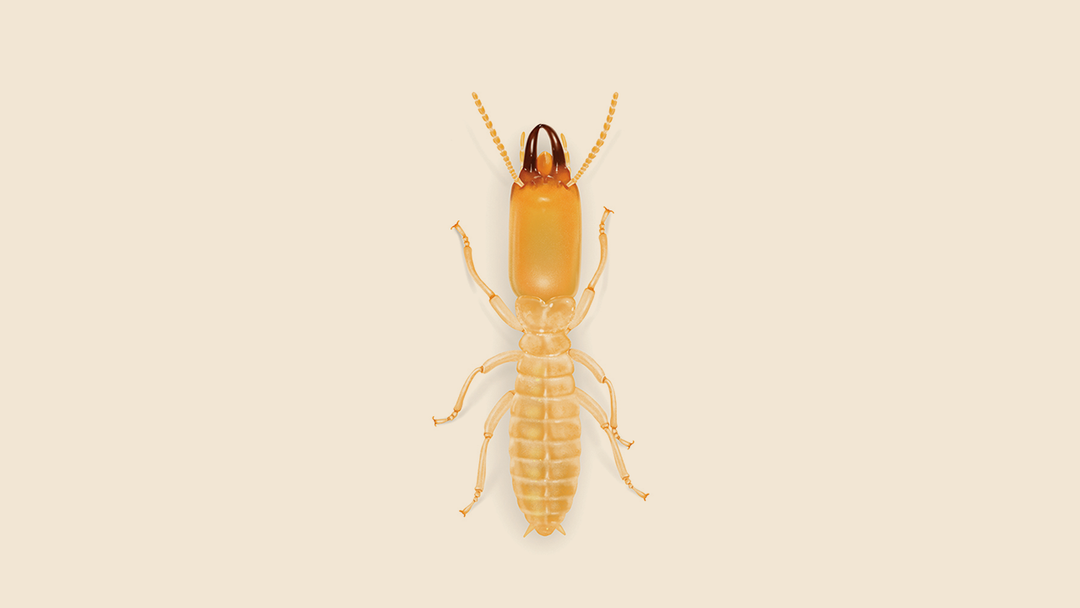
The soldiers are about 1/4 inch-long protectors of the colony. Soldiers are equipped with large jaws that they use to combat colony intruders.
Eastern Subterranean Termite Soldier
Alates
The alates are winged termites or “swarmers” that leave the colony and establish new colonies. The male and female alates leave the colony in the spring, mate after leaving the colony, construct a new colony, and then become the primary king and queen of this new colony. Fortunately, extremely few alates actually succeed in establishing new colonies.
Queens
The reproductive caste is made up of the primary queens and males (kings) that stay within the colony for life. The secondary reproductives are important during times of colony stress or conditions unfavorable to the success of the colony.
Alate queens and kings are black or dark brown, about 3/8 to a half inch long, and have two pairs of wings that are lost after a termite swarm. Generally, the appearance of swarmers or their shed wings is the first sign of a problem with eastern subterranean termites.
Diet
Termites are the most destructive insect pests in the U.S., causing damage well into the billions of dollars annually. Eastern subterranean termites consume wood, but also will feed on and damage almost anything that contains cellulose such as book pages and other papers.
Foraging
Termite workers are constantly foraging for food, and when a food source is located, the workers communicate the food source location by depositing complex odors called pheromones along trails.
Above ground foraging also takes place, and the typical termite mud tube must be constructed when workers forage above ground. The mud tube’s purpose is to protect the workers as they explore for new sources of food or travel back and forth with the cellulose they bring back to nourish the colony members.
Habitat
Eastern subterranean termites infest damp timber and prefer damp soil because they need moisture to survive. Humid areas of the home, around the home, and water-damaged lumber are perfect habitats.
Geographic Range
There are numerous termite species native to the United States. Eastern subterranean termites are a subterranean species found primarily in the South and on the East Coast. These insects can have a large economic impact on homeowners due to their dense distribution.
Colonies
One colony of Eastern subterranean termites may contain anywhere from 60,000 to nearly one million individuals. Unlike some other insect species, reproductive male termites mate throughout their lives, and males do not die immediately after mating. Eastern subterranean reproductive termites do shed their wings after mating swarms, at which time they go on to found new colonies.