Desert Drywood Termite Facts & Information
Identification
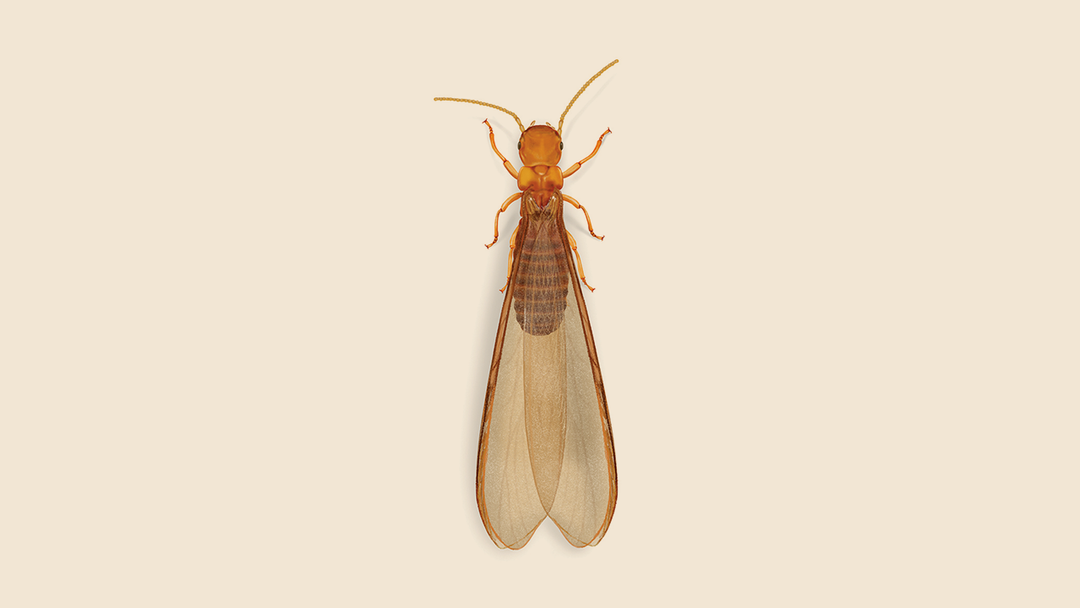
Appearance
The desert drywood termite is also called the light western drywood termite. This common name comes from the appearance of the winged reproductive life stage, or alate. The alates are yellow to light brown and, including wings, are about ½-inch long. Termite soldiers are large and equipped with mouthparts that help them defend the colony against predators. The workers are actually the nymphal stage, and they feed the colony and perform the maintenance work needed to keep the colony functional.
Behavior & Diet
Desert drywood termites readily invade, feed on and damage wooden structures, but more often they will feed on trees that grow along canyon riverbeds and large desert cacti. The likelihood for damage to homes is highest in areas where suburban neighborhoods expand into the termite’s normal habitat. In addition to homes, the desert drywood termite damages poles, firewood and posts.
Often drywood termite identification relates to the appearance of drywood termite damage, described as looking like the termite has eaten across the wood grain, not with the wood grain. Also, their galleries are very smooth and without soil. Their fecal matter generally takes on an oval shape and is firm with six concave sides, while reaching no more than 1/32 inch long. These pellets are excreted from the wood by being pushed out through kick-out holes located in the infested wood.
Reproduction
Swarmers fly at night and normally just after a rain and are most active from May through September. After swarming, they shed their wings, mate and find a location to begin a new colony.
Signs of Infestation
Indicators of desert drywood termite activity include the presence of swarmers (alates) or their shed wings and finding small piles of termite fecal pellets that were pushed out of infested wood. Seeing swarmers or their shed wings inside the house is not a good sign since it indicates a colony that could be located inside the home.