Termites Guide
Dark Southeastern Subterranean Termite Facts & Information
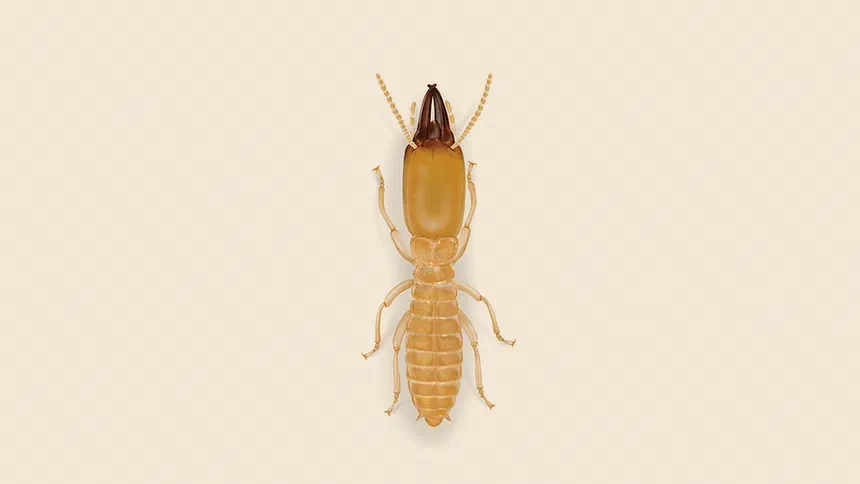
Appearance Reticulitermes virginicus alates are about 1/3-inch long and have a dark-brown or black body. Soldiers have a rectangular-shaped head with large mouthparts. Workers resemble white or cream-colored ants.
At a glance
Appearance
Reticulitermes virginicus alates are about 1/3-inch long and have a dark-brown or black body. Soldiers have a rectangular-shaped head with large mouthparts. Workers resemble white or cream-colored ants.
Behavior
The dark Southeastern subterranean termite has three castes – workers, soldiers and reproductive. Workers perform most of the efforts needed for colony maintenance, as well as feed reproductives and soldiers. Workers also construct the mud tubes that enable them to move from the soil to above-ground food sources. Soldiers are the colony’s defenders, and the reproductives are responsible for egg laying, expanding the colonies and starting new colonies by swarming. Swarming for this species usually occurs during warm, sunny and windless afternoons after rain during the spring months.
Diet
The principal food source for these termites is wood, and this termite specie seems to prefer pine and Douglas fir structural lumber and plywood.
Reproduction
Reticulitermes virginicus alates swarm, mate and burrow into the soil or rotting logs to begin a new colony. A large, healthy termite colony produces thousands of swarmers that search to find other swarmers they mate with to begin a new colony.
Signs of Infestation
Infestation signs include wood damage, presence of mud tubes and evidence of swarmers. Wood damaged by termites is honeycombed in appearance with layered hollow sections of the wood packed with mud and partially digested wood.
Distribution
Dark Southeastern subterranean termites are distributed in the Eastern states from New England, south to Florida and west to Texas.