Spiders Guide
Red House Spider Facts & Information
What You Can Do Prevention of red house spiders begins with making sure the population of insects that serve as food for spiders is kept to a minimum. Removing inside clutter that serves as harborage for spiders is also …
At a glance
What You Can Do
Prevention of red house spiders begins with making sure the population of insects that serve as food for spiders is kept to a minimum. Removing inside clutter that serves as harborage for spiders is also helpful including sealing cracks, gaps, and holes in:
- Doors
- Foundation
- Windows
Appearance
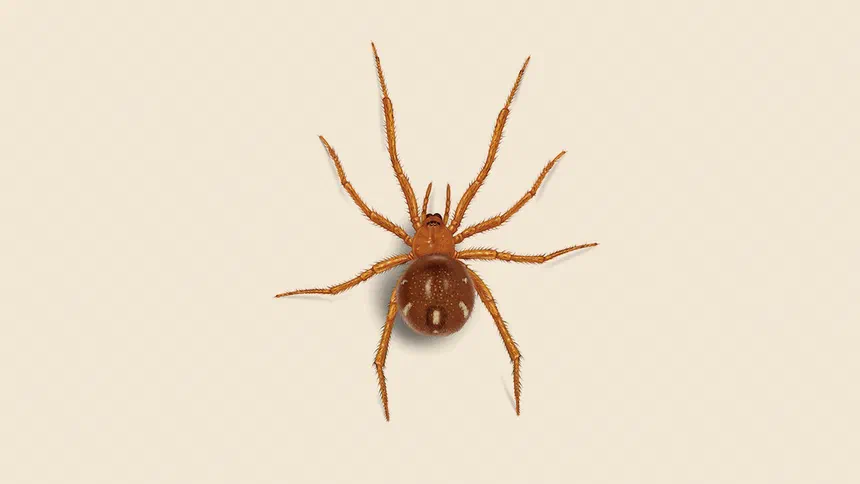
- Color: This spider varies in color, but primarily is reddish-brown over its entire body, including the legs.
- Size: Adult females are about 1/5 to 1/3 of an inch in length, not including their leg span, which is about twice the size of the males.
- Characteristics: Their abdomen is rounded – more or less shaped like a globe. The body is spotted with the females having a red band and a marking that resembles the hour glass shape of the black widow spider on the underside of their abdomen.
Diet
These spiders like to feed on the following:
- Ants
- Larder beetles
- House flies
- Other indoor pests
Habitat
Red house spiders create webs that look like a tangled mess of webbing attached to the walls and floors at multiple points.
These spider webs can be found indoors and outdoors in areas including:
- Corners in closets
- Cupboards and pantries
- Dark corners
- Corners of siding and foundations
- Doorframes
- Under leaves
Geographic Range
The red house spider is worldwide in distribution, but is reported to occur primarily in the states of Texas, Florida, and California.
Reproduction
Red house spiders breed throughout the year. The female spider creates a round egg sac that will be kept near the web, but not directly on it.