Domestic House Spider Facts & Information
Identification
What You Can Do
Sealing all cracks, gaps and crevices that provide access inside the home; using a vacuum or broom to remove spiders, webs and egg cases; and limiting the domestic house spider’s food sources and harborage sites are important prevention measures.
Appearance
- Size: Domestic house spiders are medium-sized compared to other spiders . The females are about 1/4 - 1/2 inch long, excluding their legs, and the males are about 1/4 - 3/8 inch long.
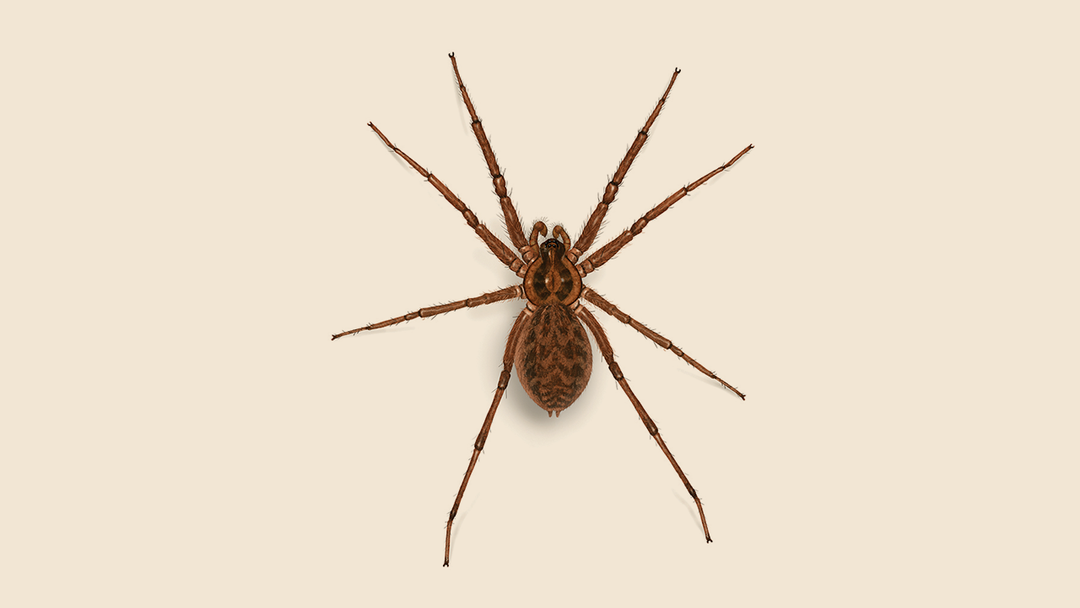
- Color: These spiders vary from gray-brown to dark brown in color and have banded legs. The cephalothorax has two dark colored stripes, and the top of their abdomen has a pattern of brown and light-beige spots.
Tegenaria domestica is called the domestic house spider, the common house spider, the barn funnel weaver spider and the lesser European house spider.
Habitat
These spiders can be found in structures anytime during the year and are very common in buildings or other manmade structures. Domestic house spiders are more likely seen during warm weather months since the males are on the move seeking females with whom to mate. Some common areas include:
- Barns
- Cellars
- Dark basement corners
- Storage sheds
- Under rocks
- Wood piles
Diet
The domestic house spider’s food sources are small insects that they trap in their web.
Geographic Range
T. domestica is common throughout all of North America.
Reproduction
Domestic house spiders can live for as long as seven years, producing upwards of nine egg sacs before re-mating. The spiders place their egg sacs close to the web and often hang them from above with threads of their silk. The males and females are usually together in the web from May through July, the normal mating season.