Library Section
Spiders
How to spot a spider Despite being remarkably varied in appearance, spiders share a number of common characteristics that make basic identification easy. Most notably, all spiders have four pairs of legs, which are …
At a glance
How to spot a spider
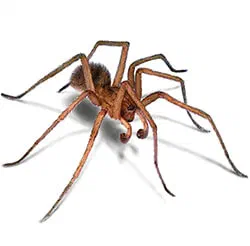
Despite being remarkably varied in appearance, spiders share a number of common characteristics that make basic identification easy. Most notably, all spiders have four pairs of legs, which are segmented and in most cases skinny in appearance. Unlike insects, which are comprised of three distinct body segments, spiders are arachnids and have unregimented bodies with two main divisions. The front portion called the cephalothorax, which is a fusion of the head and thorax, includes the spider’s eyes, mouth, fangs, poison glands, and stomach. The legs also attach to this area. The bulbous rear portion, which comprises the abdomen, houses vital organs and is essential to silk-spinning and mating. Most spiders found in Canada range from 3 to 8 mm in length, with males remaining much smaller in size than females.
Problems caused by spiders
In rare instances, some species of spiders will bite humans. Bites typically result from the victim putting on a shoe or piece of clothing with a spider trapped inside. The widow spider (Latrodectus spp.) is the only spider found in Canada that can be hazardous to humans. Contrary to popular belief, black widow spider bites rarely result in death. Symptoms depend on the bite area, victim sensitivity, and amount of venom injected. The neurotoxins in the venom of the black widow affect the nervous system and may result in muscle cramps, sweating, headache, and high blood pressure. If left untreated, the bite site can become seriously infected. However, black widow spiders are not very common in Canada. Aside from physical harm, spiders can cause psychological distress to individuals with arachnophobia. The sight of spiders can also affect the aesthetic of a home or building, as webs and crawling pests are unsightly. Though more of a nuisance than a hazard, the presence of spiders often strikes people as intolerable and worthy of eradication.
Why do I have spiders
Common spiders found in Canada include the wolf spider, fishing spider, cellar spider, house spider, garden spiders and jumping spiders. All spiders prefer dark, moist environments and tend to avoid contact with other organisms. In nature, they make homes in caves, tree hollows and shrubs, under rocks, and in soil. In homes and businesses, spiders tend to build webs in basements, garages, and corners of rooms, gaining entry through cracks and crevices in the building. Spiders lead solitary lives and prey on other pests, such as aphids, caterpillars, and various insects. Most live for about a year, while some can live as long 15 years.
How worried should I be about spiders
In rare instances, some species of spiders will bite humans. Bites typically result from the victim putting on a shoe or piece of clothing with a spider trapped inside. The widow spider (Latrodectus spp.) is the only spider found in Canada that can be hazardous to humans. Contrary to popular belief, black widow spider bites rarely result in death. Symptoms depend on the bite area, victim sensitivity, and amount of venom injected. The neurotoxins in the venom of the black widow affect the nervous system and may result in muscle cramps, sweating, headache, and high blood pressure. If left untreated, the bite site can become seriously infected. However, black widow spiders are not very common in Canada. Aside from physical harm, spiders can cause psychological distress to individuals with arachnophobia. The sight of spiders can also affect the aesthetic of a home or building, as webs and crawling pests are unsightly. Though more of a nuisance than a hazard, the presence of spiders often strikes people as intolerable and worthy of eradication.
How can I prevent spiders invading
As spiders primarily enter the home through gaps and openings around the residence, homeowners should keep windows and doors closed and properly sealed, and caulk any gaps in foundational walls. Keeping the residence clean and free from insects will also discourage spiders from entering by forcing them to look elsewhere for food sources. The frequent removal of webs also curbs spider infestations. Most spiders in the home prefer dark, moist environments, such as basements. Dehumidifiers may make the habitat less appealing to the pests, while removing clutter will cut down on the amount of hiding spaces spiders can take advantage of. Continually finding excess numbers of spiders in the home may signal a serious infestation issue requiring the services of a pest control specialist.
Browse This Section
Every guide in Spiders
Use these links to move quickly between closely related pages in the same section.
Banana Spiders
How to identify Banana Spiders People use the name banana spider to describe several spiders commonly found on banana …
Beach Wolf Spider Facts & Information
What do beach wolf spiders look like? Adult beach wolf spiders, Arctosa littoralis, are about 11-15mm long. They have a …
Black & Yellow Garden Spider Facts & Information
Appearance Belonging to a group of spiders known as orb weavers, these garden spiders are easily seen and can be quickly …
Black House Spider Facts & Information
Appearance B. insignis is a dark-colored spider with the mature female about ¾ inch long with a 1 ¼ inch leg span. The …
Black Widow Spider
How to identify Black Widow Spider Recognizable due to the red hourglass-shaped marking on the underside of the globular …
Black Widow Spiders
What are Black Widow Spiders? Black widow spiders get their common name from the popular belief that the female eats the …
Brown Carolina Wolf Spider Facts & Information
Appearance The South Carolina state spider is the Carolina wolf spider (Hogna carolinensis). This spider is considered …
Brown House Spider Facts & Information
Appearance Similar to the true black widow, the brown house spider female is about ¼ to 3/8 inch in length (does not …
Brown Recluse Spider
Why do I have Brown Recluse Spiders? Mainly outdoors, brown recluse spiders are typically outdoor creatures. They prefer …
Brown Recluse Spiders
What is the Difference Between a Brown Recluse and Woodlouse Spider? Brown recluse and woodlouse spiders have similar …
Cellar Spiders
How to identify Cellar Spiders Longer than most other spider species, the cellar spider ranges from 7 to 8 mm in length, …
Cobweb Spiders
Why do I have cobweb spiders Cobweb spiders like to spin their webs in dry, protected locations, such as dark corners of …
Crab Spiders
What Do Crab Spiders Eat? Crab spiders are not known for biting humans or pets. They are a beneficial part of an …
Daring Jumping Spider Facts & Information
Appearance The daring jumping spider, also known as the bold jumping spider, has a distinctive black or dark-gray hairy …
Dock Spiders
General Facts Why do I have dock spiders? Dock spiders, also called fishing or wharf spiders, like to live in waterfront …
Domestic House Spider Facts & Information
What You Can Do Sealing all cracks, gaps and crevices that provide access inside the home; using a vacuum or broom to …
Fishing Spider
What is a Fishing Spider? Fishing spiders (also known as fisher spiders) get their name due to their unique hunting …
Flower Crab Spider Facts & Information
Appearance Flower crab spiders belong to the Family Thomisidae. Flower crab spiders tend to have smooth, shiny bodies …
Funnelweb Spider Facts & Information
Appearance As there are many species of funnel weaver spiders found in the United States, the range of appearances of …
Giant House Spider Facts & Information
What You Can Do Sealing all cracks, gaps and crevices that provide access inside the home is an important way to prevent …
Grass Spider
What is a Grass Spider? As their name suggests, grass spiders are frequently found in grassy areas but sometimes make …
Grass Spider Facts & Information
What do grass spiders look like? Grass spiders are often yellow, brown, or cream-colored, and they have two dark …
Green Jumping Spider Facts & Information
Appearance The green jumping spider males and females are quite different in their appearance. Male Colors : The male …
Ground Spider Facts & Information
What You Can Do Preventing ground spiders and other hunting spiders starts with eliminating their food. Since these …
Hobo Spiders
What are hobo spiders? The common name for the hobo spider comes from its presumed method of expanding its distribution …
House Spiders
What is a House Spider? The common house spider gets its name from the fact that it is usually the spider most often …
Huntsman Spider Facts & Information
What You Can Do Huntsman spiders, also known as wood spiders, sometimes enter structures while foraging for prey. They …
Joro Spiders
What is a Joro Spider? Joro spiders are an invasive species that was first discovered in Georgia in 2014 and has since …
Jumping Spiders
What are Jumping Spiders? Jumping spiders are a type of spider that gets its common name from its ability to jump, which …
Long-bodied Cellar Spiders
What Do Cellar Spiders Look Like? All cellar spiders have oval-shaped bodies that range in color from pale yellowish to …
Orange Garden Spider Facts & Information
Appearance Garden spiders occur in a wide variety of colors, including orange. A great example of a common orange garden …
Orb Weaver Spiders
What is an Orb Weaver Spider? Orb weaver spiders, often referred to as orb weavers, are a type of arachnid named for the …
Red House Spider Facts & Information
What You Can Do Prevention of red house spiders begins with making sure the population of insects that serve as food for …
Small Jumping Spider Facts & Information
Appearance Smaller varieties of jumping spiders measure 4 to 5 mm in body size. Like their larger counterparts, these …
Southern House Spider Facts & Information
What You Can Do Preventing a southern house spider infestation begins with: Food restriction: The spiders’ food source …
Spinybacked Orb Weaver Spider Facts & Information
What You Can Do Preventing a spinybacked orb weaver spider infestation begins with making sure the population its food …
Tarantula Facts & Information
Appearance Size: They are the largest known arachnids. On average, they measure 7 to 10 cm in length. However, they are …
Wolf Spiders
What is a wolf spider? Unlike most spiders, wolf spiders don’t hunt with webs. Instead, they chase their prey using …
Woodlouse Spider
What do Woodlouse Spiders Look Like? Upon a first glance, woodlouse hunter spiders may look threatening with six eyes …
Yellow Sac Spider Facts & Information
What You Can Do Yellow sac spider prevention is best accomplished by sealing holes, cracks, and gaps in the home’s …
Zebra Jumping Spider Facts & Information
What You Can Do Preventing infestation begins with: Limiting food sources: Make sure the pest’s food sources are kept to …