Library Section
Rodents
Where do they live Rodents are highly adaptable animals that have spread around the globe. Rats infamously proliferated the Black Death, which led to the deaths of millions of people in the 14th century. The most common …
At a glance
Where do they live
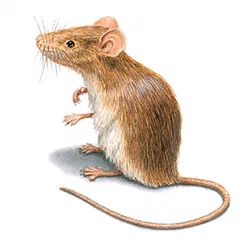
Rodents are highly adaptable animals that have spread around the globe. Rats infamously proliferated the Black Death, which led to the deaths of millions of people in the 14th century. The most common types of rodent pests in Canada are the house mouse, Norway rat and roof rat. Some burrow underground while others live in nests on the surface. Hollow logs, tree roots, and tall grasses provide protected places for rodents to shelter. Mice prefer forested areas, pastures, grassy fields, and farmland, and usually hide in underbrush or other dense vegetation, such as tall grasses, shrubs, and vines. However, in populated areas, mice tend to live near humans and readily available food sources away from the threats of predators. In the wild, rats burrow underground, near another structure which can provide overhead shelter. In urban areas, rats colonize in attics, burrows, under concrete and porches and in wall voids or other hard to reach places. The Norway rat is nocturnal. Both the Norway rat and roof rat prefer damp environments, while roof rats prefer to settle in higher locations. Rodents like to be warm and temperatures below 15°C normally bring them inside.
Rodent life cycle
As mammals, rodents give birth to litters of up to 12 live young after carrying them for around 20 days. Newborns reach sexual maturity after a month or two. In the wild, the mating season is from early summer to fall, but indoors, rodents breed all year round. They generally live no longer than a year.
Why do I have rodents
Rodents invade homes seeking food, water and warmth. They aggressively seek shelter in the fall as temperatures begin to drop. Mice and rats often find refuge in homes, businesses, industrial factories and warehouses, dog houses, sheds, barns, or lawn ornamentations. Rodents often enter through back rooms or storerooms when doors are left open and frequently gain entry under roofing tiles via the rain gutters. They can also squeeze through very small holes and cracks in the siding as small as 1.75 cm wide. Rats and mice will eat almost anything. Some prefer fruit, vegetables and meat, while others can survive solely on seeds and grains. Mice and rats can be just as satisfied with organic waste found in dumpsters as they would be with a piece of fresh food. Almost any source of moisture around your property will also attract thirsty rodents. Rats must have water to survive, and although mice can get most of their water from moisture in their food, they certainly won’t reject water if it’s readily accessible.
How worried should I be about rodents
Some mice and rats can carry and transmit Hantavirus, a rare respiratory disease, in their saliva, urine, and faeces. This disease can be fatal in humans and there is no known cure. Mice can also transmit diseases like tularemia, lymphocytic chorio-meningitis, and murine typhus, while rats can transmit bubonic plague, Weil’s disease, toxoplasmosis, and trichinosis. Rats and mice both contaminate food with their faeces, urine, and saliva, and can introduce parasites, such as fleas, lice and ticks into your home. Rodent remains also pose a serious health hazard to humans and need to be removed in order to avoid further symptoms. Rodents can also cause major structural damage to your home or business when they burrow through walls and gnaw through electrical wiring, causing power outages, provoking electrical fires, and forcing expensive repairs. As well, oils and dirt on mice and rats’ skin can rub off and cause discoloration along the walls as they squeeze through tiny holes into the building or scurry along the side of room. For business owners and property managers, a mouse or rat infestation can be devastating, ruining their reputation, harming their ability to sell their product or rent apartments, and potentially destroying their ability to operate at all. As soon as you see a rodent invade your property, it’s essential to begin rodent control measures immediately. If not rodents can multiply exponentially. Without mouse control intervention, one pair of mice may produce 200 offspring in four months. To catch rodents, snap traps and glue boards are best, as they do not require chemicals. However, rodents instinctively avoid or escape bait and traps, and larger rodents can escape unsecured glue boards. Tamper-resistant bait stations containing rodenticide bait blocks can also be used around building exteriors. These block non-target organisms, such as children and pets, from accessing the bait inside. But these traps and baits don’t get to the source of your pest problem. Preventing rodents’ return requires a sanitation program, community education, staff training, strategic landscaping, and possibly even structural changes. For truly effective long-term rodent control for your home or business, you need an integrated pest control management program provided by professional pest control services.
How can I prevent rodents invading
You can start by looking for signs. For example, check wiring for chew marks and gnawing, the walls for rubbing marks or holes, and small, pellet-like droppings around your property. You can also take proactive actions like keeping the kitchen clean by tidying up spills and crumbs immediately. Removing food sources, including bird feeders, regularly cleaning and rotating dumpsters, and ensuring trash cans are covered tightly is also a good idea. Regular home maintenance can also prevent invasions. Try to trim back vegetation from the building exterior and seal any cracks or holes with caulk or foam. Additionally, fix leaky soda or ice machines and HVAC units, install weather strips around doors and windows, and remove any standing water outside. Remember to close your doors because leaving them open for long periods of time can provide rodents with an easy entrance.
Browse This Section
Every guide in Rodents
Use these links to move quickly between closely related pages in the same section.
Beaver Facts & Information
What do beavers look like? Beavers are the largest rodents in North America. Adults typically measure three to four feet …
Chipmunk Facts & Information
What You Can Do One of the more important ways to help control chipmunks is to make your yard more open and less …
Dangers of Rodent Droppings
Rodent droppings should not be handled unless absolutely necessary and only with proper protective measures. …
Deer Mice
What is a Deer Mouse? Deer mice are a species of rodent that get their name because their fur closely resembles that of …
Gopher Facts & Information
What You Can Do One of the reasons that gopher control is so challenging is their damage usually occurs belowground so …
Groundhog Facts & Information
What You Can Do Since groundhogs may dig burrows in crawlspaces, it is important to inspect the outside of the home for …
House Mice
What House Mice Typically Eat In nature, mice prefer to eat cereal and seeds, but they will also eat insects, nuts and …
How to Identify Rodent Sounds
Rodents’ teeth are very hard and rodents tend to gnaw on many hard surfaces to gain entry or to find food. These chewing …
Mice
What do mice look like House mice often appear brown or grey, with lighter colouring on the underside of the body. Deer …
Mole Rodent Facts & Information
Appearance There are several types of mole rodents, known more commonly in scientific circles as mole rats. The most …
Mouse Facts & Information
What do mice look like? The house mouse is gray-brown with an almost completely hairless tail that is as long or longer …
Muskrat Facts & Information
What do muskrats look like? Muskrats are medium-sized, semi-aquatic rodents named for the musky scent they use to mark …
Norway Rats
What are Typical Norway Rat Behaviors? Norway rats are social pests, often building shelters close to one another. This …
Pack rats
How to identify pack rats Pack rats, also known as woodrats, have large eyes and long whiskers. They are about 30cm …
Rats
What do rats look like? The two rat species have different and distinct features. The roof rat is most recognizable …
Rodent Infestation
Rodent infestations in or surrounding a home can prove extremely destructive. Different species are known for different …
Roof Rats
What Roof Rats Tend to Eat Roof rats are omnivorous and willing to eat practically anything available to them. However, …
Shrew Facts & Information
What do shrews look like? Shrews are among the smallest mammals, often just two to four inches long including the tail …
Small Rodents
Small rodents have become invaluable test subjects in laboratory research. In fact, the tendency to perform experiments …
Squirrel Facts & Information
What do squirrels look like? Squirrels are agile, tree-dwelling rodents best known for their long, bushy tails. The …
Vole Facts & Information
What You Can Do To prevent vole damage, one needs to manage the population in your area before it reaches high numbers. …