Reptiles Guide
Veiled Chameleon
What Is a Veiled Chameleon? The veiled chameleon (Chamaeleo calyptratus) is a large, casque-headed lizard native to the mountains and coastal lowlands of the southwestern Arabian Peninsula. It takes its name from the …
At a glance
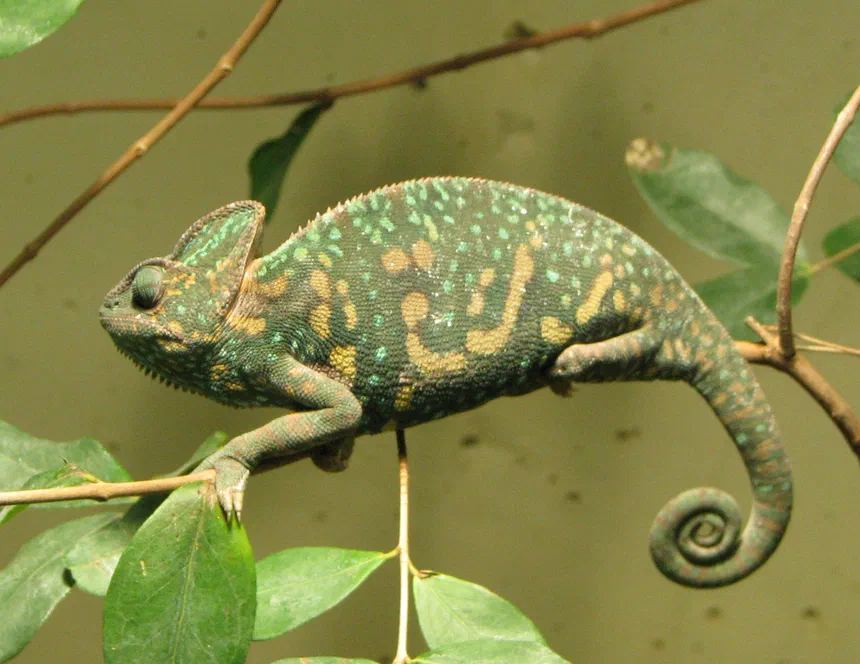
Image: Drägüs — Public domain · source
What Is a Veiled Chameleon?
The veiled chameleon (Chamaeleo calyptratus) is a large, casque-headed lizard native to the mountains and coastal lowlands of the southwestern Arabian Peninsula. It takes its name from the tall, helmet-like crest, or casque, that rises from the top of its head. Hardy and adaptable, it is also one of the most widely kept chameleons in the pet trade.
Appearance and Identification
This is one of the bigger chameleon species. Mature males can reach about 24 inches (60 cm) from snout to tail tip, while females are noticeably smaller, generally around 14 inches (35 cm). The most distinctive feature is the towering casque, which is larger in males and helps channel condensed moisture toward the mouth. Body coloration is typically green marked with vertical bands of yellow, tan, and pale blue, though the pattern shifts with temperature, mood, and social signaling rather than to match backgrounds. Like all true chameleons, it has a prehensile tail, independently swiveling turret eyes, and grasping, mitten-like feet suited to gripping branches. Males also bear a small spur on each hind heel.
Habitat and Range
Veiled chameleons occur across a range of elevations in Yemen and southwestern Saudi Arabia, from humid coastal plains up into cooler mountain woodlands and high plateaus. They favor areas with dense shrubs and trees, including vegetated valleys known as wadis. This tolerance for varied temperature and humidity helps explain why the species is comparatively resilient. Introduced populations have also become established in parts of Hawaii and Florida, where escaped or released pets found suitable conditions.
Diet
Primarily insectivorous, the veiled chameleon hunts crickets, grasshoppers, flies, and other invertebrates by slowly stalking within range and launching its long, sticky-tipped tongue to snatch prey. Unlike most chameleons, this species is notably willing to eat plant matter as well, nibbling leaves and blossoms. Botanists and keepers suspect this habit provides extra water and nutrients in dry conditions, making it effectively an opportunistic omnivore.
Behavior
Veiled chameleons are solitary, largely arboreal, and diurnal, spending their days climbing deliberately through branches. They are territorial and often intolerant of one another; adults kept or encountered together may display, gape, hiss, and darken or brighten their colors as threats. Movement is characteristically slow and rocking, which helps them blend in with wind-stirred foliage. Their turret eyes can scan in two directions at once, then lock forward together to judge distance before a tongue strike.
Life Cycle and Reproduction
This species is egg-laying (oviparous) and remarkably prolific. After mating, a female descends to the ground to dig a burrow and deposit a clutch that can range from roughly 20 to 80 or more eggs, with larger clutches possible in well-fed animals. She then covers the nest and takes no further part in parental care. Incubation in the soil typically lasts several months, often around 6 to 9 months depending on temperature. Hatchlings emerge fully independent and grow quickly, with males and females reaching maturity within their first year.
Conservation Status
The veiled chameleon is listed as Least Concern by the IUCN. Its broad habitat tolerance, wide reproductive output, and large range make it far less vulnerable than many range-restricted chameleons. It is heavily represented in the international pet trade, but most animals sold today are captive-bred rather than wild-caught, which reduces pressure on native populations.
Frequently Asked Questions
Do veiled chameleons change color to camouflage? Not primarily. Color shifts mostly communicate mood, temperature regulation, and social status, though the resulting greens and bands do help them blend into foliage.
What is the casque on its head for? The tall crest is thought to help collect condensed water, which trickles down toward the mouth, and it also plays a role in display; it is more pronounced in males.
Why do females often live shorter lives than males? Frequent, large egg clutches place heavy demands on a female’s body, so reproductively active females tend to have shorter average lifespans than males.