Reptiles Guide
Spectacled Caiman
What Is a Spectacled Caiman? The spectacled caiman (Caiman crocodilus) is a small-to-medium crocodilian native to the freshwater habitats of Central and South America. It belongs to the alligator family (Alligatoridae) …
At a glance
What Is a Spectacled Caiman?
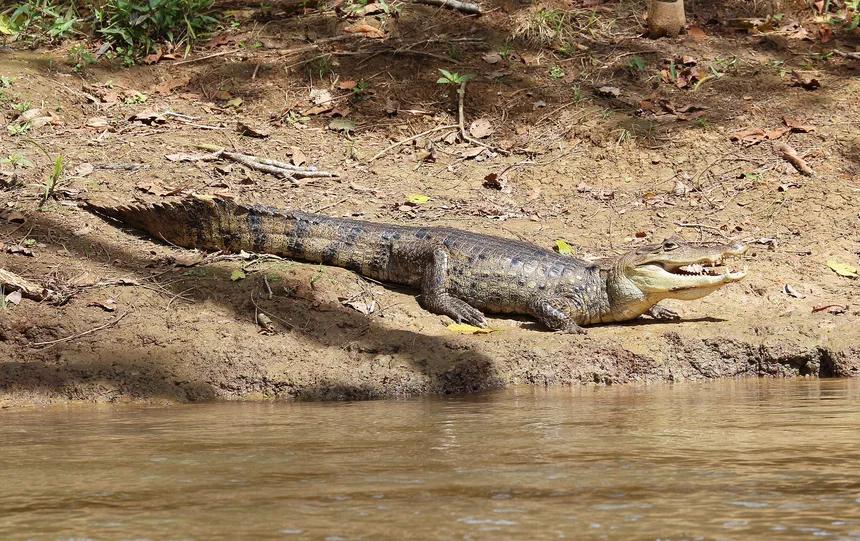
The spectacled caiman (Caiman crocodilus) is a small-to-medium crocodilian native to the freshwater habitats of Central and South America. It belongs to the alligator family (Alligatoridae) and is named for a bony ridge between its eyes that resembles the bridge of a pair of spectacles.
Appearance and Identification
Spectacled caimans are typically olive-green to brownish, with a paler, often yellowish underside. Juveniles are yellowish with dark banding that fades as they mature. The most distinctive feature is the raised bony crest running between the eyes, giving the impression of spectacles. Adult males generally reach 1.8 to 2.5 meters (6 to 8 feet), while females are smaller, usually 1.4 to 2 meters. Their broad snout, armored skin, and muscular tail are typical of crocodilians, and their eyes and nostrils sit high on the head so they can watch and breathe while nearly submerged.
Habitat and Range
This adaptable reptile occupies a wide range of lowland freshwater environments, including slow-moving rivers, oxbow lakes, swamps, marshes, and seasonally flooded savannas. It tolerates a variety of conditions and can even survive in brackish water, which has helped it colonize new areas. Its natural range spans from southern Mexico and Central America through much of northern and central South America, including the Amazon and Orinoco basins. Introduced populations have also become established in places such as Florida and Cuba.
Diet
Spectacled caimans are opportunistic carnivores whose diet shifts with age and size. Hatchlings and juveniles feed mainly on insects, crustaceans, snails, and other small invertebrates. As they grow, fish become a major part of the diet, along with amphibians, crustaceans such as crabs, and small mammals, birds, and reptiles. Larger adults may take bigger prey, and the species is known to eat carrion when available. During droughts they can go for extended periods with little food.
Behavior
Largely nocturnal, spectacled caimans hunt at night and spend much of the day basking or resting in shallow water. They regulate body temperature by moving between sun and shade or water. Although generally solitary, they may congregate at drying pools during the dry season, when competition and hierarchy become important. They are usually shy toward humans but can become defensive when guarding nests. Vocalizations, including hisses and grunts, play a role in communication, and hatchlings call to one another and to their mother.
Life Cycle and Reproduction
Breeding typically coincides with the wet season. The female builds a mound nest of vegetation and soil near the water and lays a clutch of roughly 15 to 40 eggs. Heat generated by the decomposing plant material incubates the eggs over about 70 to 90 days, and nest temperature helps determine the sex of the offspring. The mother guards the nest and often helps the hatchlings reach the water, sometimes carrying them in her mouth. Young caimans stay in loose groups for protection but face heavy predation. Sexual maturity is reached at several years of age, and individuals may live 30 to 40 years in the wild.
Conservation Status
The spectacled caiman is listed as Least Concern by the IUCN. It remains one of the most abundant and widespread crocodilians, in part because its adaptability and rapid reproduction help it recover from hunting pressure. It has historically been harvested for its skin, especially as larger crocodilian species became scarce, and it is now widely managed and farmed. Habitat loss and pollution are localized concerns, but the species as a whole is not considered threatened.
Frequently Asked Questions
Is the spectacled caiman dangerous to people? It rarely poses a serious threat to humans because of its relatively small size, though it can bite defensively if cornered or protecting a nest.
Why is it called a “spectacled” caiman? A bony ridge between its eyes resembles the bridge connecting a pair of eyeglasses, giving the appearance of spectacles.
How is a caiman different from an alligator? Caimans belong to the same family as alligators but are generally smaller, and many species have differences in snout shape and bony structures such as ventral armor.