Reptiles Guide
Texas Horned Lizard
What Is a Texas Horned Lizard? The Texas horned lizard (Phrynosoma cornutum) is a flattened, spiny reptile native to the arid plains of the south-central United States and northern Mexico. Often called a “horny toad” for …
At a glance
What Is a Texas Horned Lizard?
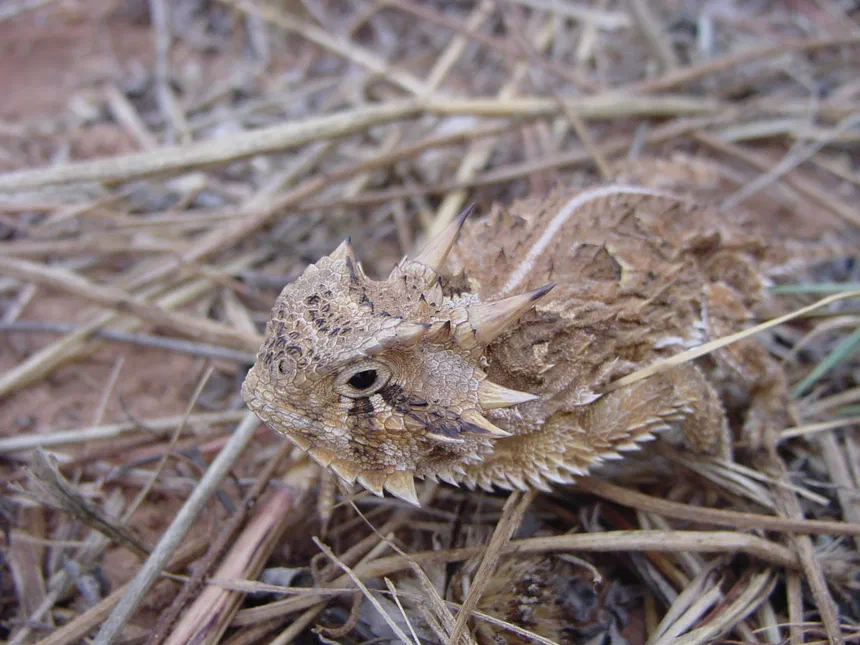
The Texas horned lizard (Phrynosoma cornutum) is a flattened, spiny reptile native to the arid plains of the south-central United States and northern Mexico. Often called a “horny toad” for its squat, toad-like shape, it is actually a true lizard in the family Phrynosomatidae. It is best known for a crown of pointed horns, a specialized ant diet, and a startling defense in which it can squirt blood from its eyes.
Appearance and Identification
This is a broad, low-slung lizard with a rounded, flattened body that helps it blend into open ground. A row of enlarged, pointed scales called horns projects from the back of the head, with the two central horns being the longest. Fringes of pointed scales line each side of the body, and smaller spines cover the back. Coloration ranges from tan and gray to reddish-brown, patterned with dark blotches and a pale line running down the spine, which provides excellent camouflage against soil and sand. Most adults measure roughly 6.5 to 11 centimeters from snout to vent, with females typically larger and heavier than males.
Habitat and Range
The Texas horned lizard favors hot, dry, open country with loose or sandy soil and sparse vegetation. Typical habitats include arid and semi-arid grasslands, mesquite scrub, and desert flats where it can bask, burrow shallowly, and find the ant colonies it depends on. Its natural range extends across much of Texas and neighboring states, north into parts of the Great Plains and west toward Arizona, and south into northern Mexico. Populations have declined in some areas, particularly in parts of eastern and central Texas, where habitat loss and other pressures have reduced its numbers.
Diet
This lizard is a dietary specialist that feeds primarily on ants, especially native harvester ants. It is a sit-and-wait forager, positioning itself near ant trails and picking off insects one at a time with its sticky tongue, consuming large numbers in a single feeding. It will also take other small invertebrates such as beetles, grasshoppers, and termites when available. Its heavy reliance on harvester ants makes it sensitive to changes in ant populations, including declines caused by invasive red imported fire ants and by pesticide use.
Behavior
The Texas horned lizard is active during the day and relies heavily on camouflage and stillness to avoid predators. When threatened it may flatten its body against the ground, puff up to appear larger and harder to swallow, or dash for cover. Its most famous defense is autohemorrhaging: from a cornered position it can rupture small vessels near its eyes and shoot a thin stream of blood, which contains compounds distasteful to canine and feline predators, up to a short distance. During the hottest and coldest parts of the year it becomes inactive, sheltering in shallow burrows or under loose soil and entering a dormant period through the winter.
Life Cycle and Reproduction
Mating occurs in spring after the lizards emerge from winter dormancy. Females are egg-laying, typically excavating a burrow in loose soil in early summer and depositing a clutch that can range widely in size, often on the order of a dozen to a few dozen eggs. The eggs are left to incubate on their own, and hatchlings emerge after several weeks, fully independent and already capable of hunting small ants. Young lizards are miniature versions of the adults but more vulnerable to predators, and they grow over a few seasons before reaching breeding age. In the wild, individuals commonly live around five to eight years.
Conservation Status
Globally, the Texas horned lizard is listed as Least Concern by the IUCN, but this masks significant regional declines. In much of its eastern range it has disappeared from areas where it was once common. Key threats include habitat loss from agriculture and development, the spread of invasive fire ants that displace native harvester ants, broad pesticide use that reduces prey, and past collection for the pet trade. It is protected under state law in Texas and is the subject of ongoing monitoring and reintroduction efforts.
Frequently Asked Questions
Can a Texas horned lizard really shoot blood from its eyes? Yes. When strongly threatened, it can rupture small blood vessels near its eyes and squirt a short stream of blood containing chemicals that taste foul to dogs, coyotes, and cats.
Is it a frog or a lizard? Despite the nickname “horny toad,” it is a true reptile and a member of the lizard family Phrynosomatidae; the toad-like name comes only from its wide, flattened body.
What do they eat? They are ant specialists, feeding mostly on native harvester ants and supplementing with other small insects such as beetles and grasshoppers.