Reptiles Guide
Egyptian Cobra
What Is a Egyptian Cobra? The Egyptian cobra (Naja haje) is a large, highly venomous elapid snake native to Africa and the Middle East. It is one of the region’s most recognizable serpents, famous for the broad hood it …
At a glance
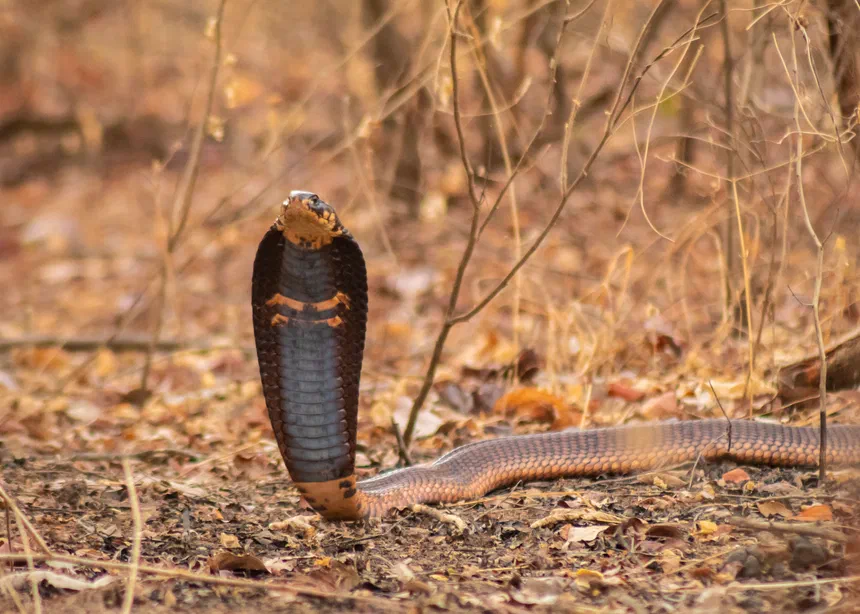
Image: Dotun55 — CC BY-SA 4.0 · source
What Is a Egyptian Cobra?
The Egyptian cobra (Naja haje) is a large, highly venomous elapid snake native to Africa and the Middle East. It is one of the region’s most recognizable serpents, famous for the broad hood it spreads when threatened. Steeped in ancient Egyptian symbolism, it is often linked to the uraeus emblem worn on the crowns of pharaohs.
Appearance and Identification
Egyptian cobras are heavy-bodied snakes that typically measure 1.5 to 2.5 meters (about 5 to 8 feet) in length, with especially large individuals occasionally exceeding this range. Coloration varies widely across their range, from yellowish-brown and coppery tones to dark brown or nearly black, and many individuals show a darker band or blotch across the throat. Juveniles often display more contrast than adults. Like other cobras, this species can rear the front of its body off the ground and flatten its neck ribs into a distinctive hood, though the hood is broader and less patterned than the “spectacle” mark seen on some Asian cobras. The head is fairly broad, the snout somewhat rounded, and the eyes have round pupils.
Habitat and Range
This adaptable snake occupies a large swath of Africa, from North Africa and the Nile Valley south across the savannas of sub-Saharan Africa, and it extends into parts of the Arabian Peninsula. It favors dry, open country, including savanna, semi-desert scrub, grassland, and rocky hillsides, but it also thrives around agricultural land and human settlements where prey is plentiful. It generally avoids true desert interiors and dense rainforest, and it is frequently found near water sources, oases, and irrigated fields.
Diet
The Egyptian cobra is a carnivore with a varied diet. Toads and other amphibians are a favored food, but it also preys on birds and their eggs, small mammals, lizards, and even other snakes. It subdues prey with a potent venom that contains neurotoxins and cytotoxins, and it often forages actively at dusk and after dark, when it may enter poultry yards and rodent-infested buildings in search of a meal.
Behavior
Egyptian cobras are largely terrestrial but climb and swim readily when needed. They tend to be most active in the cooler parts of the day and at night, sheltering in abandoned burrows, termite mounds, rock crevices, or dense vegetation during peak heat. When confronted, an Egyptian cobra typically tries to retreat, but if cornered it raises its forebody, spreads its hood, and may hiss and strike. Unlike true spitting cobras, it delivers venom primarily by biting. Its bite is a serious medical emergency and can be fatal without prompt treatment.
Life Cycle and Reproduction
Egyptian cobras are egg-laying (oviparous). After mating, the female deposits a clutch of roughly 8 to 20 eggs, often in a sheltered spot such as a burrow, termite mound, or hollow. The eggs incubate for about two months before hatching, and the young emerge fully independent and equipped with functional venom, receiving no parental care. Hatchlings measure only a small fraction of adult length but grow steadily, reaching maturity over a few years. In the wild these snakes may live around 15 to 20 years or more.
Conservation Status
The Egyptian cobra has not been formally assessed by the IUCN, but it remains widespread and reasonably common across much of its extensive range. It is not currently considered globally threatened. Localized pressures include habitat conversion, road mortality, and persecution by people who fear or kill snakes, while some individuals are collected for skins or the exotic pet trade. Its ability to live alongside agriculture helps buffer it against many of these pressures.
Frequently Asked Questions
Is the Egyptian cobra venomous? Yes, highly so. Its venom contains neurotoxins and cytotoxins, and an untreated bite can be life-threatening, making prompt antivenom treatment essential.
How big does an Egyptian cobra get? Most adults are between about 1.5 and 2.5 meters (5 to 8 feet) long, with occasional individuals growing somewhat larger.
Where does the Egyptian cobra live? It ranges across North and sub-Saharan Africa and into parts of the Arabian Peninsula, favoring savanna, scrub, farmland, and rocky terrain, often near water.