Reptiles Guide
Eastern Hognose Snake
What Is a Eastern Hognose Snake? The eastern hognose snake (Heterodon platirhinos) is a stout, mildly venomous colubrid snake native to eastern North America. It is best known for its upturned, shovel-like snout and its …
At a glance
What Is a Eastern Hognose Snake?
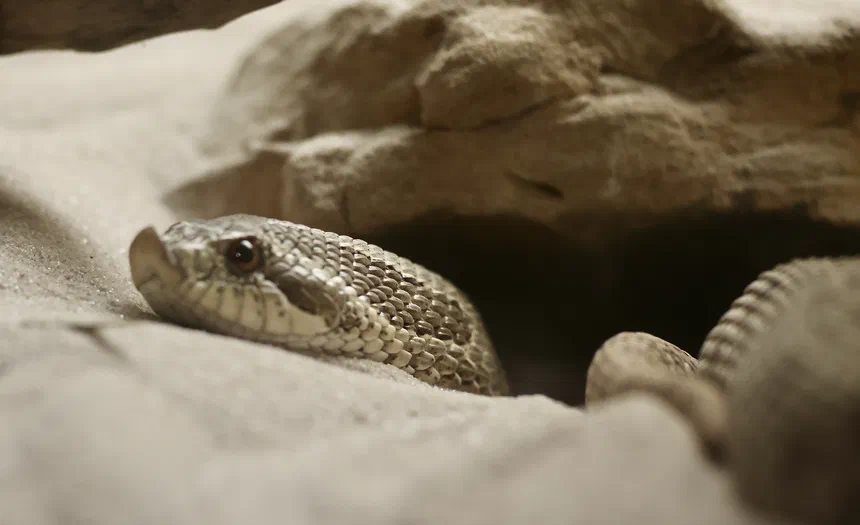
The eastern hognose snake (Heterodon platirhinos) is a stout, mildly venomous colubrid snake native to eastern North America. It is best known for its upturned, shovel-like snout and its remarkable defensive theatrics, which include hooding like a cobra and, if that fails, playing dead. Despite its dramatic bluffing, it is harmless to people and poses no serious threat.
Appearance and Identification
The eastern hognose is a thick-bodied snake of moderate size, usually measuring about 50 to 90 centimeters in length, with females growing larger than males. Its most distinctive feature is the sharply upturned, keeled snout, which it uses to dig through loose soil and leaf litter. Color and pattern are extremely variable: individuals may be yellow, tan, brown, gray, olive, orange, or nearly solid black, and many display dark blotches down the back with a checkerboard pattern along the sides. The belly is typically mottled, and the underside of the tail is often lighter than the rest of the underparts, a useful field mark. Because of this variability, the species is frequently mistaken for other snakes, including venomous vipers.
Habitat and Range
This snake ranges across the eastern and central United States, from southern New England and the Great Lakes region south to Florida and west toward the eastern Great Plains, with populations reaching into southern Ontario. It favors habitats with loose, well-drained, often sandy soils that are easy to burrow into, such as open woodlands, forest edges, old fields, farmland, and coastal dunes and scrub. Access to sandy or friable ground is important both for digging and for locating buried prey and nesting sites.
Diet
The eastern hognose snake is a dietary specialist that feeds heavily on toads, and it is well equipped for this preference. Enlarged teeth at the rear of the upper jaw help puncture toads that inflate their bodies as a defense, and the snake produces a mild, toad-specific venom delivered by these rear fangs to help subdue such prey. Enlarged adrenal glands are thought to help it tolerate the toxins that toads secrete from their skin. Besides toads, it will take frogs, salamanders, and occasionally small reptiles, insects, or invertebrates. Prey is typically located by scent and rooted out of soil or leaf litter with the upturned snout.
Behavior
When threatened, the eastern hognose puts on one of the most elaborate defensive displays of any North American snake. It first flattens its neck and forebody into a broad hood, hisses loudly, and may lunge with a closed-mouth, bluffing strike, earning it nicknames such as “puff adder” and “hissing viper.” If this cobra-like bluff does not deter a predator, the snake rolls onto its back, writhes as though in agony, gapes its mouth, and may release a foul musk and even a little blood, convincingly feigning death. Turned upright, it will often flip back over, revealing the ruse. It is active by day and spends much of its time burrowing.
Life Cycle and Reproduction
Eastern hognose snakes are egg-layers. Mating generally takes place in spring, and in early to midsummer the female excavates a shallow nest in sandy or loose soil where she deposits a clutch that commonly ranges from about 8 to 40 eggs. The eggs are left unattended and incubate for roughly one to two months, warmed by the surrounding soil. Hatchlings emerge in late summer or early fall, measuring only around 15 to 20 centimeters, and are fully independent from birth, already capable of their species’ signature defensive displays. Sexual maturity is typically reached in about two years, and individuals may live for several years to over a decade in the wild.
Conservation Status
The eastern hognose snake is listed as Least Concern by the IUCN, reflecting its wide distribution and generally stable overall numbers. Even so, local populations can decline where sandy habitats are lost to development, where roads cause high mortality, and where amphibian prey becomes scarce. The snake is also frequently killed by people who mistake its dramatic bluffing for genuine aggression or venomous danger. It receives some protection at the state level in parts of its range where populations are considered vulnerable.
Frequently Asked Questions
Is the eastern hognose snake venomous? It produces a mild venom that helps subdue toads and is delivered by enlarged rear teeth, but it is considered harmless to humans and very rarely bites people.
Why does it play dead? Playing dead is a last-resort defense; many predators lose interest in prey that appears already dead, so the elaborate act can help the snake avoid being attacked.
What does it eat? Its diet is dominated by toads, supplemented by frogs, salamanders, and occasionally other small animals it roots out of soil and leaf litter.