Reptiles Guide
Dwarf Crocodile
What Is a Dwarf Crocodile? The dwarf crocodile (Osteolaemus tetraspis) is the smallest living crocodile species, native to the rainforests and wetlands of West and Central Africa. Shy and largely nocturnal, it is heavily …
At a glance
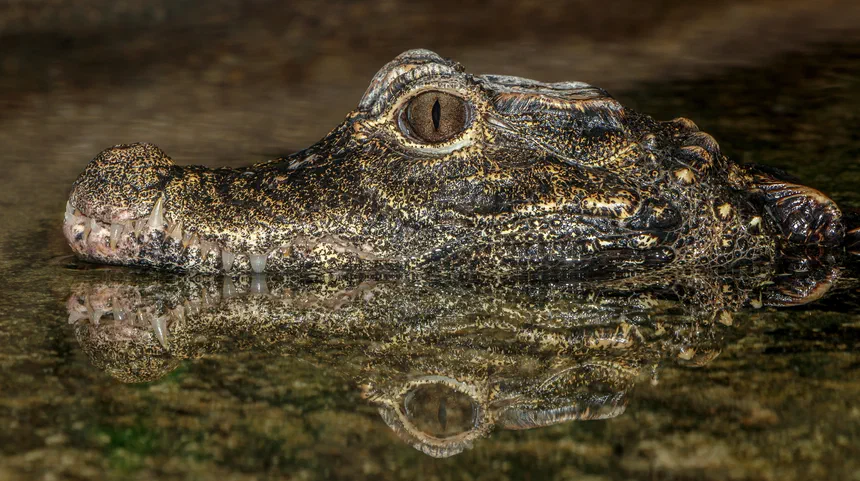
Image: H. Zell — CC BY-SA 3.0 · source
What Is a Dwarf Crocodile?
The dwarf crocodile (Osteolaemus tetraspis) is the smallest living crocodile species, native to the rainforests and wetlands of West and Central Africa. Shy and largely nocturnal, it is heavily armored and well suited to a life spent along quiet forest waters. Ongoing genetic research suggests the group may actually include more than one species.
Appearance and Identification
Dwarf crocodiles rarely exceed about 1.9 meters (6 feet), and many adults are smaller, making them roughly a third the length of larger crocodilians. They are stocky and heavily built for their size, with a short, blunt snout that distinguishes them from most other crocodiles. Adults are dark brown to nearly black on the back, with a paler, often yellowish belly, while juveniles tend to be lighter with banded markings. Their bodies carry unusually thick, bony scutes, including well-developed armor plating on the neck, back, and even the belly, which is thought to help protect these small crocodiles from predators.
Habitat and Range
The species occurs across the tropical lowlands of West and Central Africa, in countries ranging from Senegal and Gambia eastward to the Congo Basin and Uganda. It favors slow-moving or still freshwater habitats, including swamps, forest streams, seasonally flooded pools, and the margins of slow rivers. Dense rainforest cover is typical of its range, and the crocodiles often shelter in burrows or among submerged roots and leaf litter. Because they tolerate small, isolated water bodies, they can persist in patches of forest where larger crocodilians would not thrive.
Diet
Dwarf crocodiles are carnivores with a broad, opportunistic diet. Fish, crustaceans such as crabs, amphibians, insects, and other invertebrates make up much of what they eat, and they will also take small mammals, birds, and reptiles when available. They tend to hunt at night, moving through shallow water and along muddy banks to ambush or seize prey. Seasonal flooding can concentrate food, and crabs in particular are an important item in some parts of the range.
Behavior
These crocodiles are secretive and mostly active after dark, spending daylight hours hidden in burrows or resting in sheltered water. They are generally solitary and far less aggressive toward people than larger crocodile species, relying on their heavy armor and cryptic habits for defense rather than size. Burrows dug into banks provide refuge from heat, drought, and predators, and some individuals travel short distances overland between water bodies, especially during wet conditions.
Life Cycle and Reproduction
Breeding is tied to the rainy season, when females build mound nests out of vegetation and soil near the water’s edge. A clutch is small compared with larger crocodilians, typically around 10 eggs, sometimes fewer. The decaying plant material in the mound helps keep the eggs warm during an incubation period of roughly three months. The female guards the nest and, once the young hatch, helps them reach the water and may protect them for a time. Dwarf crocodiles grow slowly and are long-lived, with wild individuals commonly reaching several decades of age.
Conservation Status
The dwarf crocodile is listed as Vulnerable by the IUCN. Although it remains fairly widespread, populations are declining in many areas due to habitat loss from deforestation and wetland drainage, together with hunting for bushmeat and local trade. Its slow reproductive rate makes recovery difficult where populations have been depleted. International trade is regulated under CITES, and the species’ ability to survive in small forest waters offers some resilience, but continued habitat protection is important for its long-term future.
Frequently Asked Questions
How big does a dwarf crocodile get? Most adults reach about 1.5 to 1.9 meters (5 to 6 feet), making it the smallest crocodile species in the world.
Are dwarf crocodiles dangerous to people? They are shy, mostly nocturnal, and much less aggressive than large crocodiles, so they pose little threat to humans, though like any wild crocodilian they can bite if handled or cornered.
Where do dwarf crocodiles live? They inhabit swamps, forest streams, and flooded pools across the rainforest regions of West and Central Africa.