Reptiles Guide
Desert Iguana
What Is a Desert Iguana? The desert iguana (Dipsosaurus dorsalis) is a medium-sized lizard native to the arid deserts of the American Southwest and northwestern Mexico. It is one of the most heat-tolerant lizards in …
At a glance
What Is a Desert Iguana?
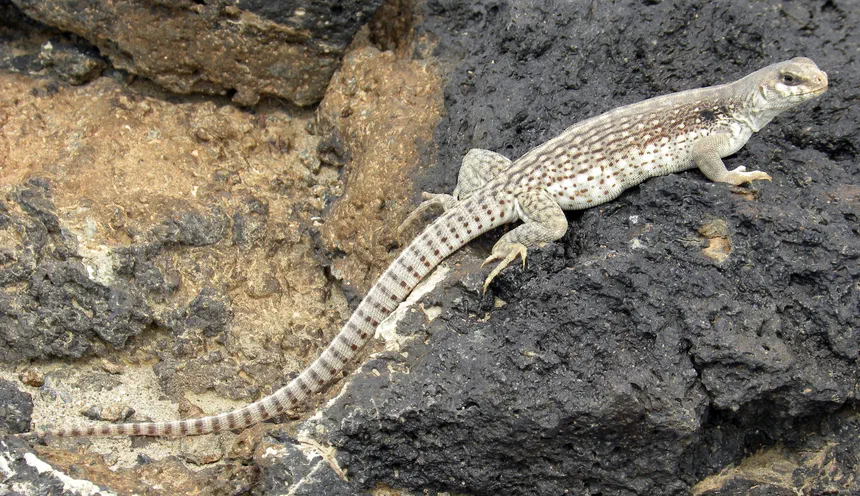
The desert iguana (Dipsosaurus dorsalis) is a medium-sized lizard native to the arid deserts of the American Southwest and northwestern Mexico. It is one of the most heat-tolerant lizards in North America, remaining active on the ground when most other reptiles have retreated to shade. Despite its name, it is only distantly related to the large green iguanas of the tropics.
Appearance and Identification
Desert iguanas are pale, blending seamlessly with the sand and pale soils they inhabit. The body is generally gray to cream, patterned with reddish-brown or tan reticulations and spots that often form faint bands toward the tail. A distinctive low crest of slightly enlarged scales runs down the middle of the back. The tail is long, typically longer than the body, and the animal reaches roughly 10 to 16 inches (25 to 40 cm) in total length. During the breeding season, the sides may take on a pinkish flush. Their rounded snout, sturdy limbs, and clawed toes suit a life of digging and running across open desert.
Habitat and Range
This species is closely tied to hot, dry lowland deserts, particularly the Mojave and Sonoran Deserts. It ranges through southeastern California, southern Nevada, western Arizona, and parts of Utah in the United States, extending south into northwestern Mexico, including Baja California and Sonora. Desert iguanas favor sandy flats and washes dotted with creosote bushes, whose burrows made by other animals and root systems provide shelter. They are often found in areas of loose soil where they can dig their own retreats.
Diet
Desert iguanas are primarily herbivorous. They browse on leaves, buds, and especially the yellow flowers of the creosote bush, which is a staple of their diet. They also eat other desert annuals and occasionally insects or carrion, particularly when young. By climbing into shrubs to reach fresh growth, they take advantage of foliage that stays available even in dry conditions. Their gut hosts microbes that help ferment tough plant material, an adaptation shared with other plant-eating lizards.
Behavior
Remarkably heat-adapted, the desert iguana can stay active at body temperatures above 40 degrees Celsius (104 degrees Fahrenheit), foraging in the midday sun when predators and competitors are inactive. It is diurnal and shelters in burrows during the cooler night and through the winter, when it becomes dormant. When threatened, it dashes for cover with surprising speed, sometimes running briefly on its hind legs. Males defend territories during the breeding season and communicate through head-bobbing and push-up displays.
Life Cycle and Reproduction
Breeding takes place in spring, after the animals emerge from winter dormancy. Females typically lay a single clutch of about three to eight eggs in early summer, depositing them in a burrow dug in sandy soil. The eggs incubate underground for roughly two months, warmed by the desert heat, and hatchlings emerge in late summer as miniature versions of the adults. Young lizards fend for themselves from the start. Individuals may take a couple of years to reach breeding maturity and can live well over a decade under favorable conditions.
Conservation Status
The desert iguana is listed as Least Concern by the IUCN. It remains widespread and locally common across much of its range, and its tolerance for harsh, sparsely vegetated terrain helps buffer it against some pressures. Localized threats include habitat loss from development, off-road vehicle activity, and disturbance of the creosote-scrub communities it depends on. Overall, however, populations are considered stable.
Frequently Asked Questions
Is the desert iguana dangerous to people? No. It is a shy, non-venomous plant-eater that flees from humans and poses no threat.
How does it survive such extreme heat? It has an unusually high thermal tolerance and can forage at temperatures that force most other lizards into shade, retreating to cool burrows only when it must.
What does it mainly eat? Its diet centers on desert vegetation, especially the flowers and leaves of the creosote bush, supplemented by other plants and occasional insects.