Reptiles Guide
Blue-Tongued Skink
What Is a Blue-Tongued Skink? The blue-tongued skink (Tiliqua scincoides) is a large, ground-dwelling lizard native to Australia and known for the vivid blue tongue it flashes when threatened. It belongs to the skink …
At a glance
What Is a Blue-Tongued Skink?
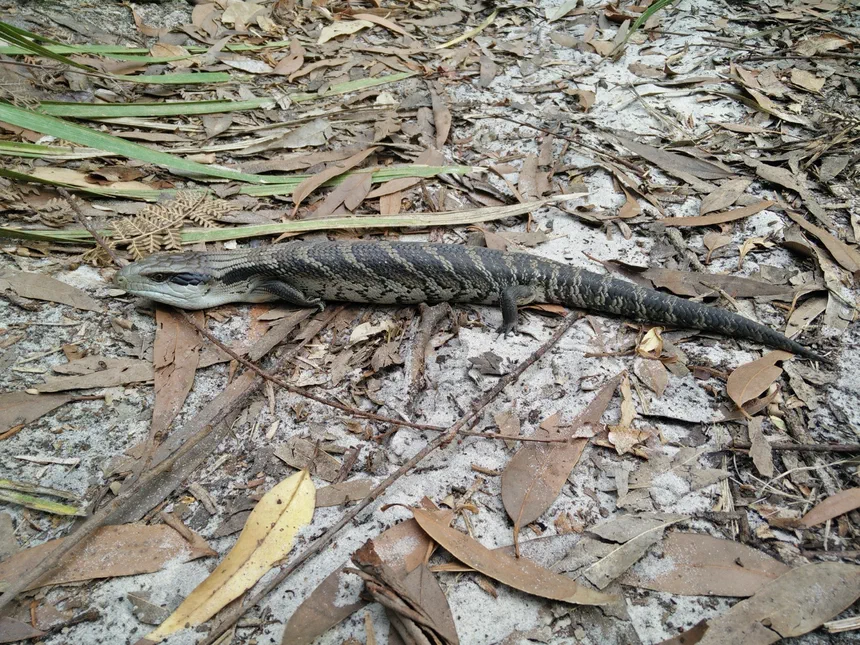
The blue-tongued skink (Tiliqua scincoides) is a large, ground-dwelling lizard native to Australia and known for the vivid blue tongue it flashes when threatened. It belongs to the skink family Scincidae and is one of the most recognizable reptiles on the continent, popular both in the wild and as a docile companion animal.
Appearance and Identification
Blue-tongued skinks have a stout, elongated body with a broad triangular head and comparatively short, stubby legs. Their smooth, overlapping scales are typically silvery-gray to warm brown, marked by darker crossbands running along the back and tail. Adults commonly reach about 45 to 60 cm (18 to 24 in) in total length, including a tapering tail, and weigh in the range of 250 to 500 g. The species’ most famous feature is the broad, bright blue tongue, which contrasts sharply with the pink lining of the mouth. Their small eyes and slow, deliberate movements give them a distinctly unhurried appearance compared with faster, more slender skinks.
Habitat and Range
This skink occupies a wide variety of habitats across eastern and northern Australia, from open woodlands and grasslands to coastal heaths and scrub. It has also adapted well to human-modified landscapes and is a frequent visitor to suburban gardens, parks, and farmland, where it shelters under leaf litter, logs, rocks, and garden debris. Related forms and subspecies extend the broader group’s range into parts of Indonesia and New Guinea. Blue-tongued skinks are ground animals that rarely climb, preferring to forage and bask on the surface and to retreat into burrows or dense cover when temperatures are extreme.
Diet
Blue-tongued skinks are true omnivores with a broad and opportunistic appetite. They feed on a mix of invertebrates, including beetles, caterpillars, and especially snails and slugs, which their strong jaws can crush with ease. Plant material forms a significant part of the diet as well, and they readily consume wildflowers, leaves, berries, and fallen fruit. Their slow pace suits this generalist strategy, as much of their prey is either sedentary or slow-moving. In gardens they are often welcomed for helping to control snail and insect populations.
Behavior
These skinks are diurnal and spend much of their day basking to raise their body temperature before foraging. They are generally solitary and maintain loose home ranges. When cornered, a blue-tongued skink puts on a memorable bluff display: it opens its mouth wide, hisses, flattens its body to look larger, and protrudes its startling blue tongue at the intruder. This sudden flash of color is thought to startle predators long enough for the lizard to escape, since the skink is slow and lacks other strong defenses. If the display fails, it may deliver a firm bite. In cooler parts of their range, they become inactive and shelter during winter.
Life Cycle and Reproduction
Unlike many reptiles, blue-tongued skinks give birth to live young rather than laying eggs. After mating in spring, females carry developing embryos internally and typically produce a litter of several to more than a dozen offspring in late summer, though litter size varies. The newborns are miniature versions of the adults and are independent almost immediately, receiving no parental care. Young skinks grow steadily over several years before reaching maturity. In the wild, individuals commonly live around 15 to 20 years, and well-cared-for animals in captivity may live considerably longer.
Conservation Status
The blue-tongued skink is widespread and common throughout much of its range and is generally regarded as being of Least Concern. It tolerates disturbed and suburban environments better than many reptiles, which helps sustain its numbers. Nonetheless, local populations face threats from vehicle strikes, predation by domestic cats and dogs, and poisoning from consuming snails killed by garden pesticides. Preserving leaf litter, logs, and pesticide-free gardens helps support healthy local populations.
Frequently Asked Questions
Why is the skink’s tongue blue? The bright blue color is a warning and startle signal. When threatened, the skink flashes its tongue to surprise or intimidate predators, buying time to escape.
Are blue-tongued skinks dangerous to people? No. They are not venomous and are quite docile. A cornered skink may bite in self-defense, but it poses no real danger and prefers to bluff its way out of confrontation.
Do they make good pets? They are among the more popular pet lizards because they are hardy, calm, and easy to handle, though like all animals they need appropriate space, heating, and a varied diet.
References
The conservation status and key facts in this profile are supported by these sources:
- Animal Diversity Web — Tiliqua scincoides (accessed 2026-08-06)
- GBIF — Tiliqua scincoides (White, 1790) (accessed 2026-08-06)
- ITIS — Tiliqua scincoides (TSN 1182843) (accessed 2026-08-06)
Found an error, source problem, or image concern? Report this page.