Reptiles Guide
American Crocodile
What Is a American Crocodile? The American crocodile (Crocodylus acutus) is a large, coastal crocodilian found across the tropical Americas, from the southern tip of Florida through the Caribbean and Central America to …
At a glance
What Is a American Crocodile?
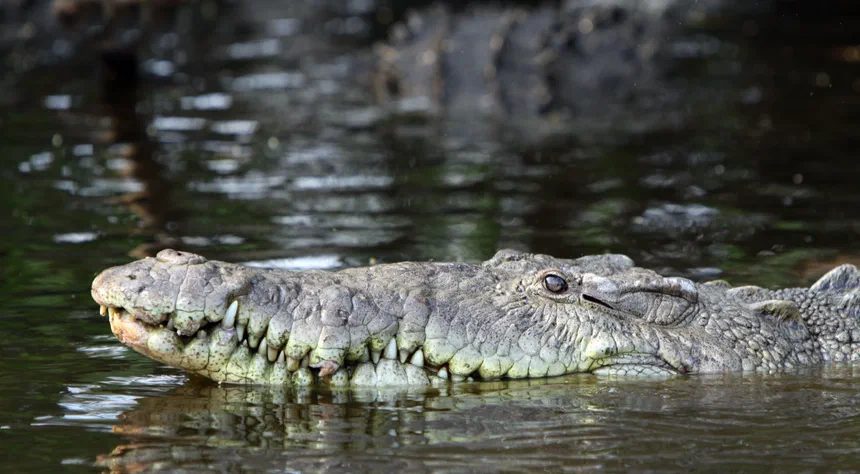
The American crocodile (Crocodylus acutus) is a large, coastal crocodilian found across the tropical Americas, from the southern tip of Florida through the Caribbean and Central America to northern South America. It is one of the most widely distributed crocodiles in the New World and, unlike many of its relatives, thrives in salty and brackish water. Slender-snouted and generally shy, it shares part of its Florida range with the American alligator, making the two the only place on Earth where alligators and crocodiles coexist naturally.
Appearance and Identification
American crocodiles are recognized by their narrow, tapering snout and grayish-green to olive coloration, which is often paler on the underside and marked with darker bands across the back and tail. Most adults measure about 3 to 4 meters, though large males can exceed 5 meters in exceptional cases. A useful field mark separating them from alligators is the snout shape and the visible fourth tooth on each side of the lower jaw, which remains exposed when the mouth is closed. Their eyes and nostrils sit high on the head, allowing them to see and breathe while nearly submerged.
Habitat and Range
This species favors coastal habitats such as mangrove swamps, estuaries, brackish lagoons, and the lower reaches of rivers, and it tolerates full seawater better than most crocodilians thanks to specialized salt glands on the tongue. In the United States, its range is limited to the warm coastal margins of southern Florida, particularly around Florida Bay and the Everglades. Farther south, it occurs along both the Atlantic and Pacific coasts of Mexico and Central America, throughout much of the Caribbean, and into Colombia, Venezuela, Ecuador, and Peru.
Diet
The American crocodile is a carnivore and an opportunistic predator whose diet shifts with age and size. Hatchlings and juveniles feed largely on insects, crabs, snails, small fish, and frogs, while adults take a wider range of prey including fish, birds, turtles, and small to medium-sized mammals. Prey is typically ambushed at the water’s edge, seized in the jaws, and often drowned or swallowed whole. Like other crocodilians, they have slow metabolisms and can go for extended periods between substantial meals.
Behavior
Compared with some of its relatives, the American crocodile is relatively reclusive and tends to avoid people, which makes serious encounters uncommon. It regulates body temperature by basking on banks in the sun and retreating to water or shade when too warm, and it is most active around dawn, dusk, and at night. These crocodiles are strong swimmers, propelled by powerful tails, and can travel considerable distances along coastlines and even across open sea, which helps explain their broad island distribution.
Life Cycle and Reproduction
Breeding typically occurs in the dry season, after which females build nests near the water. Depending on the location, a female may dig a hole in sandy or well-drained soil or construct a mound of vegetation and earth, laying roughly 30 to 60 eggs. She guards the nest during an incubation period of about 75 to 90 days, and the temperature inside the nest influences the sex of the developing young. When the hatchlings call, the mother helps uncover them and may carry them toward the water, though parental care fades quickly and juveniles face heavy predation.
Conservation Status
The IUCN lists the American crocodile as Vulnerable. Populations were heavily reduced during the twentieth century by hunting for hides and by widespread loss of coastal wetland habitat. Since then, legal protection, habitat conservation, and reduced hunting have allowed numbers to recover in parts of the range, and the Florida population in particular has rebounded from very low levels. Ongoing threats include coastal development, water management changes, pollution, and entanglement or persecution where crocodiles and people overlap.
Frequently Asked Questions
How can you tell an American crocodile from an alligator? Crocodiles have a narrower, more pointed snout and are grayish-green, and the large fourth tooth on the lower jaw stays visible when the mouth is closed. Alligators have a broader, rounded snout and are darker in color.
Are American crocodiles dangerous to people? They are large predators and should be respected, but they are generally shy and less aggressive than some other crocodilians, so attacks on humans are relatively rare.
Can American crocodiles live in salt water? Yes. They have salt glands that let them excrete excess salt, so they thrive in brackish estuaries, mangroves, and even coastal seawater, and they can travel between islands.
References
The conservation status and key facts in this profile are supported by these sources:
- Animal Diversity Web — Crocodylus acutus (accessed 2026-08-06)
- GBIF — Crocodylus acutus (Cuvier, 1807) (accessed 2026-08-06)
Found an error, source problem, or image concern? Report this page.