Reptiles Guide
Aldabra Giant Tortoise
What Is a Aldabra Giant Tortoise? The Aldabra giant tortoise (Aldabrachelys gigantea) is one of the largest land tortoises on Earth, native to the remote Aldabra Atoll in the Seychelles. It is among the last surviving …
At a glance
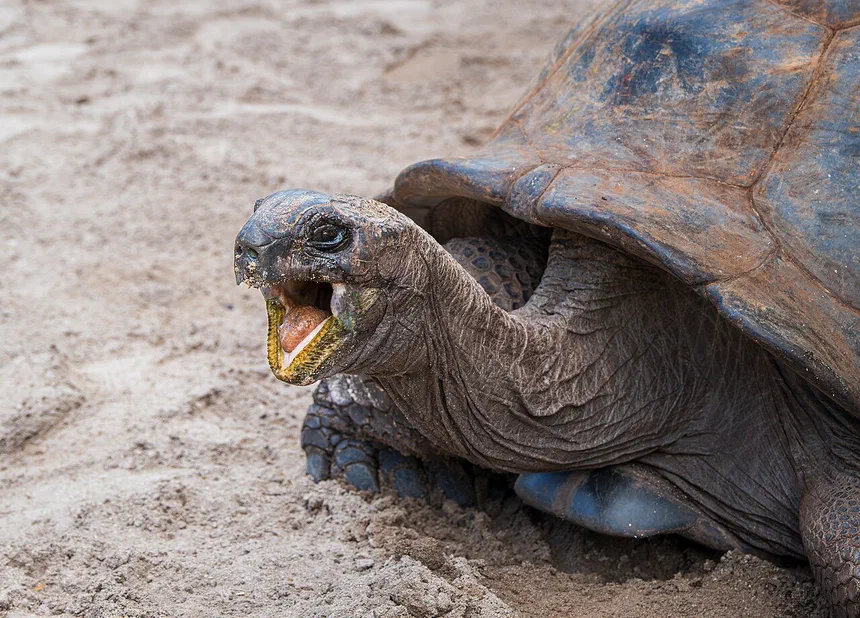
Image: NorbertNagel — CC BY-SA 4.0 · source
What Is a Aldabra Giant Tortoise?
The Aldabra giant tortoise (Aldabrachelys gigantea) is one of the largest land tortoises on Earth, native to the remote Aldabra Atoll in the Seychelles. It is among the last surviving giant tortoises of the Indian Ocean, most of which vanished after the arrival of humans, and today it thrives in one of the world’s great natural strongholds for the species.
Appearance and Identification
This tortoise is built for bulk and longevity. It carries a high, dome-shaped carapace that ranges from brown to grayish, sitting atop stout, pillar-like legs covered in tough, bony scales. The head is relatively small for the body, tipped with a long neck that lets the animal reach up for browse well above the ground.
Males are typically larger than females and have longer, thicker tails. Adults commonly reach shell lengths of three to four feet and weigh several hundred pounds, with the biggest males being the heaviest. The scaly skin of the limbs and neck is usually dark gray, helping to protect against the harsh sun and dry conditions of the atoll.
Habitat and Range
The species is centered on Aldabra Atoll, a ring of coral islands enclosing a large lagoon in the outer Seychelles. Here the tortoises occupy a mix of habitats, from open grasslands and scrub to mangrove edges and low woodland. Because the natural population is concentrated on this single atoll, the world’s survival of the species has long depended on protecting this one place.
Beyond Aldabra, captive and introduced populations have been established on other islands in the Seychelles and elsewhere, both for conservation and as a safeguard against disaster striking the main population. Aldabra itself is a UNESCO World Heritage Site, valued in part for the enormous tortoise herds it supports.
Diet
Aldabra giant tortoises are herbivores that graze and browse across their range. They feed mainly on grasses, herbs, and leaves, but will also take fruit, flowers, and even woody stems when preferred foods are scarce. In some areas, heavy grazing by tortoises has shaped a low, cropped vegetation sometimes called “tortoise turf.”
These reptiles get much of their water from the plants they eat and from rain that collects in shallow pools. They can go long periods with little food or water, an ability that helps them endure the dry season on a resource-poor coral atoll.
Behavior
Tortoises are most active in the cooler hours of morning and late afternoon, seeking shade, mud, or shallow water during the midday heat to avoid overheating. As cold-blooded animals, they rely on their surroundings to regulate body temperature and can be seen basking early in the day before moving off to feed.
Though generally slow and deliberate, they can travel notable distances in search of food and water. Large numbers may gather in favorable feeding areas, and while they are not truly social, this crowding creates some of the densest tortoise populations found anywhere in the world.
Life Cycle and Reproduction
Mating usually takes place in the warmer, wetter months. After mating, the female digs a nest in dry ground and lays a clutch of hard-shelled eggs, often numbering from a handful to a dozen or more. In years when conditions are poor, some females may lay few eggs or none at all.
The eggs incubate for several months, warmed by the sun, before tiny hatchlings dig their way to the surface. Young tortoises grow slowly and are vulnerable to predators such as crabs and introduced animals in their early years. Those that survive can live remarkably long lives, with many individuals exceeding a century and some captive animals reputed to be even older.
Conservation Status
The Aldabra giant tortoise is listed as Vulnerable by the IUCN, a status that reflects both its recovery and its fragility. Once heavily exploited by passing sailors who took tortoises for food, the wild population is now protected, and Aldabra Atoll supports well over one hundred thousand animals. Its main long-term threats include its reliance on a single low-lying atoll, which leaves it exposed to sea-level rise and climate change, along with the risk from introduced predators. Ongoing protection of Aldabra and the maintenance of backup populations remain central to the species’ future.
Frequently Asked Questions
How long do Aldabra giant tortoises live? They are exceptionally long-lived, with many individuals passing one hundred years of age; some captive tortoises have been claimed to reach even greater ages.
Where do Aldabra giant tortoises live in the wild? Their natural home is Aldabra Atoll in the outer Seychelles, though introduced and captive groups now exist on several other islands.
What do these giant tortoises eat? They are herbivores, grazing mostly on grasses and herbs and browsing leaves, fruit, and woody plants when other food is scarce.
References
The conservation status and key facts in this profile are supported by these sources:
- Animal Diversity Web — Aldabra giant tortoise (Dipsochelys dussumieri / Aldabrachelys gigantea) (accessed 2026-08-06)
- GBIF — Aldabrachelys gigantea (accessed 2026-08-06)
Found an error, source problem, or image concern? Report this page.