Occasional Invaders Guide
Millipedes
What is a millipede? Millipedes are sometimes called “thousand-leggers” because of their many pairs of legs, but they can actually have anywhere from 30-90+ pairs of legs, depending on the species. The leggiest is …
At a glance
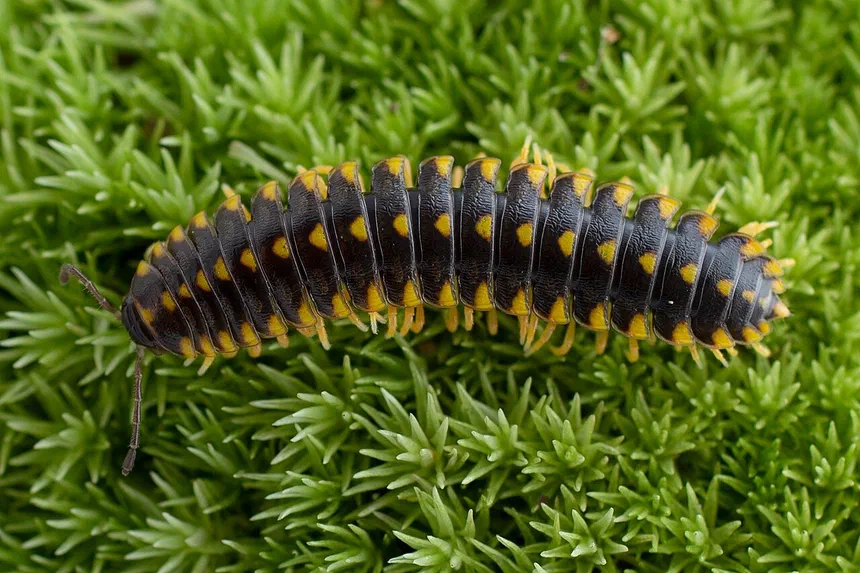
Image: Aggyrolemnoixytes — CC BY-SA 4.0 · source
What is a millipede?
Millipedes are sometimes called “thousand-leggers” because of their many pairs of legs, but they can actually have anywhere from 30-90+ pairs of legs, depending on the species. The leggiest is Illacme plenipes, which can have more than 333 pairs of legs.
What do millipedes look like?
This pest is usually blackish or brownish in color, but some are also red, orange or with mottled patterns. They are known for having long, cylindrical and wormlike bodies and antenae.
Common Millipede Habits
Most millipedes are nocturnal and are primarily scavengers, feeding on decaying plants and occasionally dead insects. In the autumn, millipedes are known to migrate in great numbers.
Common Millipede Habitats
Millipedes are found throughout the world, with about 1,000 species occurring in the United States alone. They are typically found in areas of high moisture and decaying vegetation, such as under trash, in piles of grass clippings, flower-bed mulches, piles of leaves, etc. Millipedes do not usually survive indoors for more than a few days unless there are high moisture conditions and a food supply is present.
Possible Millipede Threats
Some millipede species give off an ill-smelling fluid through openings along the sides of the body. Underscoring the importance of millipede control, this fluid can be toxic to small animals and pets, and can cause small blisters on humans.
Millipede Prevention Tips
The most effective way to prevent and get rid of millipede infestations is to reduce areas of moisture in and around your home. Consider running a dehumidifier if you have a damp basement. Keep lawns mowed so that grass does not retain moisture, and water lawns in the early morning to allow grass to dry during the day. Remove leaf piles and grass clippings. Store firewood off of the ground.
How to Get Rid of Millipedes
If you suspect a millipede infestation in your home, the best course of action is to contact a licensed pest control professional. They will conduct a thorough inspection to identify the full extent of the problem and recommend the appropriate control measures.
Found an error, source problem, or image concern? Report this page.