Library Section
Occasional Invaders
What is an Assassin Bug? Assassin bugs are predatory insects that feed on other bugs. There are nearly 200 species of assassin bugs found in North America, including the wheel bug, the kissing bug and ambush bugs. While …
At a glance
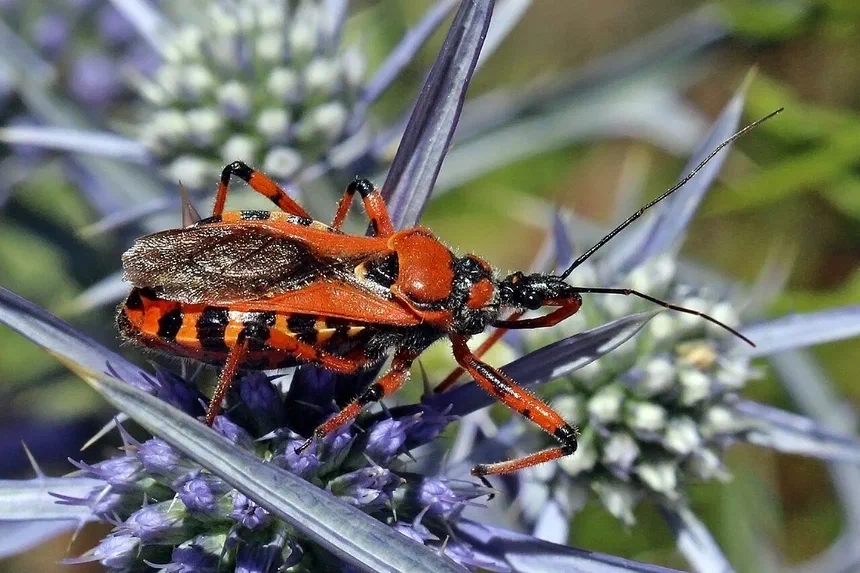
Image: Charles J. Sharp — CC BY-SA 4.0 · source
What is an Assassin Bug?
Assassin bugs are predatory insects that feed on other bugs. There are nearly 200 species of assassin bugs found in North America, including the wheel bug, the kissing bug and ambush bugs. While these insects can be beneficial in the garden as a form of natural pest control, they inflict painful, venomous bites if provoked and some can even spread disease.
What Do Assassin Bugs Look Like?
Because there are so many different species of assassin bugs, not all of them look quite the same. Many species are black or brown in color, although some can be orange, yellow or red. Their bodies are usually oval and elongated with a narrow head, membranous wings and long, thin antennae.
Generally, assassin bugs can be identified by their elongated head and long, three-segmented mouthpart (proboscis used like a straw to feed on fluids from their prey’s bodies).
Assassin bug hatchlings, also known as nymphs, can look very different from their parents, often exhibiting different colors or patterns than fully developed adults.
Assassin Bug Habits
Because of their predatory nature, assassin bugs are commonly found in trees, gardens and grassy areas where they can find other insects to eat. They use their straw-like beaks to feed upon the fluids of other insects, including bees, flies and caterpillars.
Assassin bugs can enter homes through various crevices and openings, including open windows and doors, tears in screens, and unsealed cracks in exterior walls.
Assassin Bug Bites
If provoked, assassin bugs can bite humans. Their venomous bites are immediately and severely painful. If you are bitten by an assassin bug, be sure to wash the bite and apply antiseptic as needed. Over-the-counter medications, like ibuprofen and aspirin, can be used to reduce pain. Contact a medical professional if you notice any changes in the bite area or if you start showing signs of anaphylactic reaction such as swelling, itching, hives or difficulty breathing.
Assassin Bug Threats
Although assassin bugs are generally not aggressive towards humans, they may bite if they feel threatened. Their venomous bites are intensely painful and in rare cases they can even cause anaphylactic reactions.
Feces from some types of assassin bugs can also spread a parasite that causes Chagas disease. This potentially fatal, but rare, illness can cause fever, fatigue, body aches, headaches, rashes and swelling around the eyelids.
Signs of an Assassin Bug Infestation
Assassin bugs prefer to spend their time where they are more likely to find plenty of insects to feed on. Therefore, they are typically found in vegetation outside the home. However, assassin bugs can find their way indoors through openings such as open windows or gaps around doorways and windows. If you notice assassin bugs in your home, contact a professional immediately to discuss how to resolve the problem.
How to Get Rid of Assassin Bugs
Preventing an assassin bug infestation in the home requires sealing off possible points of entry. Make sure to seal any cracks or crevices in exterior walls with a silicone-based caulk, replace weather stripping, install door sweeps and repair any torn screens in doors or windows.
If you identify assassin bugs in your home, it is important to take quick steps to prevent or eradicate an infestation. Contact a qualified pest control professional immediately if you suspect an assassin bug infestation.
Browse This Section
Every guide in Occasional Invaders
Use these links to move quickly between closely related pages in the same section.
Boxelder Bugs
What is a Boxelder Bug? Boxelder bugs get their common name from the fact that they are often found on and around …
Camel Crickets
What is Common Behavior for Camel Crickets? Camel crickets are nocturnal, or active at night, and hide during the day. …
Centipedes
What is a Centipede? Centipedes are sometimes called house centipedes or “hundred-leggers” because of their many pairs …
Earwigs
What are Common Earwig Habits? Earwigs usually spend their days hiding while feeding on leaves, flowers, fruits, mold …
House Crickets
What Do House Crickets Eat? Outside, house crickets feed on plants and dead or live insects, including other crickets. …
Ladybugs
What is Common Ladybug Behavior? Many ladybug species are considered important beneficial insects because they …
Mayflies
What Do Mayflies Eat? Immature mayflies, also known as nymphs, feed on microscopic algae and organic matter in the …
Millipedes
What is a millipede? Millipedes are sometimes called “thousand-leggers” because of their many pairs of legs, but they …
Periodical Cicadas
What is a periodical cicada? Periodical cicadas, sometimes referred to as 17-year cicadas, are large, flying insects …
Pillbugs (Rollie Pollies)
What Do Pill Bugs Eat? Pillbugs are scavengers and feed on decaying plant material. Outdoors, they occasionally injure …
Scorpions
What is a scorpion? Scorpions are nuisance pests that are closely related to spiders, mites and ticks. There are about …
Silverfish
What are Common Silverfish Habits? Silverfish move fast and are good climbers. They can survive for weeks without food …
Spotted Lanternfly
What is a Spotted Lanternfly? The Spotted Lanternfly is a relatively new invasive species to the United States. Native …
Springtails
What is a Springtail? Springtails are tiny critters that get their unique name from their ability to hop around, which …
Stink Bugs
What are Stink Bugs and Where Do They Come From? The brown marmorated stink bug (BMSB) earned its name from its tendency …