Spongy Moths (Formerly Gypsy Moths)
Identification
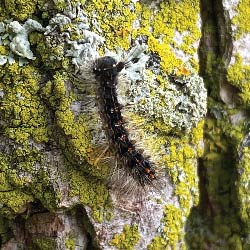
Where do Spongy Moths live?
Spongy moth egg masses can be found almost everywhere on outdoor surfaces. Their pupae can be found anywhere dry with protective cover. Adults are mainly found in tree crowns, trunks, and in the cracks and crevices.
What do Spongy Moths eat?
The larvae feed on foliage of plants; preferred host plants are oak tree species and maple tree species, but they will also feed on other plants, shrubs, and trees of hardwood and softwood. Adult spongy moths do not feed.
How long do Spongy Moths live
The Lymantria dispar dispar (LDD) or spongy moth has four life stages, egg, larva, pupa, and adult. They lay their eggs late summer then become active once they hatch in spring. Larvae development occurs in spring to early summer, April to June and the pupae stage is from June to July. Adult spongy moths emerge from July to August; they mate, eggs are laid, and they die. Next spring the cycle repeats.
Why do I have spongy moths?
Lymantria dispar dispar (LDD) caterpillars or as they are more commonly known Spongy Moths or Gypsy Moths are native to Europe, however since they were introduced to North America they have become well established in eastern Canada and parts of the USA. The population of spongy moths fluctuates periodically depending on environmental factors. If these conditions are favourable, their population can build up to a damaging level. You could be seeing more of them because you have host trees in your yard. Learn more about Spongy Moths
How to prevent Gypsy Moths/Spongy Moths
Unfortunately, you cannot prevent an invasion if you have trees. These pests can be flown from miles away. The best you can do is monitor the situation and act right away to avoid a full-blown infestation.
How to get rid of Spongy Moths?
You can remove egg masses by scraping them off into soapy water or household bleach then leaving it for 24 hours before disposal. You can also use burlap bands around your tree trunks to trap larvae as they migrate up and down. If you are dealing with a severe Spongy moth ( Lymantria dispar dispar) infestation, you should contact a licensed pest control professional , landscaper or arborist.