Casemaking Clothes Moth Facts & Information
Identification
What You Can Do
Controlling and preventing casemaking clothes moth infestations are very similar to what works for webbing clothes moths . Since reducing food sources and favorable habitats are critical to these control pests, control entails cleaning the home to remove food sources. However, as they eat both animal and plant products, removing their food sources may not be possible.
Appearance
- Size: Their bodies are about 3/8 to 1/2 inches long, while larvae are up to 1/2 inch long.
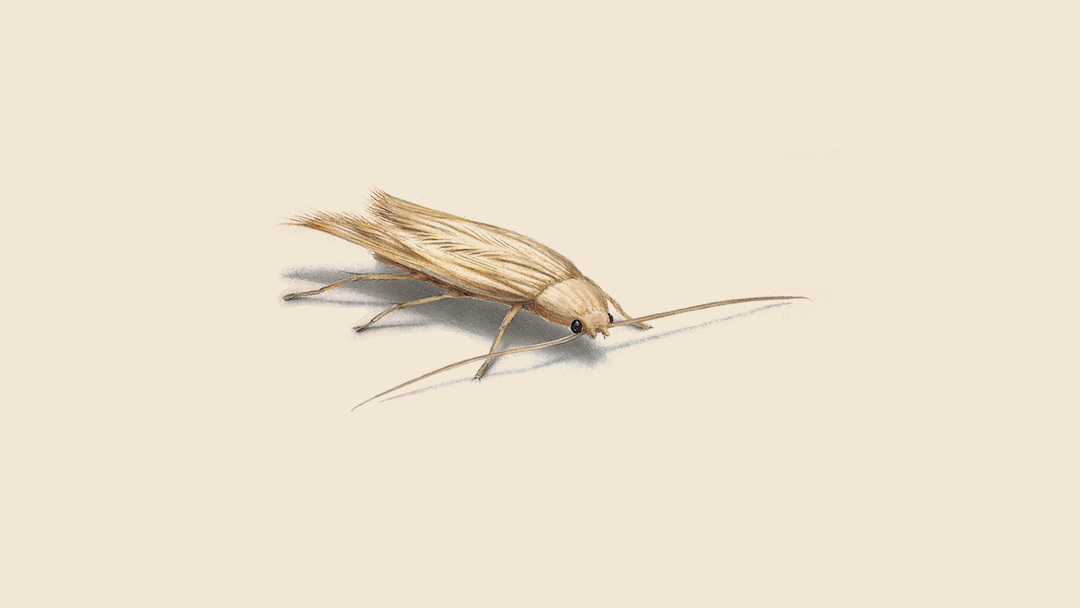
- Color: Casemaking clothes moths have brownish-gray wings with three dark spots. These spots can be rubbed off on older moths. Larvae are yellowish in color.
- Characteristics: Their wings are long and narrow. These moths build cases of silk particles that they drag about wherever they go to feed.
Diet
Adult male and female casemaking clothes moths, much like the webbing clothes moth , prefer to stay close to their source of food. These pests commonly feed on:
- Carpet
- Fur
- Furniture
- Hemp
- Silk
- Tea
- Tobacco
- Wool
Fabric Moths vs. Food Storage Moths
Homeowners often confuse fabric moths, such as the casemaking clothes moth, with food storage moths. Unlike most other species, casemaking clothes moths are not strong fliers and light does not attract them to living spaces. If the homeowner sees moths flying around lights or in well lit rooms, it is more likely to be food-infesting rather than a fabric moth.
While the casemaking clothes moth is less common, and far less economically important, than the webbing clothes moth , they can be a difficult insect to control in storage facilities.