Library Section
Moths
How to identify Moths Moths vary in size and appearance from species to species. For instance, the Indian meal moth is relatively small and measures around 9 mm in length, but has a wingspan reaching up to 16 mm. These …
At a glance
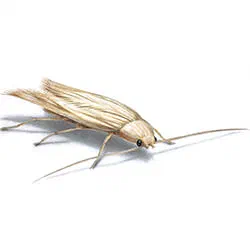
How to identify Moths
Moths vary in size and appearance from species to species. For instance, the Indian meal moth is relatively small and measures around 9 mm in length, but has a wingspan reaching up to 16 mm. These moths stand out from other pantry-pest species due to the reddish-brown or copper sheen on their forewings. Similarly, the webbing clothes moths have a buff or gold colouration, with reddish-gold hairs on the top of the head and around the wings. The fabric pests tend to range in size from 6 to 8 mm, with a wingspan extending as far as 12 mm. Casemaking clothes moths boast dark spots on their wings, which distinguishes the species from webbing clothes moths.
Signs of an infestation
Many adult non-pest moths feed on nectar and sap, but their larvae feed voraciously on stored foods or fabrics. Female moths lay their eggs directly on these food sources, so the larvae can begin feasting as soon as they hatch. Adult moths tend to live near their larvae. Because of this, Indian meal moths commonly live in food processing and handling facilities and homes. Meanwhile, casemaking clothes moths and webbing clothes moths live in homes, museums, and fabric handling facilities. Indian meal moth larvae will consume seeds, grains, cereals, dehydrated herbs, and dried pet food, while clothes moth larvae can eat through wool carpets and rugs, clothing, upholstered furniture, furs, and all sorts of synthetic and cotton blends. Note that clothes moth larvae focus on the cuffs and collars of apparel, the crevices of upholstered furniture, and the carpeted areas underneath home furnishings. The pests typically attack old, dirty, or stained items. In most cases, the larvae spend up to two months eating through the stored food or fabric, before pupating and emerging as adult moths 10 days later. They begin reproducing immediately.
Moths Removal
Use of appropriate pheromone traps can help with the detection and control of moths from homes and other structures. For pantry-invading species, exposure to extremely high or low temperatures will kill the developing larvae and stop the threat of infestation. Home cleaning agents, on the other hand, have proven to be less than effective. An appropriately labelled insecticide product may be used to control adult moth populations. It is important to read and follow label instructions for safety. For severe infestations, consult a pest management professional to control and eliminate the moth infestation.
How to prevent Moths from invading
Look for silk webbing left by the larvae, Store pantry items in airtight containers, Vacuum up spilled foods promptly, Dry clean clothes, Steam clean furniture, Use pheromone traps
Habitat, Diet, and Life Cycle
Habitat
Moths can be found throughout the Canadian provinces, but they tend to stay close to food sources. Adults live near their breeding sites as developing moths need a consistent food source to grow and mature. Species that feed on stored food products are commonly found in food processing and handling facilities as well as in homes. Meanwhile clothes moths often infest homes, museums, and fabric handling facilities.
Diet
Most species of moths feed on nectar and sap as adults. The larvae, often referred to as caterpillars, are the ones which inflict damage by attacking stored foods or fabrics. The stored-food pest species consume various common pantry items, including seeds, grains, cereals, dehydrated herbs, and dried pet food, while clothes moths can eat through wool carpets and rugs, clothing, upholstered furniture, furs, and all sorts of synthetic and cotton blends.
Life Cycle
Moths undergo complete metamorphosis where eggs are laid on suitable sources of food. The eggs hatch into larvae, commonly referred to as caterpillars, and they undergo a series of larval transformations before pupating and becoming adults. The length of development time is dependent on temperature, humidity, and diet. In most cases, it takes about one to two months or more depending on species. Before pupating, larvae molt up to 4 – 5 times depending on the temperature of the environment and the availability of food sources. Pupation lasts up to 10 days in warm weather but may continue for longer periods of time during the winter months. When adults finally emerge, they are sexually mature and begin the reproductive process anew.
Commonly Asked Questions
How worried should I be about moths?
Moth larvae can damage clothing, carpets, upholstered furniture, wall hangings, and even museum artifacts, and make pantry products unfit for consumption. Accidental ingestion of moth cocoons or larvae can cause gastrointestinal irritation and an upset stomach. These pests may also indicate the existence of an infestation problem where the product was manufactured or bought, causing granaries, warehouses, mills, and even retail establishments to lose business and profits over time. In the case of a home infestation, exposing stored foods to extremely high or low temperatures will kill the developing larvae and stop the threat of infestation. However, for larger or commercial infestations, you’ll need the help of professional pest control services.
Browse This Section
Every guide in Moths
Use these links to move quickly between closely related pages in the same section.
Almond Moth Facts & Information
What You Can Do The first step in eliminating almond moths is careful inspection. Empty the food storage areas and …
Angoumois Grain Moth Facts & Information
What You Can Do Angoumois grain moth prevention and control starts with a careful inspection to identify infested …
Armyworm Facts & Information
What You Can Do Here are some helpful things to do when combating armyworms: Inspect for spots of dead or unhealthy …
Bagworm Facts & Information
How to Inspect for Bagworms Bagworms might sound harmless, but these stealthy little critters can wreak havoc on your …
Buck Moth Facts & Information
Appearance The buck moth adult’s wingspan is about two to three inches. The front and hind wings are black with narrow …
Cabbage Looper Facts & Information
Appearance The adult cabbage looper moth wingspan is about 1 ½ inches long with gray-brown wings with a silver or white …
Cactus Moth Facts & Information
Appearance The cactus moth is grayish-brown in color with dark spots and wavy lines on its wings. The hindwings are …
Cankerworm Facts & Information
What You Can Do A non-chemical, but limited cankerworm control option available to homeowners is to place a band of …
Casemaking Clothes Moth Facts & Information
What You Can Do Controlling and preventing casemaking clothes moth infestations are very similar to what works for …
Coneworm Facts & Information
Appearance Various species of coneworm moths are very different in their appearance and host plant preferences, …
Eastern Tent Caterpillar Facts & Information
Appearance Adult moths are brown to tan in color. Their front wings have two white or yellowish lines that extend from …
Fall Webworm Facts & Information
Appearance Adult coloration varies from completely white to white with black spots. In general, fall webworms in the …
Forest Tent Caterpillar Facts & Information
Appearance Forest tent caterpillar adult moths are tan to white-yellow colored with brownish-colored bands on the moth’s …
Hemlock Woolly Adelgid Facts & Information
Appearance The hemlock woolly adelgid is tiny – 1.5-mm– and its color varies from dark reddish-brown to dark …
How to Identify and Control Spongy Moths
What You Can Do There are ways to manage a spongy moth infestation. If the population is small, the egg masses can be …
Indian Meal Moths
What attracts Indian meal moths In Canada and around the world, people find Indian meal moths lurking in stored food. …
Light Brown Apple Moth Facts & Information
Appearance Adults are typically yellow-brown in color. Females are slightly larger than males, with a wingspan of 7-13 …
Mediterranean Flour Moth Facts & Information
What You Can Do The first step in controlling Mediterranean flour moths is a careful inspection. Empty the kitchen …
Miller Moth Facts & Information
What You Can Do Against Miller Moths Light Management: Since miller moths are attracted to light, minimizing outdoor …
Moth Damage
Extreme Infestations Although homeowners seldom see moths around the house, it’s not because the pests aren’t there. …
Moth Identification
Moths and butterflies are often confused for one another. However, through close inspection, it can be easier to make …
Moth Larvae
What Are Moth Larvae? Before moths reach adulthood, they first develop into larvae. These small, caterpillar-like pests …
Moth Life Cycle
Although the life cycle of the moth can be relatively short, moths are capable of doing significant damage to fabrics …
Moth Prevention Tips
How Do They Get Inside the Home? The most common ways that moths get inside are by flying through an open door or window …
Moth Vs. Butterfly
Moth vs. Butterfly Many homeowners notice large, flying insects in and around their homes and wonder whether they are …
Pantry Moths
Telltale signs of pantry moth infestations include webbing along the corners of packages or on the product inside, flour …
Pink Bollworm Facts & Information
Appearance Adult pink bollworms are small and grayish-brown in color with folded wings and a slender body. Young larvae …
Spongy Moths (Formerly Gypsy Moths)
Where do Spongy Moths live? Spongy moth egg masses can be found almost everywhere on outdoor surfaces. Their pupae can …
Webbing Clothes Moth Facts & Information
What You Can Do A variety of methods may be employed to eliminate these clothes moths, although prevention is the best …
What is a Cocoon?
A cocoon is a protective envelope that insect larvae use to develop into their pupal stage. The cocoon also serves to …
Where Do Moths Come From?
Moth Illustration What Attracts Moths to Homes? The two main types of moths that infest homes are webbing and casemaking …