Mites Guide
Dust Mite Facts & Information
What You Can Do Seeking the assistance of a professional who has experience and success in dust mite control is always the best bet. However, in an effort to reduce dust mite populations, homeowners are encouraged to:
At a glance
What You Can Do
Seeking the assistance of a professional who has experience and success in dust mite control is always the best bet. However, in an effort to reduce dust mite populations, homeowners are encouraged to:
- Reduce and keep the relative humidity in your house below 60-70 percent and the interior temperature as cool as possible. Dust mites are very susceptible to the environmental factors of low humidity and cool temperatures.
- Encase mattresses, box springs, and upholstered furniture in mite-proof coverings . Also, it might be helpful to remove carpets and replace them with wood or tile flooring.
- Use drapes and other household fabrics that can be washed frequently.
- Ensure your household vacuum has a HEPA filter.
- Use HEPA filters in the home’s ventilation system.
What do dust mites look like?
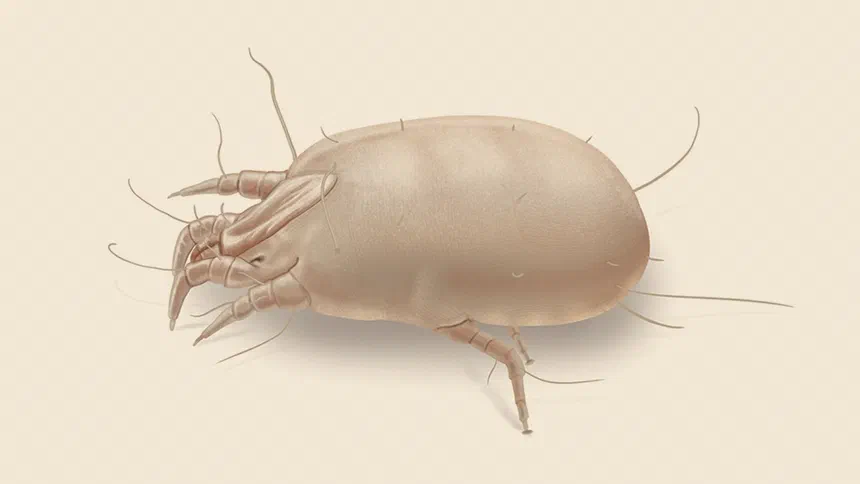
- Body: Their body is globular shaped and has a light or whitish color.
- Legs: Dust mites have eight legs.
- Size: House dust mite adults are about 500 microns long, and the immature stages are even smaller, which means they can be seen only by using a microscope .
What do dust mites eat?
House dust mites are very different than many species of mites that are blood feeders. Since these mites are microscopic they don’t eat much. The sources of foods needed to energize them and sustain life include:
- Animal dander shed by pets
- Pollen particles
- Skin shed by people during their sleep or everyday activities
Where do dust mites live?
The common habitat for house dust mites is dust that occurs throughout the home found in:
- Beds
- Carpeting
- Curtains
- Fabric covered furniture
- Pillows
Dust Mite Life Cycle
The dust mite life cycle consists of four developmental stages:
- Egg
- Larva
- Nymph
- Adult
How long do dust mites live?
While the time needed to complete their life cycle varies depending upon temperature and humidity, it generally takes about three to four months. Depending upon the favorability of their habitat , adult mites will live about one month.