Mammals Guide
Common Vampire Bat
What Is a Common Vampire Bat? The common vampire bat (Desmodus rotundus) is a small, leaf-nosed bat native to the warm regions of the Americas. It is one of only three bat species in the world that feed exclusively on …
At a glance
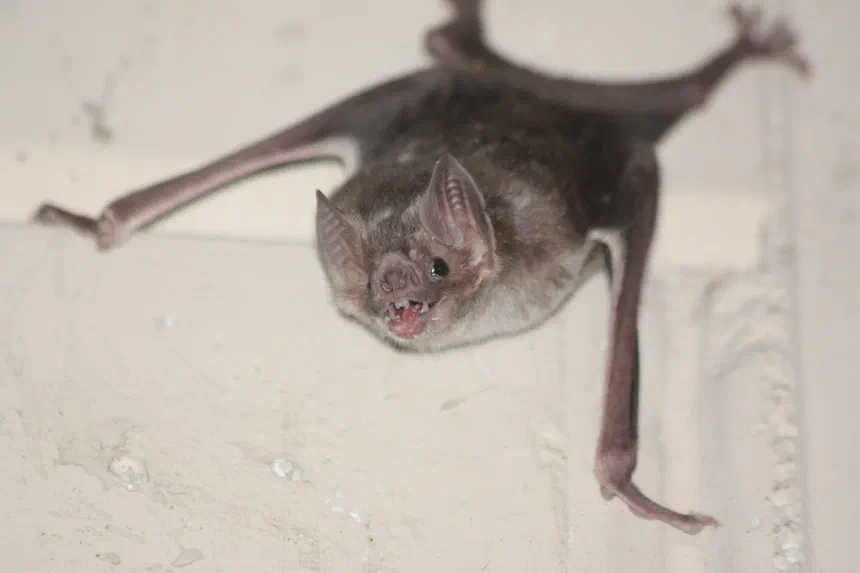
Image: Gerry Carter — CC BY-SA 4.0 · source
What Is a Common Vampire Bat?
The common vampire bat (Desmodus rotundus) is a small, leaf-nosed bat native to the warm regions of the Americas. It is one of only three bat species in the world that feed exclusively on blood, a diet known as sanguivory. Despite its fearsome reputation, it is a highly social animal with some of the most cooperative behavior known among mammals.
Appearance and Identification
This bat has a compact body covered in short, grayish-brown fur that is usually paler on the belly. It has a distinctive flattened, cone-shaped nose rather than the elaborate nose-leaf seen in many related bats, along with small ears and large, sharp incisor and canine teeth. Its thumbs are unusually long and strong, which helps it walk, hop, and launch into flight from the ground. Adults typically measure about 7 to 9 centimeters in body length, with a wingspan of roughly 35 to 40 centimeters, and weigh between about 25 and 45 grams depending on how recently they have fed.
Habitat and Range
Common vampire bats live across a broad swath of the American tropics and subtropics, from northern Mexico south through Central America and into much of South America as far as northern Argentina and Chile. They roost in dark, sheltered spaces such as caves, hollow trees, mine shafts, and abandoned buildings. Roost sites are often shared with other bat species and may hold anywhere from a handful of individuals to colonies numbering in the hundreds. Warm climates are essential, as these bats do not tolerate cold well.
Diet
The common vampire bat feeds solely on blood, most often from livestock such as cattle, horses, and pigs, though wild mammals are also targeted. Using heat-sensing pits around its nose, the bat locates spots where blood flows close to the skin. It makes a small, painless incision with its razor-sharp teeth and laps up the blood as it flows. A specialized anticoagulant in its saliva, sometimes called draculin, keeps the wound from clotting. A feeding bat consumes a modest amount of blood over several minutes and rarely harms the host directly, though bites can transmit disease, including rabies.
Behavior
These bats are nocturnal, emerging after dark to forage and returning to communal roosts by dawn. They are remarkably agile on the ground, able to run and jump in a way that is unusual among bats. Vampire bats are also famous for food sharing: a bat that has fed well will often regurgitate blood to a hungry roost-mate, especially a relative or a familiar partner. This reciprocal sharing helps individuals survive the occasional night without a meal, since a vampire bat can starve if it fails to feed for just a couple of days.
Life Cycle and Reproduction
Females usually give birth to a single pup after a gestation period of around seven months, and breeding can occur throughout the year. Newborns are nursed for several months, longer than in many bats, and mothers may continue to provision young with regurgitated blood as they are weaned. Females often remain in the same social group for life, forming stable bonds, while males are more likely to disperse. In the wild, common vampire bats commonly live around 9 to 12 years, and some individuals reach even greater ages.
Conservation Status
The common vampire bat is listed as Least Concern by the IUCN. It is widespread, adaptable, and has arguably benefited from the spread of livestock ranching, which provides an abundant food source. In some areas it is considered a pest because of its role in transmitting rabies to cattle, and control programs are used to limit its numbers. Overall, however, the species faces no significant threat to its survival.
Frequently Asked Questions
Do common vampire bats attack humans? They very rarely bite people and strongly prefer livestock and other animals. Bites are uncommon and, while a rabies risk exists, direct harm to humans is minimal.
How much blood does a vampire bat drink? A single bat drinks only a small quantity, roughly a tablespoon, over a feeding session lasting several minutes, so healthy hosts are seldom seriously affected.
Why do vampire bats share food? A vampire bat can starve after only a night or two without feeding, so well-fed bats regurgitate blood to hungry roost-mates, a cooperative behavior that improves survival for the whole group.
References
The conservation status and key facts in this profile are supported by these sources:
- Animal Diversity Web — Desmodus rotundus (accessed 2026-07-29)
- GBIF — Desmodus rotundus (accessed 2026-07-29)
Found an error, source problem, or image concern? Report this page.