Mammals Guide
Japanese Macaque
What Is a Japanese Macaque? The Japanese macaque (Macaca fuscata), also known as the snow monkey, is a stocky Old World monkey native only to Japan. It is famous as the northernmost-living non-human primate on Earth, …
At a glance
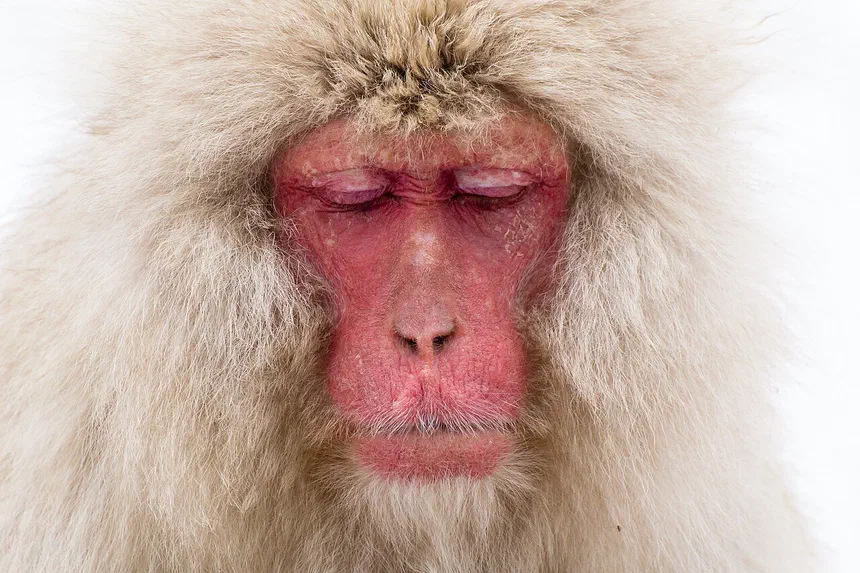
Image: Daisuke tashiro — CC BY-SA 2.0 · source
What Is a Japanese Macaque?
The Japanese macaque (Macaca fuscata), also known as the snow monkey, is a stocky Old World monkey native only to Japan. It is famous as the northernmost-living non-human primate on Earth, surviving cold, snowy winters that few other monkeys could endure.
Appearance and Identification
The Japanese macaque has a robust, thickset body covered in dense brown-gray to buff fur that grows longer and shaggier in winter to insulate against the cold. Its most striking features are its bare crimson-red face and matching red rump, both of which flush a deeper color during the breeding season and periods of excitement. The tail is short and stubby, unlike the long tails of many tropical monkeys, which helps limit heat loss. Males are noticeably larger and heavier than females, and both sexes have expandable cheek pouches used to carry food while foraging. Its expressive face and forward-facing eyes give it keen depth perception for moving through the forest canopy.
Habitat and Range
This species is found across three of Japan’s four main islands, Honshu, Shikoku, and Kyushu, as well as the small southern island of Yakushima. It occupies a remarkable variety of environments, from warm subtropical lowland forests in the south to cold, snow-covered highland forests in the north. Northern populations, such as those in the Japanese Alps, live in areas buried under deep snow for months at a time. Some troops have become internationally famous for bathing in natural volcanic hot springs to keep warm, a behavior seen at sites like Jigokudani in Nagano.
Diet
The Japanese macaque is a flexible omnivore whose diet shifts with the seasons and local conditions. It feeds heavily on fruits, seeds, nuts, young leaves, flowers, bark, buds, and fungi, and supplements this plant matter with insects, bird eggs, and occasionally small animals or shellfish along the coast. In the harsh winter months, when fruit is scarce, northern troops rely on bark, winter buds, and dormant plants. Cheek pouches let a monkey gather food quickly and store it to chew later in a safer spot.
Behavior
Japanese macaques are highly social and live in troops that can range from a couple of dozen to well over a hundred individuals. Troops are organized around a matriline of related females that remain in their birth group for life, while males typically leave and move between troops as they mature. Rank is inherited through the female line and strongly influences access to food and resources. These monkeys are intelligent and known for cultural behaviors passed between generations, including the celebrated example of a population that learned to wash sweet potatoes in water before eating them. Grooming is a central social activity that maintains bonds and reinforces the troop hierarchy.
Life Cycle and Reproduction
Breeding is seasonal, generally peaking in the fall and winter, with a single infant born after a gestation of roughly five and a half to six months. Newborns cling to their mother’s belly and later ride on her back, and they nurse for around a year. Young females stay within their mother’s troop and inherit her social rank, while young males eventually disperse. Infants are cared for primarily by the mother, though other female relatives may help. In the wild, Japanese macaques often live into their twenties, with females tending to outlive males.
Conservation Status
The Japanese macaque is listed as Least Concern by the IUCN, as it remains widespread across Japan and adapts well to varied habitats. However, populations face pressure from habitat loss, expanding human development, and conflict with farmers, since troops sometimes raid crops and are culled or trapped as a result. Local declines and the isolation of some troops remain concerns, and the small Yakushima population is recognized as a distinct subspecies of conservation interest. Overall, the species is not currently considered at risk of extinction.
Frequently Asked Questions
Why do Japanese macaques bathe in hot springs? Some northern troops soak in volcanic hot springs to stay warm during freezing, snowy winters. The behavior appears to have been learned and then passed down through the troop.
Are Japanese macaques the only monkeys that live in snow? They are the northernmost non-human primates in the world and routinely endure deep snow, earning the nickname “snow monkey,” though a few other primates also tolerate cold climates.
How smart are Japanese macaques? They are highly intelligent and show culturally transmitted behaviors, such as washing food and handling stones, that are learned socially and spread within and between generations.