Mammals Guide
Isard
What Is a Isard? The isard (Rupicapra pyrenaica), also known as the Pyrenean chamois, is a nimble goat-antelope native to the mountain ranges of southwestern Europe. Closely related to the Alpine chamois, it is one of …
At a glance
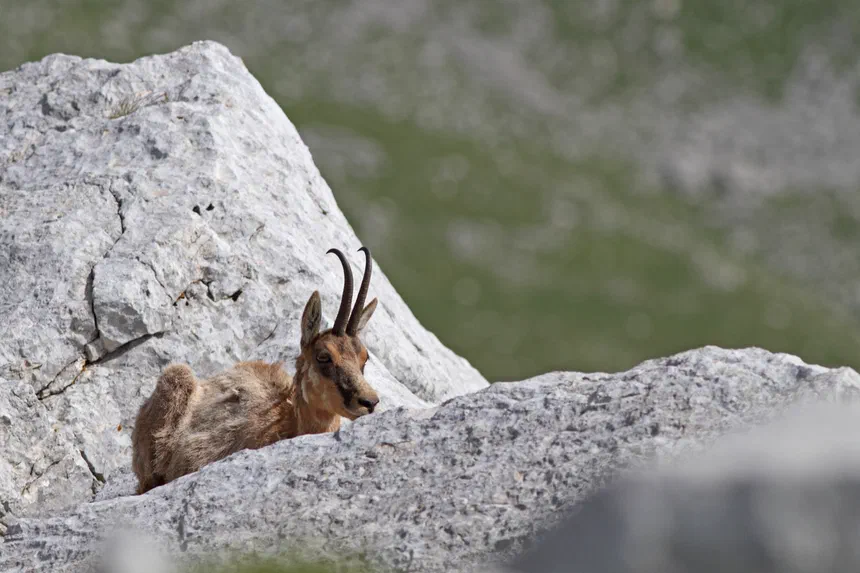
What Is a Isard?
The isard (Rupicapra pyrenaica), also known as the Pyrenean chamois, is a nimble goat-antelope native to the mountain ranges of southwestern Europe. Closely related to the Alpine chamois, it is one of the most characteristic large mammals of the high Pyrenees. Compact, surefooted, and highly adapted to steep terrain, the isard thrives where few other hoofed animals can move with ease.
Appearance and Identification
Isards are medium-sized bovids with a slender build well suited to climbing. In summer their coat is a warm tawny to reddish brown, turning much darker, often nearly black, in winter, when a pale throat, shoulder stripe, and rump patch stand out against the darker body. A dark stripe runs from the muzzle through each eye, giving the face a masked appearance. Both sexes carry short, slender horns that rise almost vertically before hooking sharply backward at the tips. Adults stand roughly 70 to 80 centimeters at the shoulder and weigh somewhere between 20 and 40 kilograms, with males typically a bit heavier than females. Their broad, cushioned hooves grip rock and packed snow, making them exceptionally agile on cliffs and scree.
Habitat and Range
The isard is a mountain specialist. Its stronghold is the Pyrenees along the border of France, Spain, and Andorra, but distinct populations also occur in the Cantabrian Mountains of northern Spain and in the Apennine range of central Italy, where the Apennine form is sometimes treated as a separate subspecies. Isards favor a mix of alpine and subalpine environments: open grassy meadows above the tree line in the warmer months, and steep forested slopes at lower elevations during winter, when deep snow pushes them downhill in search of accessible forage and shelter.
Diet
Isards are strict herbivores and browse or graze depending on the season. In spring and summer they feed heavily on fresh grasses, alpine herbs, and flowering plants across high meadows, taking advantage of the brief but rich growing season. As autumn arrives and snow covers the high pastures, their diet shifts toward tougher fare, including lichens, mosses, buds, twigs, and the shoots of shrubs and conifers. This flexibility helps them survive long, harsh winters at altitude.
Behavior
Isards are social animals for much of the year. Females, kids, and young males gather in loose herds, while mature males tend to live alone or in small bachelor groups outside the breeding season. They are most active in the cooler hours of morning and late afternoon, resting on rocky ledges during the heat of midday. Alert and wary, isards rely on sharp eyesight and a keen sense of smell to detect danger, and they can flee across near-vertical rock at remarkable speed. When alarmed, an animal may give a sharp whistling snort and stamp a foot to warn the rest of the group before bounding away.
Life Cycle and Reproduction
The breeding season, or rut, takes place in late autumn, generally from November into early December. During this period males compete for access to females, chasing rivals across the slopes and occasionally clashing. After a gestation of around six months, females give birth in late spring to a single kid, rarely twins, timed to coincide with the flush of new plant growth. Kids are active within hours of birth and follow their mothers closely across the rocks. They are weaned over the summer but often remain with the maternal group into their second year. Isards typically live around 15 to 20 years in the wild.
Conservation Status
The isard is currently classified as Least Concern by the IUCN, and overall numbers are considered stable across its range. This is a marked recovery from earlier centuries, when overhunting drove some populations to very low levels. Regulated hunting, protected areas, and reintroduction efforts have allowed herds to rebound. Localized threats remain, however, including disease outbreaks such as pestivirus, which has caused sharp die-offs in parts of the Pyrenees, as well as competition with livestock and the pressures of a warming mountain climate.
Frequently Asked Questions
Is the isard the same as a chamois? It is a close relative. The isard, or Pyrenean chamois, belongs to the same genus as the more widespread Alpine chamois but is a distinct species, generally smaller and with somewhat different coat markings.
Where can isards be seen in the wild? They are most easily observed in the high Pyrenees of France, Spain, and Andorra, with additional populations in the Cantabrian Mountains and the central Apennines of Italy.
Are isards good climbers? Yes. Their cushioned, wide-splaying hooves and light, muscular build let them move confidently across cliffs, scree, and snowfields that would be impassable to most other large mammals.