Mammals Guide
Indian Wolf
What Is a Indian Wolf? The Indian wolf (Canis lupus pallipes) is a small, lean subspecies of the gray wolf native to the open landscapes of the Indian subcontinent and parts of southwest Asia. Adapted to hot, arid …
At a glance
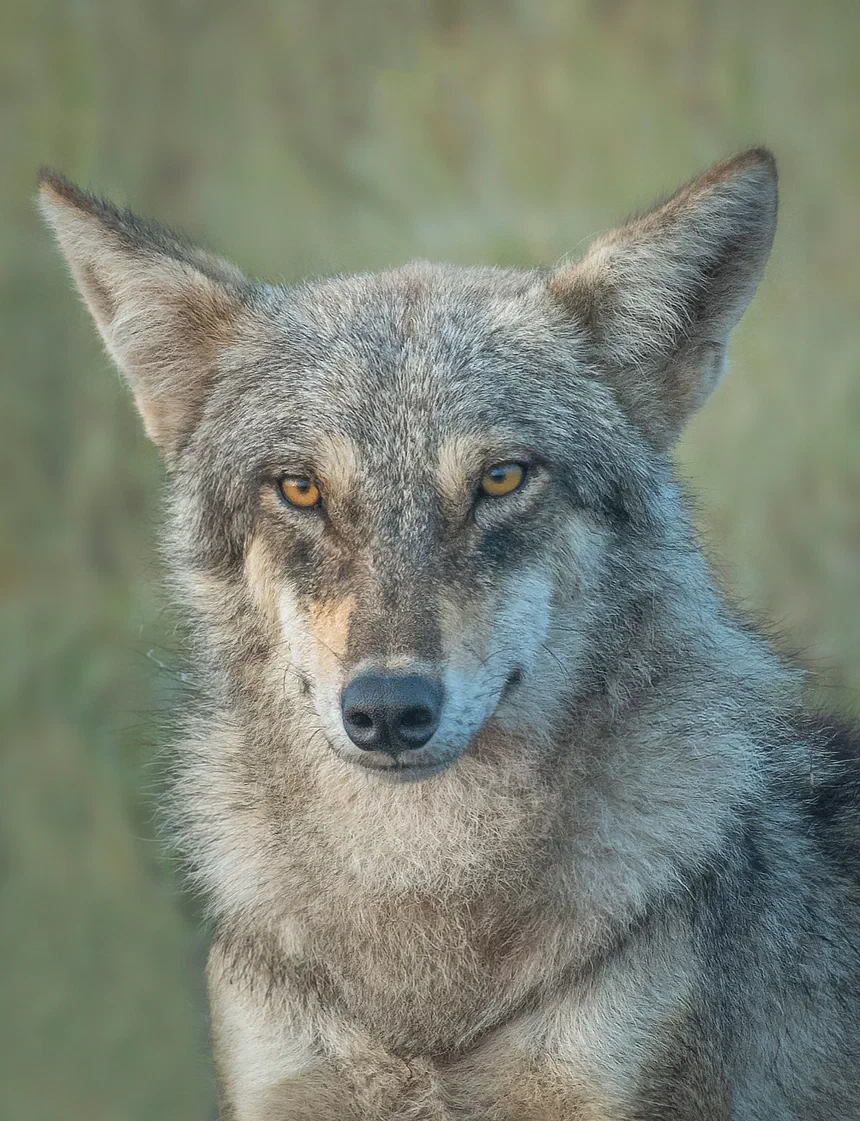
Image: Rushikesh Deshmukh DOP — CC BY-SA 4.0 · source
What Is a Indian Wolf?
The Indian wolf (Canis lupus pallipes) is a small, lean subspecies of the gray wolf native to the open landscapes of the Indian subcontinent and parts of southwest Asia. Adapted to hot, arid country, it is noticeably smaller and shorter-coated than the wolves of colder northern regions. Recent genetic studies suggest the Indian wolf represents one of the most ancient surviving wolf lineages.
Appearance and Identification
This is one of the smaller wolves, built for endurance rather than bulk. Its coat is short and typically sandy gray to reddish-buff, often peppered with black-tipped guard hairs along the back, which helps it blend into dry grassland and scrub. The underparts are paler, and the winter coat is far thinner than that of temperate wolves. With long legs, a narrow muzzle, and large upright ears, an Indian wolf can superficially resemble a large jackal, though it is taller and more powerfully proportioned. Adults generally stand around 60-75 cm at the shoulder and weigh roughly 18-27 kg, with males slightly larger than females.
Habitat and Range
The Indian wolf favors open habitats rather than dense forest. It ranges across scrublands, semi-arid grasslands, agricultural plains, and rocky ravines, from peninsular India northwest through Pakistan and into Iran and the Arabian region. Much of its Indian range overlaps with human-dominated countryside, where it persists in pockets of uncultivated land, protected grasslands, and around villages. This close proximity to people shapes much of its ecology and its conservation challenges.
Diet
As a carnivore, the Indian wolf is an adaptable hunter of small and medium prey. Its diet leans heavily on rodents, hares, rats, and ground-nesting birds, supplemented by antelope such as blackbuck and Indian gazelle (chinkara) where these remain. In agricultural areas it also takes livestock, especially goats and sheep, and will scavenge carcasses. Packs are generally small, and much hunting is done by individuals or pairs targeting the smaller prey that dominate its landscape.
Behavior
Indian wolves live in smaller packs than their northern relatives, often just a breeding pair with their most recent offspring, reflecting the modest size of available prey. They are most active around dawn, dusk, and through the night, resting through the heat of the day in burrows, ravines, or shaded cover. Communication relies on scent marking, body language, and howling, though they are often more secretive and less vocal than wolves elsewhere, likely a response to living alongside dense human populations. Territories are defended against neighboring packs.
Life Cycle and Reproduction
Typically only the dominant pair in a pack breeds. After a gestation of about two months, the female gives birth to a litter usually numbering three to six pups, often in a dug den or a sheltered crevice. Pups are born blind and helpless and depend entirely on the adults, who bring food and guard the den. Other pack members may help provision and protect the young. Juveniles begin accompanying adults as they mature and may disperse to seek their own territories, while some remain to help raise the next litter.
Conservation Status
The gray wolf as a species is listed by the IUCN as Least Concern, but the Indian wolf population is small, fragmented, and of significant conservation concern. In India it receives legal protection, yet it faces steady pressure from habitat loss as grasslands are converted to farmland, from retaliatory killing over livestock predation, from road collisions, and from disease and hybridization with free-ranging dogs. Because it depends on open, often unprotected land rather than reserves, safeguarding its remaining grassland habitat is central to its long-term survival.
Frequently Asked Questions
Is the Indian wolf a separate species? No. It is a subspecies of the gray wolf, Canis lupus pallipes, though its ancient lineage has prompted debate about its distinct status.
How is it different from other gray wolves? It is smaller, leaner, and shorter-coated, adapted to hot, dry climates rather than cold northern forests, and lives in smaller packs.
Are Indian wolves dangerous to people? Attacks on humans are rare and usually tied to unusual circumstances. Most conflict with people arises from predation on livestock.