Mammals Guide
Indian Rhinoceros
What Is a Indian Rhinoceros? The Indian rhinoceros (Rhinoceros unicornis), also called the greater one-horned rhinoceros, is a massive grazing mammal native to the floodplains of the Indian subcontinent. It is one of the …
At a glance
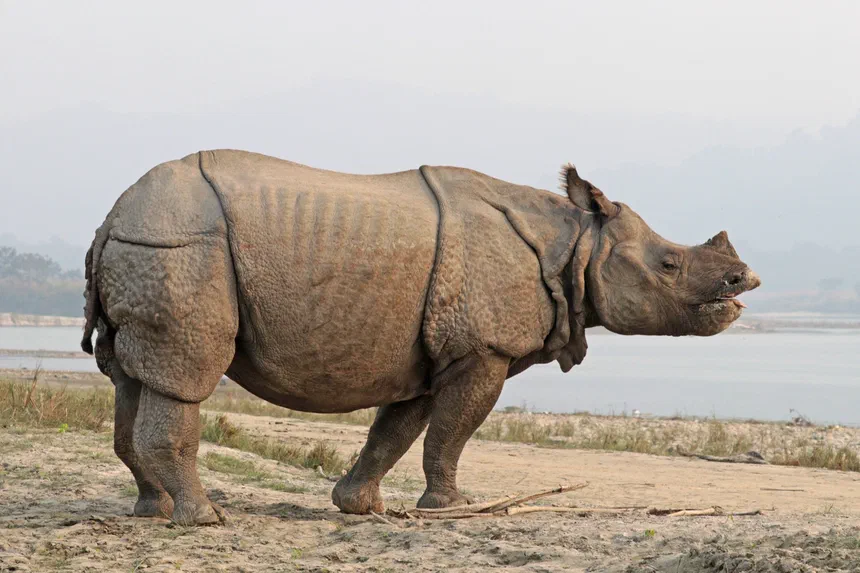
Image: Charles J. Sharp — CC BY-SA 4.0 · source
What Is a Indian Rhinoceros?
The Indian rhinoceros (Rhinoceros unicornis), also called the greater one-horned rhinoceros, is a massive grazing mammal native to the floodplains of the Indian subcontinent. It is one of the largest living rhino species and is instantly recognizable by its single horn and its heavily folded, armor-like skin. Once widespread across the region, it now survives mainly in protected reserves.
Appearance and Identification
This rhino’s most striking feature is its thick, gray-brown hide, which hangs in deep folds and is studded with bumps, giving it the appearance of riveted plates of armor. Unlike African rhinos, it carries only a single horn, made of keratin, which typically measures around 20–60 cm. Adults stand roughly 1.7–2 m at the shoulder, reach 3–3.8 m in body length, and weigh between about 1,800 and 2,700 kg, with males generally heavier than females. Despite their bulk, they have a large upper lip that is somewhat prehensile, useful for gathering vegetation.
Habitat and Range
Indian rhinos favor tall alluvial grasslands, riverine forests, and swampy floodplains fed by seasonal flooding. These wetland-and-grassland mosaics provide both abundant food and the water and mud wallows the animals depend on. Historically the species ranged across the northern Indian subcontinent along the Indus, Ganges, and Brahmaputra river systems. Today the population is concentrated in a handful of protected areas in northeastern India, especially Assam, and in the lowland Terai of southern Nepal.
Diet
As a herbivore, the Indian rhinoceros grazes primarily on grasses, which make up the bulk of its diet, but it also browses on leaves, shrubs, aquatic plants, fruit, and cultivated crops when reserves border farmland. It feeds most actively in the cooler hours of morning and evening. The semi-prehensile upper lip helps it grasp tall grasses, and it may fold the lip out of the way to crop shorter vegetation close to the ground.
Behavior
Indian rhinos are largely solitary, though loose gatherings form at wallows, grazing areas, and mineral licks. Males hold overlapping home ranges and can be aggressive toward one another, sometimes engaging in serious fights using their sharp lower incisors rather than the horn. These rhinos are strong swimmers and readily cross rivers. They spend much of the hot part of the day wallowing in water or mud, which cools them and helps control parasites and biting insects. Though they have poor eyesight, their hearing and sense of smell are keen.
Life Cycle and Reproduction
Females typically become reproductive in their earlier years of adulthood, while males mature somewhat later once large enough to compete. After a gestation of roughly 15–16 months, a female gives birth to a single calf. Newborns weigh in the range of tens of kilograms and stay closely with their mother, nursing for about a year and remaining with her until she is ready to breed again. Calving intervals are long, generally around three years, which limits how quickly populations can recover.
Conservation Status
The Indian rhinoceros is listed as Vulnerable by the IUCN. Intensive hunting and widespread loss of its grassland habitat had reduced numbers to a few hundred animals by the early twentieth century. Decades of strict protection, anti-poaching efforts, and habitat management in parks such as Kaziranga and Chitwan have driven a strong recovery, and the total population now numbers in the low thousands. Poaching for the horn and the concentration of most animals in a few sites remain ongoing threats.
Frequently Asked Questions
How many horns does an Indian rhinoceros have? Just one. The single horn distinguishes it from African white and black rhinos, which each carry two.
Are Indian rhinos dangerous to people? They are usually not aggressive, but their size, poor vision, and readiness to charge when startled mean they can be dangerous at close range.
How is the species doing today? After nearing extinction a century ago, careful protection has raised numbers to several thousand, though it remains classified as Vulnerable and dependent on continued conservation.