Mammals Guide
Iberian Lynx
What Is a Iberian Lynx? The Iberian lynx (Lynx pardinus) is a medium-sized wild cat found only on the Iberian Peninsula of southwestern Europe. Once teetering on the brink of extinction, it has become one of …
At a glance
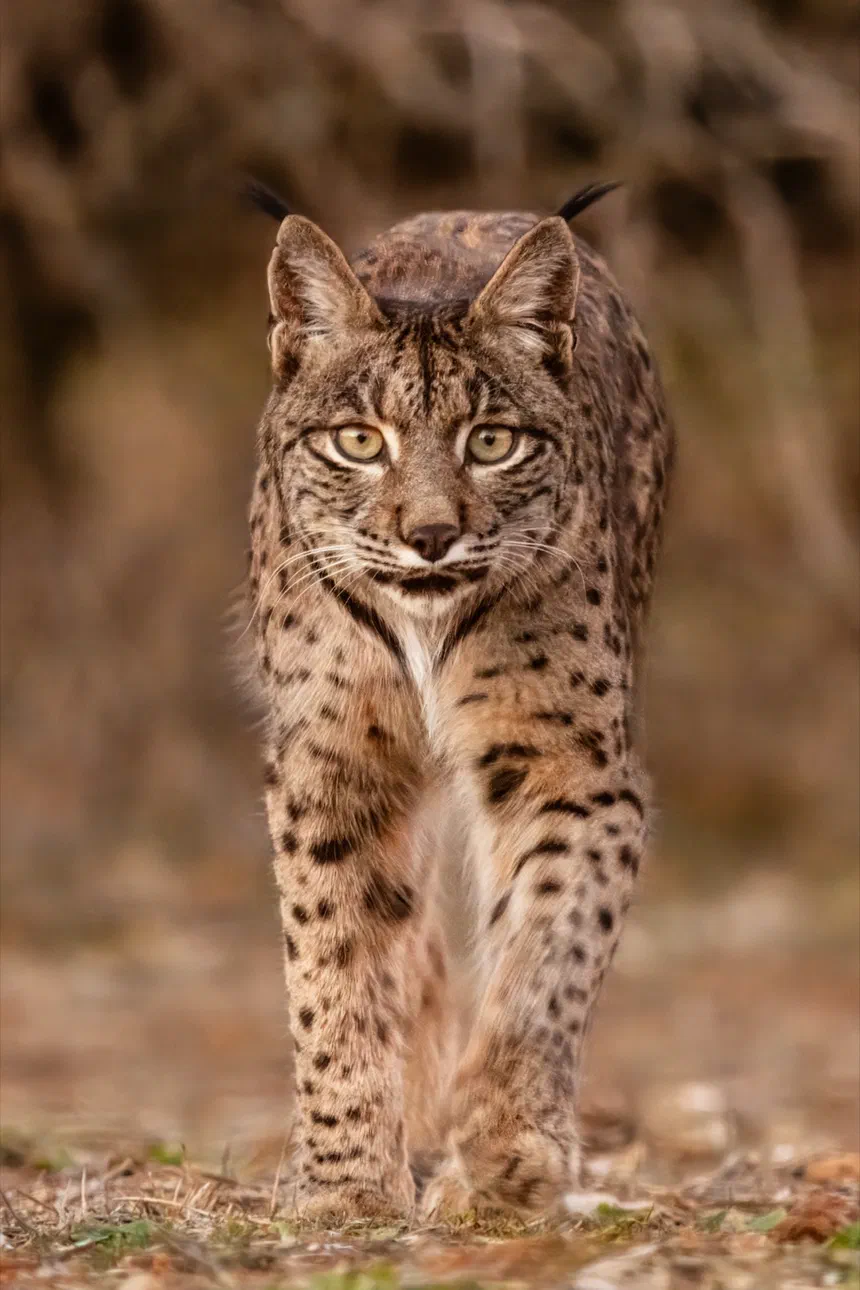
Image: Diego Delso — CC BY-SA 4.0 · source
What Is a Iberian Lynx?
The Iberian lynx (Lynx pardinus) is a medium-sized wild cat found only on the Iberian Peninsula of southwestern Europe. Once teetering on the brink of extinction, it has become one of conservation’s most closely watched species. It is a specialized hunter, tied closely to the fortunes of a single prey animal: the European rabbit.
Appearance and Identification
The Iberian lynx has the classic lynx silhouette—long legs, a short, black-tipped tail, and prominent tufts of black hair rising from the tips of its ears. Its coat is tawny to grayish, marked with dark spots that vary from small speckles to bold blotches depending on the individual. A distinctive ruff of longer fur frames the face like a set of side whiskers. It is noticeably smaller than the Eurasian lynx, with adults typically weighing 20–30 pounds (9–13 kilograms) and measuring about 3 to 3.4 feet (85–110 centimeters) in body length. Males are generally larger than females.
Habitat and Range
This cat is native to the Mediterranean landscapes of southern Spain and Portugal. It favors a mosaic of dense scrubland (known as matorral), open pasture, and scattered woodland, which provides both cover for stalking and open ground where rabbits forage. Historically the species ranged widely across the Iberian Peninsula, but habitat loss, road building, and declining prey fragmented its populations into a few isolated pockets. Strongholds such as the Doñana and Sierra Morena regions of Spain have anchored its recovery, and reintroduction efforts have since re-established populations in additional areas.
Diet
The Iberian lynx is a highly specialized predator, and the European rabbit makes up the large majority of its diet—often around three-quarters or more. This dependence is a double-edged sword: when rabbit numbers crash from disease such as myxomatosis or rabbit hemorrhagic disease, lynx populations suffer badly. When rabbits are scarce, the cat will take other prey, including young deer, ducks, partridges, and rodents, but it never thrives on these alternatives the way it does on rabbits.
Behavior
Iberian lynxes are solitary and largely territorial, with adults maintaining home ranges that they mark with scent and patrol regularly. They are most active around dawn and dusk, hunting by stealth—creeping close to prey before a short, explosive pounce rather than a long chase. Individuals communicate through scent marking and occasional vocalizations, and territory sizes shift with the local abundance of rabbits. Outside of breeding and the period when a mother raises her young, these cats spend most of their lives alone.
Life Cycle and Reproduction
Breeding generally takes place in winter, with females giving birth in spring after a gestation of roughly two months. Litters usually contain two or three kittens, which are born in a sheltered den—often a hollow tree, thicket, or rock cavity. The young nurse for several weeks and remain dependent on their mother for the better part of a year before dispersing to find their own territories. Sibling aggression among kittens can be intense in the first months of life. Females typically reach breeding age at around two to three years.
Conservation Status
The Iberian lynx is often cited as one of the great conservation success stories of recent decades. At the start of the 2000s, fewer than 100 individuals were thought to remain, and the species was classified as Critically Endangered. Coordinated action—captive breeding, reintroductions, habitat restoration, rabbit population management, and measures to reduce road deaths—drove a steady recovery. The IUCN has since downgraded its status to Vulnerable, reflecting a population that now numbers in the hundreds to low thousands. Continued threats include road collisions, disease outbreaks in rabbits, and habitat fragmentation, so ongoing management remains essential.
Frequently Asked Questions
Is the Iberian lynx still endangered? It is no longer classified as Critically Endangered. Thanks to intensive conservation work, the IUCN now lists it as Vulnerable, though it still depends heavily on active protection.
What does the Iberian lynx eat? Its diet is dominated by European rabbits, which can make up three-quarters or more of what it eats. It turns to birds, rodents, and young deer only when rabbits are scarce.
Where can the Iberian lynx be found? It lives only on the Iberian Peninsula, in parts of southern Spain and Portugal, favoring Mediterranean scrubland and woodland habitats.