Mammals Guide
Golden Hamster
What Is a Golden Hamster? The golden hamster (Mesocricetus auratus), also called the Syrian hamster, is a small, stout-bodied rodent native to a limited region of the Middle East. It is best known worldwide as a popular …
At a glance
What Is a Golden Hamster?
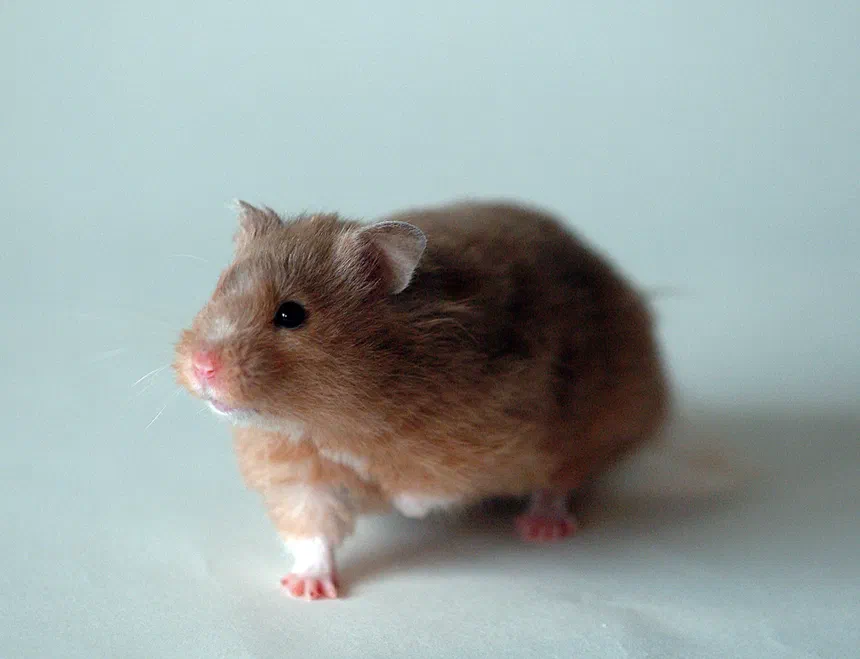
The golden hamster (Mesocricetus auratus), also called the Syrian hamster, is a small, stout-bodied rodent native to a limited region of the Middle East. It is best known worldwide as a popular pet and laboratory animal, though its wild population is far more restricted and secretive than its household fame suggests.
Appearance and Identification
Golden hamsters are compact, round-bodied rodents with short legs, small ears, and a very short, barely visible tail. Wild individuals typically wear a warm golden-brown coat over the back and sides, fading to a paler cream or white on the belly, often with darker markings on the cheeks and chest. Adults generally measure about 5 to 7 inches (13 to 18 cm) in body length and weigh roughly 3.5 to 6 ounces (100 to 170 g), with females often slightly larger than males. A hallmark feature is the pair of large internal cheek pouches, which extend back toward the shoulders and allow the animal to carry surprising quantities of food. Domesticated hamsters come in many colors and coat lengths, but the wild form remains fairly uniform in its golden appearance.
Habitat and Range
In the wild, the golden hamster occupies a small area of arid and semi-arid country in northern Syria and adjacent parts of southern Turkey. It favors dry steppe, cultivated fields, and rocky scrub where the soil is suitable for digging. Rather than roaming open ground, it lives in self-excavated burrow systems that provide shelter from temperature extremes and predators. These burrows include separate chambers for nesting and for storing hoarded food, and they can reach well below the surface.
Diet
The species is essentially omnivorous, though plant matter dominates its diet. Wild hamsters feed heavily on seeds, grains, nuts, and various green plant parts, supplementing this with insects and other small invertebrates when available. Their cheek pouches are central to their feeding strategy: an individual will gather far more food than it can eat in one sitting, transport it back to the burrow, and stockpile it in underground larders. This hoarding behavior helps the animal survive periods when food is scarce.
Behavior
Golden hamsters are largely solitary and strongly territorial, defending their burrows and generally tolerating other adults only briefly during the breeding season. They are most active around dusk and during the night, spending the hot daylight hours underground. Solitary by nature, they rely on scent and vocalizations to communicate and to keep rivals at a distance. Their well-known habit of stuffing food into their cheeks and their industrious digging both reflect adaptations to a harsh, unpredictable environment.
Life Cycle and Reproduction
Golden hamsters are prolific breeders. Females come into heat frequently during the breeding season and, after a short gestation of roughly 16 days, give birth to a litter that commonly numbers around 6 to 12 pups, though litters can be larger. The young are born blind, hairless, and helpless, developing quickly over the following weeks. They are weaned at around three to four weeks and can reach reproductive maturity within a couple of months. In the wild, few individuals live beyond two to three years, and mortality is high, but their rapid reproduction helps sustain the population.
Conservation Status
The golden hamster is listed as Vulnerable on the IUCN Red List. Its wild range is small and fragmented, and it faces pressure from habitat loss as land is converted to agriculture and development. Ironically, while wild numbers are of conservation concern, the species is one of the most abundant small mammals in captivity worldwide, descended in large part from a small founder population collected in the 1930s.
Frequently Asked Questions
Are pet hamsters the same as wild golden hamsters? Yes. Domestic golden (Syrian) hamsters are the same species as the wild animal, though most descend from a very small captive-bred founder stock and have been selectively bred for varied colors and coat types.
Why do hamsters stuff food into their cheeks? Their expandable cheek pouches let them carry large amounts of food back to the burrow, where it is stored for later. This hoarding is an adaptation to an environment where food supply can be unreliable.
Are golden hamsters social animals? No. In the wild they are solitary and territorial, usually coming together only briefly to mate. Adults kept together often fight.