Mammals Guide
Guinea Pig
What Is a Guinea Pig? The guinea pig (Cavia porcellus) is a stout, tailless rodent that was domesticated thousands of years ago in the Andean regions of South America. Despite the name, it is neither a pig nor related to …
At a glance
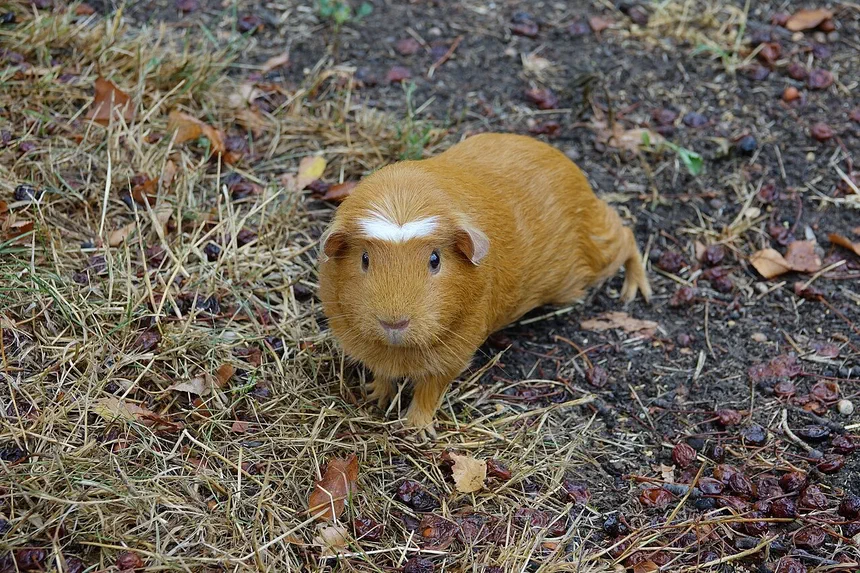
Image: Gzen92 — CC BY-SA 4.0 · source
What Is a Guinea Pig?
The guinea pig (Cavia porcellus) is a stout, tailless rodent that was domesticated thousands of years ago in the Andean regions of South America. Despite the name, it is neither a pig nor related to the country of Guinea; it belongs to the cavy family (Caviidae) and is kept today as a popular companion animal and, in parts of its native range, as a food source.
Appearance and Identification
Guinea pigs have a compact, rounded body with short legs, small ears, and no visible tail. Adults typically measure 8 to 10 inches (20 to 25 cm) in length and weigh roughly 1.5 to 2.6 pounds (700 to 1200 grams), with males generally larger than females. Their coats come in a wide range of colors and patterns, including brown, black, white, cream, and mixed patches. Selective breeding has produced many varieties, from the short-haired American to the rosette-coated Abyssinian and the long-haired Peruvian. They have four toes on the front feet and three on the hind feet.
Habitat and Range
The domestic guinea pig does not exist in the wild; it descended from wild cavies native to the grasslands, rocky slopes, and forest edges of the Andes, spanning countries such as Peru, Bolivia, Ecuador, and Argentina. Wild relatives typically shelter in burrows dug by other animals or in dense vegetation and rock crevices. Today, domestic guinea pigs live in homes and hutches around the world, thriving in moderate temperatures and requiring protection from extreme heat and cold.
Diet
Guinea pigs are strict herbivores. Their diet centers on grasses and hay, which provide the fiber essential for healthy digestion and continuously growing teeth. In captivity they are fed grass hay, fresh leafy vegetables, and commercial pellets. Notably, guinea pigs cannot synthesize their own vitamin C and must obtain it from their food, making vitamin-C-rich vegetables or supplements important to prevent deficiency. Like many rodents, they practice coprophagy, re-ingesting certain soft droppings to absorb additional nutrients.
Behavior
Guinea pigs are social, diurnal animals that in the wild live in small groups. They communicate through a rich range of vocalizations, including whistles, purrs, chutters, and the high-pitched “wheek” often used to beg for food. When excited or startled, they may perform quick hopping leaps known as “popcorning.” They are generally gentle and rarely bite, and they establish stable social hierarchies within their groups. Individuals kept alone often benefit from companionship, as isolation can cause stress.
Life Cycle and Reproduction
Guinea pigs reach sexual maturity early, with females able to breed within a few months of birth. After a relatively long gestation of about 59 to 72 days, females give birth to litters usually numbering two to four young, though larger litters occur. Unlike many rodents, newborn guinea pigs are precocial: they are born fully furred, with open eyes and teeth, and can walk and nibble solid food within hours. Young are weaned within a few weeks. In captivity, guinea pigs commonly live 4 to 8 years with proper care.
Conservation Status
As a domesticated animal, the guinea pig is not assessed by the IUCN and faces no conservation concern. Its wild ancestors and close cavy relatives remain widespread across South America and are generally listed as species of least concern. Because domestic guinea pigs depend entirely on human care, their welfare is a matter of husbandry rather than conservation.
Frequently Asked Questions
Are guinea pigs actually pigs? No. They are rodents in the cavy family and are unrelated to pigs. The origin of the name is uncertain, possibly referring to their squealing sounds or early trade routes.
Why do guinea pigs need vitamin C? Like humans, guinea pigs cannot produce vitamin C internally and must get it from their diet. A shortage can lead to scurvy, so fresh vegetables or supplements are essential.
Do guinea pigs live longer in pairs? They are highly social and generally happier with companions. While companionship does not directly extend lifespan, it reduces stress and supports better overall well-being.