Mammals Guide
Western Gorilla
What Is a Western Gorilla? The western gorilla (Gorilla gorilla) is one of two recognized gorilla species and the most numerous of all gorillas. A large, ground-dwelling ape native to the forests of west-central Africa, …
At a glance
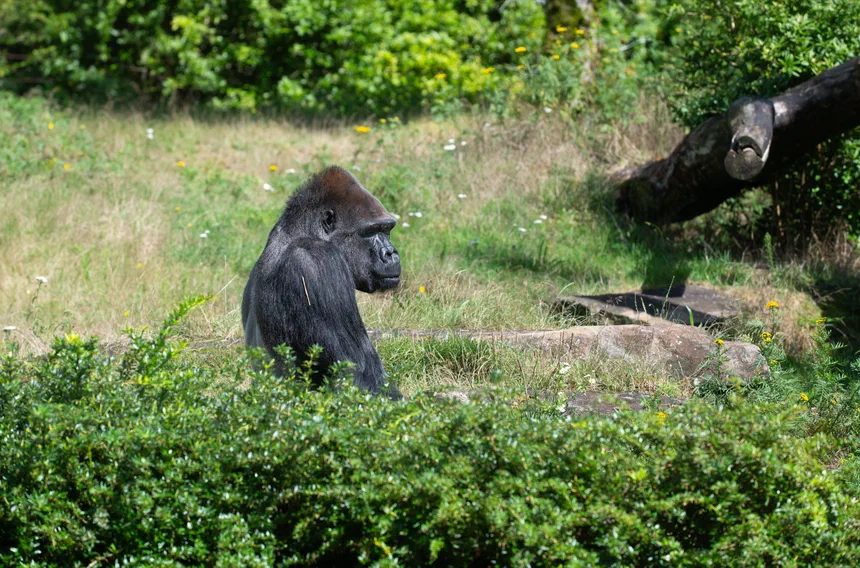
Image: Tuxyso — CC BY-SA 4.0 · source
What Is a Western Gorilla?
The western gorilla (Gorilla gorilla) is one of two recognized gorilla species and the most numerous of all gorillas. A large, ground-dwelling ape native to the forests of west-central Africa, it shares roughly 98 percent of its DNA with humans, making it one of our closest living relatives.
Appearance and Identification
Western gorillas are powerfully built apes with broad chests, long muscular arms, and short legs. Adults have coarse hair that ranges from black to brownish-gray, often with a reddish or auburn cast on the crown that helps distinguish them from their eastern cousins. Mature males, known as silverbacks, develop a saddle of silvery-white hair across the back and hips as they age. Both sexes have a prominent brow ridge, a broad face, and small ears, though males are considerably larger and possess a raised bony crest on top of the skull. Standing upright, adults reach roughly 4.5 to 5.5 feet, and their arm span exceeds their height.
Habitat and Range
This species occupies the lowland tropical rainforests and swampy forests of west-central Africa, including parts of Cameroon, the Central African Republic, Equatorial Guinea, Gabon, the Republic of the Congo, Nigeria, and Angola. Two subspecies are recognized: the widespread western lowland gorilla and the much rarer Cross River gorilla, which survives only in a small pocket of hills along the Nigeria–Cameroon border. Western gorillas favor dense vegetation with abundant ground-level food and are frequently found near clearings and marshy areas where mineral-rich plants grow.
Diet
Western gorillas are primarily herbivorous and spend much of the day foraging. Their diet leans heavily on fruit when it is in season, supplemented by leaves, stems, shoots, bark, and the pith of herbaceous plants. During times of fruit scarcity, they rely more on fibrous foliage. They also eat small quantities of insects such as ants and termites, which add protein to an otherwise plant-based diet. Because much of their food holds water, gorillas rarely need to drink from open sources.
Behavior
Gorillas are social animals that live in cohesive groups, usually numbering from a handful up to around a dozen individuals. Each group is led by a dominant silverback who decides where the group travels, mediates conflicts, and defends against threats. Days follow a rhythm of feeding, resting, and traveling, and each night the animals build fresh sleeping nests from bent vegetation. Despite their imposing size and displays of chest-beating, gorillas are generally peaceful and shy, using vocalizations, gestures, and posturing rather than outright violence to settle most disputes.
Life Cycle and Reproduction
Female western gorillas typically give birth for the first time in their early teens, and there is no fixed breeding season. After a gestation of about 8.5 months, a single infant is born, weighing only a few pounds. Young gorillas cling to their mothers and are carried for the first months of life, later riding on her back. Mothers nurse and care for their offspring for several years, and because of this long dependency, females usually produce a new infant only once every four years or so. This slow reproductive rate makes population recovery difficult when numbers fall.
Conservation Status
The western gorilla is classified as Critically Endangered by the IUCN, and the Cross River subspecies is among the most threatened primates on Earth. Populations have declined sharply due to commercial poaching for bushmeat, habitat loss from logging and agriculture, and outbreaks of the Ebola virus, which has killed large numbers of gorillas in some regions. Conservation efforts focus on protected areas, anti-poaching patrols, disease monitoring, and community programs, as well as ecotourism that gives local people an economic stake in the apes’ survival.
Frequently Asked Questions
How strong is a silverback gorilla? Silverbacks are extraordinarily powerful, capable of lifting and moving weights far beyond human ability, though exact figures are often exaggerated. Their strength is mainly used for foraging, display, and defending the group.
Are western gorillas dangerous to people? Gorillas are shy and avoid confrontation. A silverback may charge or display if it feels its group is threatened, but attacks on humans are rare and usually defensive.
What is the difference between western and eastern gorillas? They are separate species living in different parts of Africa. Western gorillas tend to be a bit smaller with browner coats and reddish crowns, while eastern gorillas are generally larger and darker.