Mammals Guide
Golden Lion Tamarin
What Is a Golden Lion Tamarin? The golden lion tamarin (Leontopithecus rosalia) is a small, strikingly colored New World monkey native to the coastal rainforests of southeastern Brazil. It belongs to the family …
At a glance
What Is a Golden Lion Tamarin?
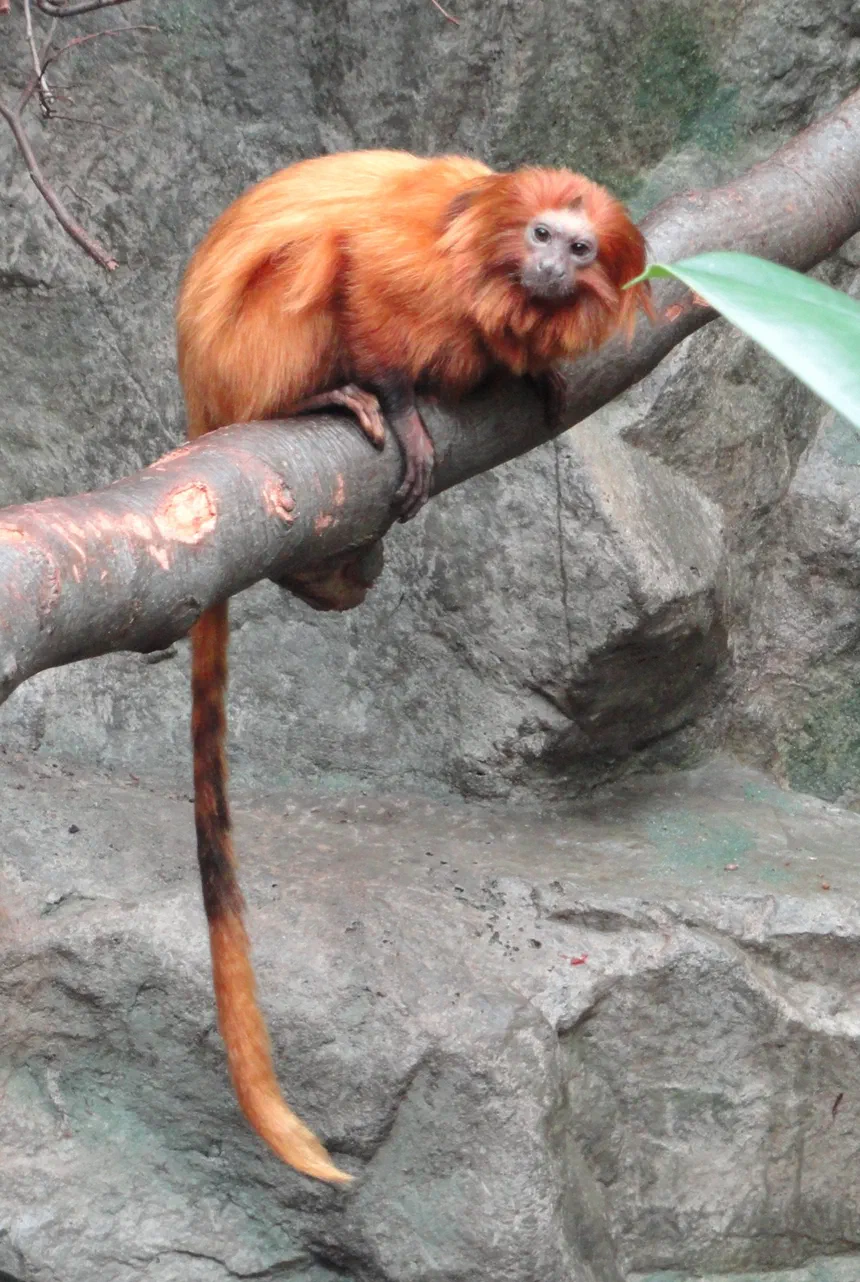
The golden lion tamarin (Leontopithecus rosalia) is a small, strikingly colored New World monkey native to the coastal rainforests of southeastern Brazil. It belongs to the family Callitrichidae, the group that includes marmosets and tamarins, and takes its name from the flowing golden mane that frames its face like a miniature lion.
Appearance and Identification
This species is easy to recognize by its luxuriant, silky coat of reddish-gold to deep orange fur. A long mane surrounds the dark, largely hairless face, giving the animal its leonine look. Adults measure roughly 8 to 13 inches in head-and-body length, with a non-prehensile tail that is somewhat longer than the body, and they typically weigh about 1.1 to 1.6 pounds. Males and females are similar in size and coloration. Instead of nails, golden lion tamarins have claw-like nails on most digits, an adaptation that helps them cling to and scramble along tree trunks and branches.
Habitat and Range
Golden lion tamarins are found only in a small area of the Atlantic Forest in Rio de Janeiro state, Brazil. They favor humid, lowland tropical rainforest, generally below about 1,000 feet in elevation, and depend on dense, closed-canopy woodland with abundant vines, epiphytes, and tree holes. Much of their original forest has been cleared for agriculture, pasture, and urban growth, leaving the remaining populations confined to scattered forest fragments.
Diet
As omnivores, golden lion tamarins eat a varied diet. Fruit makes up a large share of their intake, supplemented by insects, spiders, and other small invertebrates, along with the occasional small vertebrate such as a lizard, frog, or bird egg. They also consume flower nectar and plant gums when other foods are scarce. Their slender fingers let them probe into bromeliads, bark crevices, and leaf litter to extract hidden prey, and by moving seeds through the forest they help disperse the plants they feed on.
Behavior
These tamarins are active during the day and spend nearly all of their time in the trees. They live in small, cooperative family groups, usually numbering from two to about eight individuals, that defend a shared home range through scent marking and vocal calls. Group members communicate with a range of chirps, trills, and whines. At night they retreat to sleep in tree hollows, which offer shelter and protection from predators such as birds of prey, snakes, and wild cats.
Life Cycle and Reproduction
Golden lion tamarin groups are typically built around a single breeding pair. After a gestation of roughly four to four and a half months, the female usually gives birth to twins, though single infants and triplets also occur. Care of the young is a shared effort: the father and older siblings carry the infants for much of the day, handing them back to the mother mainly for nursing. This cooperative rearing is a hallmark of the family. Young tamarins are weaned within a few months and reach sexual maturity at around one and a half to two years of age.
Conservation Status
The golden lion tamarin is classified as Endangered by the IUCN, chiefly because of extensive habitat loss and fragmentation across the Atlantic Forest. By the 1970s wild numbers had fallen to only a few hundred individuals. Intensive conservation work, including captive breeding in zoos worldwide, reintroduction programs, habitat protection, and the planting of forest corridors that reconnect isolated patches, has helped the wild population recover to well over a thousand animals. Continued protection of remaining forest remains essential to the species’ survival.
Frequently Asked Questions
Why is it called a lion tamarin? The name comes from the long, golden mane of fur that surrounds the animal’s face, which resembles the mane of a lion.
Are golden lion tamarins endangered? Yes. The IUCN lists the species as Endangered, though decades of coordinated conservation efforts have brought its numbers back from the brink.
Do they really have twins? Twins are the norm for golden lion tamarins, and the whole family group, including the father and older offspring, helps carry and care for the infants.