Mammals Guide
Four-Toed Hedgehog
What Is a Four-Toed Hedgehog? The four-toed hedgehog (Atelerix albiventris) is a small, spiny, insect-eating mammal native to the grasslands and savannas of central and eastern Africa. Often called the African pygmy …
At a glance
What Is a Four-Toed Hedgehog?
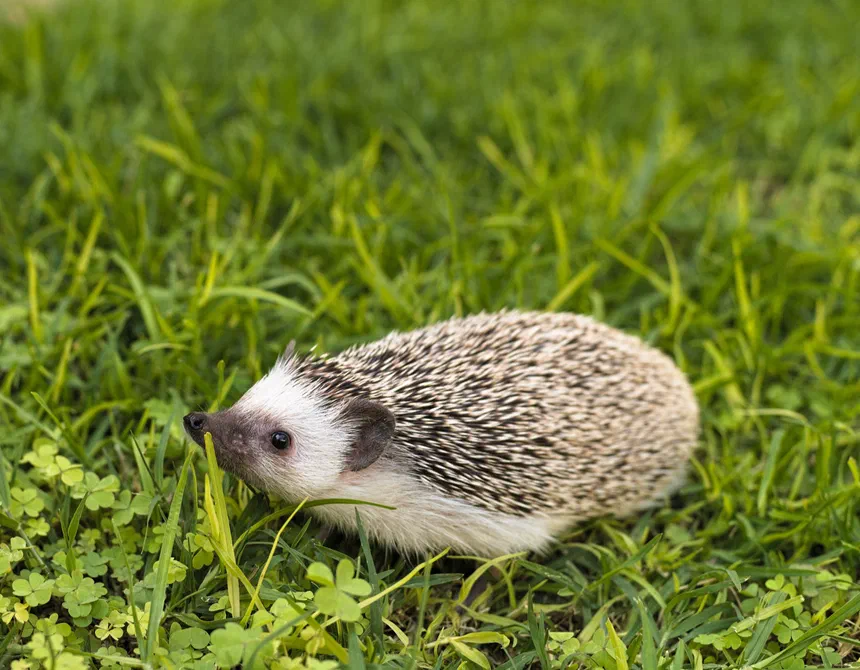
The four-toed hedgehog (Atelerix albiventris) is a small, spiny, insect-eating mammal native to the grasslands and savannas of central and eastern Africa. Often called the African pygmy hedgehog, it is the species most commonly kept as a pet, though wild populations remain widespread across their native range. Its name comes from the reduced number of toes on its hind feet, which usually bear four digits rather than five.
Appearance and Identification
This is a compact animal with a rounded body covered on the back and sides by thousands of short, stiff spines. The spines are modified hairs, typically banded in brown and cream or white, giving the coat a speckled appearance. The belly, legs, and face are covered in soft, pale fur, and the muzzle is pointed with a small dark nose. Adults generally measure about 6 to 9 inches (15 to 23 cm) in length and weigh somewhere between 250 and 600 grams, with pet individuals sometimes heavier. A key identifying trait is the hind foot, which normally has four toes, distinguishing it from some related hedgehog species.
Habitat and Range
Four-toed hedgehogs occupy a broad band of central and eastern Africa, from Senegal and the Gambia in the west across to Somalia, Ethiopia, and down into parts of Tanzania and Zambia. They favor dry savanna, grassland, scrub, and the edges of forests, and they also turn up in cultivated land and suburban gardens. They avoid dense rainforest and very arid desert, preferring areas with enough ground cover and loose soil for foraging and daytime shelter. During the day they rest in burrows, leaf litter, or tucked beneath rocks and vegetation.
Diet
The species is primarily insectivorous but takes a wide variety of foods, making it effectively an omnivore. Beetles, grasshoppers, termites, caterpillars, and other invertebrates form the bulk of the diet, supplemented by spiders, snails, small vertebrates such as frogs or lizards, and occasionally eggs, carrion, and some plant matter like fruit and seeds. They forage mostly at night, using a strong sense of smell and hearing to locate prey in leaf litter and soil.
Behavior
Four-toed hedgehogs are solitary and mainly nocturnal, spending daylight hours sheltered and emerging after dusk to feed. When threatened, an individual rolls into a tight ball, tucking the head and legs inward so the erect spines protect the vulnerable body. They are capable climbers and swimmers and can travel considerable distances in a single night while foraging. In cooler conditions or when food is scarce, they may enter periods of torpor, slowing their metabolism to conserve energy. They also perform an unusual behavior called self-anointing, spreading frothy saliva over their spines when they encounter novel smells or tastes.
Life Cycle and Reproduction
Breeding tends to coincide with warmer, wetter months when food is plentiful. After a gestation of roughly 34 to 37 days, the female gives birth to a litter of usually two to seven young, called hoglets. Newborns are blind and helpless, with soft spines beneath the skin that harden and emerge within the first days of life. The mother raises the young alone, and they are typically weaned and independent within four to six weeks. Sexual maturity is reached within the first year, and lifespans in the wild are commonly two to four years, though protected captive animals often live longer.
Conservation Status
The four-toed hedgehog is listed as Least Concern by the IUCN, reflecting a wide distribution, adaptable habits, and no evidence of steep population decline. It is collected for the pet trade and is sometimes hunted locally, but these pressures are not currently thought to threaten the species overall. As with many small mammals, habitat conversion and agricultural intensification pose localized risks worth monitoring.
Frequently Asked Questions
Why is it called a four-toed hedgehog? Its hind feet usually have four toes rather than five, a trait that sets it apart from several other African hedgehogs and gives the species its name.
Are four-toed hedgehogs dangerous to people? No. They are shy and defensive rather than aggressive, relying on their spines and rolling into a ball for protection instead of biting or attacking.
Is this the same animal sold as a pet hedgehog? Yes. Most domesticated “African pygmy hedgehogs” are four-toed hedgehogs or hybrids derived largely from this species.