Mammals Guide
Ferret
What Is a Ferret? The ferret (Mustela putorius furo) is a small, domesticated carnivore in the weasel family, Mustelidae. It is generally regarded as a domesticated form of the European polecat, kept for thousands of …
At a glance
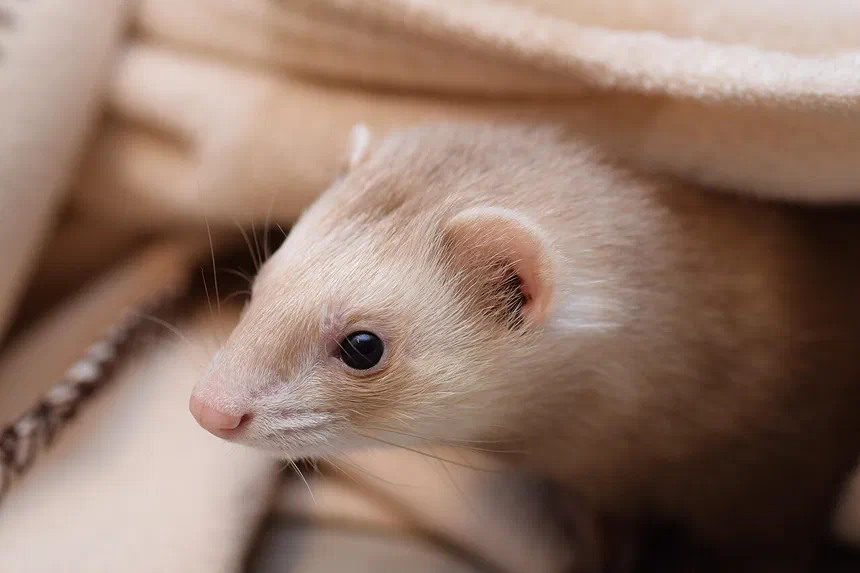
Image: Aurélien Mora — CC BY-SA 4.0 · source
What Is a Ferret?
The ferret (Mustela putorius furo) is a small, domesticated carnivore in the weasel family, Mustelidae. It is generally regarded as a domesticated form of the European polecat, kept for thousands of years first as a working hunter and today mostly as a household companion.
Appearance and Identification
Ferrets have the long, slender, low-slung body that is typical of weasels, with short legs, a flexible spine, and a tapering tail. Adults usually measure around 20 inches (51 cm) from nose to tail tip, with males noticeably larger and heavier than females. Their coat comes in many patterns produced by domestic breeding, from pale cream and champagne to the common “sable” form, which has cream guard hairs over a darker undercoat and a distinctive dark facial mask, feet, and tail tip. Albino individuals, which are white with pink eyes, are also common. The face is small and rounded with short, low ears and prominent whiskers.
Habitat and Range
Because the ferret is a domesticated animal, it has no natural wild habitat of its own. Domestic ferrets live wherever people keep them and are found around the world as pets and working animals. They should not be confused with the black-footed ferret (Mustela nigripes), a separate endangered species native to North American grasslands. Where domestic ferrets escape or are released, they usually struggle to survive on their own; only in a few places, most notably New Zealand, have feral populations become established, where they are treated as harmful invasive predators.
Diet
Ferrets are obligate carnivores, meaning their bodies are built to digest meat and animal protein rather than plants. Their digestive tract is short and lacks a functioning cecum, so they cannot make good use of fiber or carbohydrates. In practice they thrive on high-protein, high-fat diets based on whole prey or specially formulated ferret and cat foods. Because their metabolism is fast and their gut passes food quickly, ferrets tend to eat small amounts frequently throughout the day.
Behavior
Ferrets are famously playful, curious, and energetic when awake, but they are also heavy sleepers that may rest 14 to 18 hours a day. When active they investigate every opening and burrow-like space, a trait rooted in their ancestors’ habit of pursuing prey underground. Their loose skin and supple spine let them squeeze through remarkably small gaps. A relaxed, excited ferret often performs a bouncing, sideways hopping display sometimes called the “weasel war dance.” They communicate with soft chuckling sounds known as “dooking,” along with hisses and squeaks. Like many mustelids, they have scent glands and a musky odor.
Life Cycle and Reproduction
Ferrets are seasonal breeders whose reproductive cycle is triggered by increasing daylight in spring and summer. Females, called jills, are induced ovulators, releasing eggs only after mating. Pregnancy lasts roughly 42 days, after which the jill gives birth to a litter that commonly ranges from about 3 to 8 young, called kits. Kits are born blind, deaf, and nearly hairless, and they depend entirely on their mother at first. They are typically weaned by around six weeks and reach sexual maturity in their first year. Responsible owners and breeders usually spay or neuter pet ferrets, which improves health and reduces odor.
Conservation Status
As a domesticated animal, the ferret is not assessed by the IUCN and is not a conservation concern. Its wild ancestor, the European polecat, is widespread and listed as Least Concern. The visually similar but unrelated black-footed ferret of North America is a genuinely endangered wild species and has been the focus of major captive-breeding and reintroduction efforts.
Frequently Asked Questions
Are ferrets the same as weasels? Ferrets belong to the weasel family and are close relatives of wild weasels and polecats, but the domestic ferret is its own domesticated animal rather than a captured wild weasel.
Do ferrets make good pets? Many people keep ferrets successfully, but they need daily interaction, secure housing, a meat-based diet, and veterinary care, so they suit owners willing to meet those needs.
How long do ferrets live? With good care, pet ferrets typically live about 6 to 10 years.