Mammals Guide
Elk
What Is a Elk? The elk (Cervus canadensis), also called the wapiti, is one of the largest members of the deer family and a signature animal of North America’s mountains and forests. Only the moose stands taller among …
At a glance
What Is a Elk?
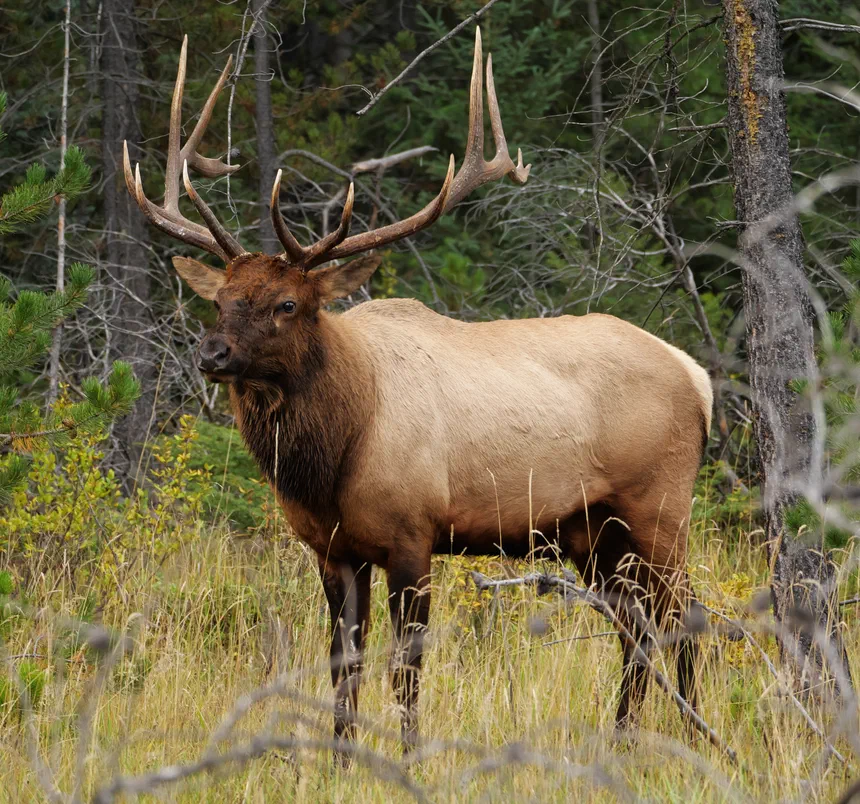
The elk (Cervus canadensis), also called the wapiti, is one of the largest members of the deer family and a signature animal of North America’s mountains and forests. Only the moose stands taller among deer in the region. Known for the bugling calls of males during the breeding season, elk are highly social grazers that gather in herds across open valleys and wooded slopes.
Appearance and Identification
Elk have a tawny to reddish-brown coat over most of the body, with a noticeably darker brown mane on the neck and a distinctive pale, cream-colored rump patch. Bulls (males) are considerably larger than cows (females) and grow impressive branching antlers that can span more than 4 feet (1.2 m) across and weigh up to 40 pounds (18 kg). These antlers are shed each winter and regrown over the following spring and summer. Adult bulls typically weigh between roughly 700 and 1,100 pounds (320–500 kg), while cows generally range from about 375 to 600 pounds (170–270 kg). A shaggy winter coat gives way to a sleeker summer coat as the seasons change.
Habitat and Range
Elk favor a mix of open feeding areas and sheltering forest, thriving along forest edges, in mountain meadows, river valleys, and open woodland. Historically they ranged across much of North America, but today the largest wild populations live in the western United States and Canada, including the Rocky Mountains, with notable herds in places such as Yellowstone. A related population also occurs in eastern Asia. Many herds migrate seasonally, moving to higher elevations in summer and descending to lower, warmer valleys in winter to find food and escape deep snow.
Diet
Elk are herbivores with a flexible, seasonally shifting diet. In spring and summer they graze heavily on grasses and soft, leafy forbs, taking advantage of nutrient-rich growth. As colder months arrive and green forage becomes scarce, they browse more on the twigs, shoots, and bark of shrubs and trees. Like other members of the deer family, elk are ruminants, using a four-chambered stomach to ferment and extract nutrients from tough plant material. They also visit mineral licks to supplement their diet with salts and minerals.
Behavior
Elk are social animals, often forming sizable herds that offer safety in numbers against predators such as wolves, mountain lions, and bears. Outside the breeding season, cows and calves typically group together while bulls form smaller bachelor groups or roam alone. They are most active around dawn and dusk. Elk are strong runners and capable swimmers, and they communicate through a range of sounds, body postures, and scent. The most famous vocalization is the bull’s bugle, a loud, carrying call used during the fall rut to advertise dominance and attract mates.
Life Cycle and Reproduction
The breeding season, or rut, occurs in the fall. Dominant bulls gather and defend groups of cows called harems, bugling and sparring with rival males in antler-to-antler contests to win mating rights. After a gestation of roughly 8 to 9 months, a cow gives birth in late spring or early summer, usually to a single spotted calf. The calf can stand within an hour or two and stays hidden in vegetation during its first weeks before joining the herd. Calves are weaned over several months and reach breeding age in a couple of years. In the wild, elk commonly live about 10 to 13 years, though some survive longer.
Conservation Status
The elk is listed as Least Concern by the IUCN, reflecting large and generally stable populations across its current range. This status is a conservation success story: overhunting and habitat loss in the 1800s wiped out elk from much of their former range, but careful management, hunting regulation, and reintroduction programs have restored many herds. Ongoing challenges include habitat fragmentation, competition with livestock, and diseases such as chronic wasting disease, all of which require continued monitoring.
Frequently Asked Questions
What is the difference between an elk and a moose? Elk are smaller than moose and have a tawny coat with branching antlers, while moose are darker, bulkier, and have broad, flattened palmate antlers. The two are separate species within the deer family.
Why do male elk bugle? Bulls bugle mainly during the fall rut to advertise their strength, warn off rival males, and attract cows. The loud, echoing call can carry across long distances.
Are elk dangerous to people? Elk are wild animals and can become aggressive, especially bulls during the rut and cows protecting calves. It is best to observe them from a safe distance.