Mammals Guide
Degu
What Is a Degu? The degu (Octodon degus) is a small, social rodent native to the semi-arid landscapes of central Chile. Roughly the size of a large gerbil or small rat, it belongs to the family Octodontidae, a group of …
At a glance
What Is a Degu?
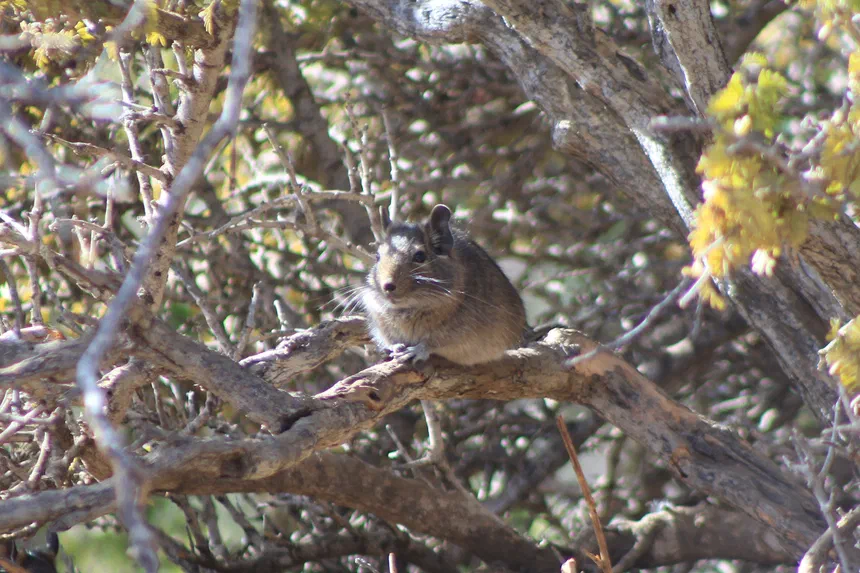
The degu (Octodon degus) is a small, social rodent native to the semi-arid landscapes of central Chile. Roughly the size of a large gerbil or small rat, it belongs to the family Octodontidae, a group of caviomorph rodents more closely related to chinchillas and guinea pigs than to true rats and mice. Highly active by day, the degu is one of the few rodents that is genuinely diurnal, making it a familiar sight scurrying across sunlit scrubland.
Appearance and Identification
Degus have a stocky body covered in coarse fur that is brownish-gray on the back and sides, fading to a paler creamy-yellow on the belly. A distinctive pale ring often surrounds each eye. The head-and-body length is usually around 5 to 7 inches, with a slender tail of similar length that ends in a small tuft of black hair. Total length, including the tail, typically runs about 10 to 12 inches, and adults weigh roughly 6 to 11 ounces. Their chisel-like incisors show a characteristic yellow-orange tint on the outer surface. The tail is a fragile structure: if a predator grabs it, the outer skin can slough off, allowing the degu to escape, though the exposed portion is then lost.
Habitat and Range
The species is restricted to central Chile, where it occupies open habitats on the western slopes of the Andes and in coastal lowlands, generally at elevations below about 4,000 feet. Degus favor matorral scrubland, rocky outcrops, and the margins of agricultural fields, where scattered shrubs provide cover and open ground allows foraging. They dig extensive communal burrow systems that offer shelter from temperature extremes and refuge from predators.
Diet
Degus are strict herbivores. Their diet shifts with the seasons, consisting of grasses, herbs, seeds, leaves, and bark, along with the occasional flower or fruit. During the dry Mediterranean summer, when fresh greenery is scarce, they rely more heavily on tougher, drier plant material and stored resources. Like other hindgut-fermenting rodents, degus practice coprophagy, re-ingesting certain fecal pellets to extract additional nutrients. They are notably sensitive to dietary sugar and are prone to developing diabetes when fed foods richer than their natural fare.
Behavior
These rodents are intensely social, living in groups that may include several breeding females and their offspring. They communicate through an elaborate repertoire of vocalizations, from soft contact calls to sharp alarm chirps, and reinforce group bonds through mutual grooming and communal digging. When foraging, degus post sentinels that watch for aerial and ground predators, sounding alarms that send the whole group diving for burrows. Their strong diurnal rhythm, dust-bathing habits, and cooperative burrowing make them a favorite subject for studies of rodent behavior and social cognition.
Life Cycle and Reproduction
Breeding is seasonal, generally timed so that young arrive as spring vegetation becomes abundant. After a comparatively long gestation of roughly 90 days, a female gives birth to a litter usually numbering from about 4 to 8 pups. The young are unusually well developed at birth, born furred with eyes that open within a few days, and they begin sampling solid food early while continuing to nurse. Females within a group may share nursing duties, communally raising pups. Degus can reach sexual maturity within their first year. In the wild, lifespans are short, often only one to four years, largely due to heavy predation, though sheltered individuals can live considerably longer.
Conservation Status
The degu is classified as Least Concern by the IUCN. It is widespread and locally abundant across its Chilean range, and it readily persists in landscapes altered by agriculture. In some farming areas it is even regarded as a minor pest. Its adaptability and the absence of major range-wide threats mean the species faces no significant conservation concern at present, although it remains an important prey animal underpinning local food webs.
Frequently Asked Questions
Are degus rats? No. Although they superficially resemble large rats, degus belong to a separate rodent family, Octodontidae, and are more closely related to chinchillas and guinea pigs.
Are degus active at night? Not usually. Unlike most rodents, degus are primarily diurnal, doing most of their foraging and socializing during daylight hours.
Why are degus prone to diabetes? Their natural diet is low in sugar, so their metabolism handles sweet or starchy foods poorly. Diets richer than wild plant material can quickly trigger diabetes, which is why they are also studied as a model for the disease.