Mammals Guide
Brown Bear
What Is a Brown Bear? The brown bear (Ursus arctos) is one of the largest living land carnivores and among the most widely distributed bear species on Earth. It is a highly adaptable omnivore found across the northern …
At a glance
What Is a Brown Bear?
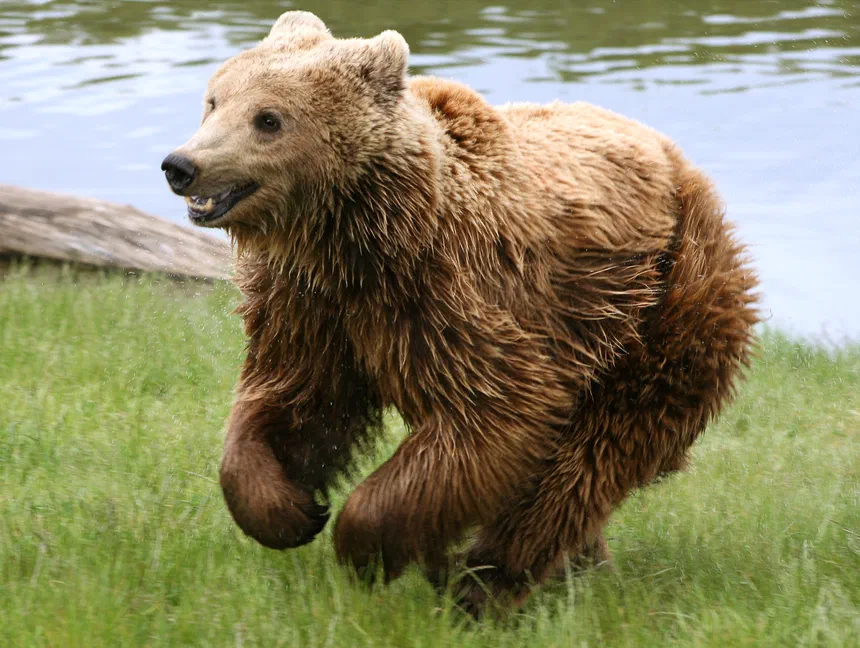
The brown bear (Ursus arctos) is one of the largest living land carnivores and among the most widely distributed bear species on Earth. It is a highly adaptable omnivore found across the northern reaches of North America, Europe, and Asia. Familiar regional forms include the grizzly bear of interior North America and the massive coastal Kodiak bear of Alaska.
Appearance and Identification
Brown bears are heavy-bodied animals with a pronounced muscular hump over the shoulders, a feature that distinguishes them from black bears. This hump powers the forelimbs and long, curved claws used for digging. Despite the name, coat color varies widely, from pale blond and cinnamon through rich brown to nearly black, and the tips of the guard hairs are often frosted or “grizzled,” giving grizzlies their name. The head is broad with a dished facial profile and small, rounded ears. Size differs dramatically by population and food supply: inland bears may weigh 80 to 200 kilograms, while well-fed coastal males can exceed 500 to 600 kilograms.
Habitat and Range
Brown bears occupy an enormous variety of habitats, including dense forests, open tundra, alpine meadows, river valleys, and coastlines. Historically their range spanned much of the Northern Hemisphere, but human expansion has fragmented many populations. Today the largest numbers persist in Russia, Canada, Alaska, and parts of northern and eastern Europe, with smaller relict populations scattered across the mountains of southern and central Europe and Asia. They generally favor areas with seasonal food abundance and enough cover and space to avoid people.
Diet
Although classified among the carnivores, brown bears are opportunistic omnivores, and plant matter often makes up the bulk of their diet. They consume grasses, roots, tubers, berries, nuts, and fruit, digging energetically for bulbs and burrowing rodents. Protein comes from insects, fish, carrion, and mammals ranging from ground squirrels to young ungulates. In coastal regions, seasonal salmon runs provide a crucial, fat-rich bonanza that lets bears build the reserves needed for winter dormancy.
Behavior
Brown bears are largely solitary, though they tolerate one another at rich food sources such as salmon streams, where loose hierarchies form based on size and temperament. They are most active around dawn and dusk but adjust their timing to food and human activity. Excellent senses of smell guide much of their foraging. In colder parts of their range, bears enter a winter dormancy in dens, during which heart rate and metabolism drop sharply, though they can rouse if disturbed. They are surprisingly fast over short distances and are capable swimmers and climbers when young.
Life Cycle and Reproduction
Mating occurs in late spring and early summer. Through a process called delayed implantation, the fertilized egg does not begin developing until the female enters her den in autumn, and only if she has built sufficient fat reserves. Cubs, usually one to three, are born tiny and helpless in midwinter and nurse in the den until spring. They remain with their mother for roughly two to three years, learning to forage before dispersing. Females do not breed again until their cubs are independent, giving the species one of the slower reproductive rates among mammals.
Conservation Status
Globally, the brown bear is listed as Least Concern by the IUCN because of its large total population and wide range. This status masks sharp regional differences: robust populations in Russia, Alaska, and Canada contrast with small, isolated, and vulnerable groups in parts of Europe and Asia. Historical persecution, habitat loss, and conflict with people have eliminated the species from much of its former range. Ongoing threats include road development, human-bear conflict, and habitat fragmentation, and many local populations depend on active management and legal protection.
Frequently Asked Questions
Are grizzly bears and brown bears the same species? Yes. Grizzly bears are simply a subspecies or regional form of the brown bear found in interior North America.
How dangerous are brown bears to people? Brown bears generally avoid humans, and most encounters end without harm. Conflicts usually arise when bears are surprised, defending cubs, or attracted to human food.
Do all brown bears hibernate? Bears in cold climates enter a winter dormancy, but individuals in mild regions with year-round food may remain active or den only briefly.
References
The conservation status and key facts in this profile are supported by these sources:
- Animal Diversity Web — Ursus arctos (brown bear) (accessed 2026-07-28)
- GBIF — Ursus arctos Linnaeus, 1758 (accessed 2026-07-28)
Found an error, source problem, or image concern? Report this page.