Mammals Guide
Arctic Hare
What Is a Arctic Hare? The Arctic hare (Lepus arcticus) is a large hare adapted to the cold, treeless landscapes of the far north. It is built to survive some of the harshest conditions on the planet, with a thick coat, …
At a glance
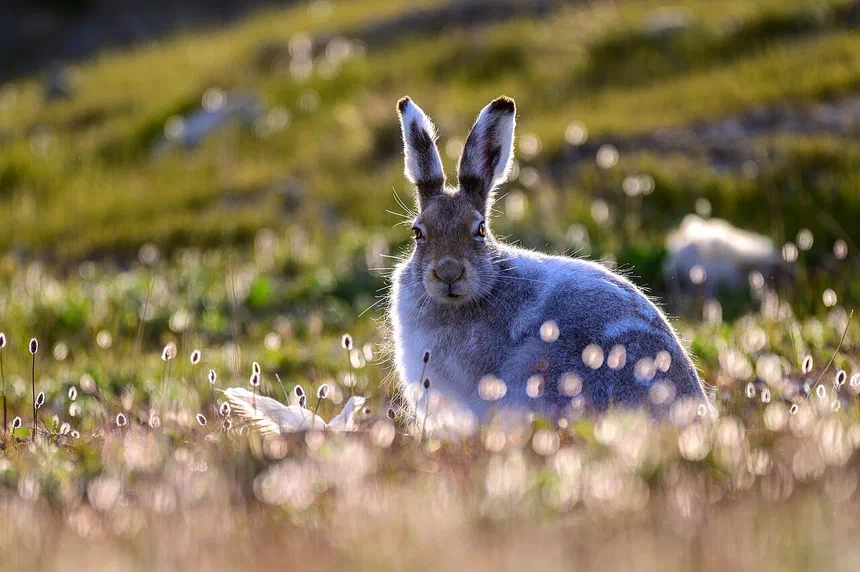
What Is a Arctic Hare?
The Arctic hare (Lepus arcticus) is a large hare adapted to the cold, treeless landscapes of the far north. It is built to survive some of the harshest conditions on the planet, with a thick coat, compact body, and behaviors that help it conserve heat and find food across frozen ground.
Appearance and Identification
The Arctic hare is a sturdy, thickly furred hare with relatively short ears compared with hares of warmer regions. Shorter ears reduce heat loss, an advantage in a climate where temperatures can plunge far below freezing. Adults generally measure roughly 17 to 28 inches in body length and weigh in the range of 6 to 12 pounds, making them among the larger hares.
Coat color changes with the seasons in most populations. In winter the fur is almost entirely white, save for black tips on the ears, providing camouflage against snow. In summer, hares in the southern part of the range molt to a brown-gray coat that blends with rock and tundra vegetation, while in the high Arctic some populations stay white year-round. The hind feet are large and heavily furred, acting like snowshoes that spread the animal’s weight and grip icy terrain.
Habitat and Range
Arctic hares live across the tundra and barren grounds of northern Canada, the Canadian Arctic islands, and Greenland. They favor open, rocky slopes, windswept plateaus, and areas where the snow is shallow or blown clear, which makes reaching food easier. Unlike many mammals, they do not hibernate and remain active through the long, dark Arctic winter.
To cope with cold and wind, hares often shelter behind rocks, in shallow depressions, or in burrows they dig into snow. These resting spots offer protection from biting winds and help the animals hold onto body heat during storms.
Diet
The Arctic hare is a herbivore that feeds on the limited plant life of the tundra. Its diet includes woody twigs, buds, bark, and roots, along with mosses, lichens, grasses, and leafy plants when they are available. The tough, low-growing Arctic willow is an especially important food source in many areas.
In winter, when vegetation is buried, hares use their claws and teeth to dig through snow and gnaw frozen woody stems. Their strong sense of smell helps them locate plants beneath the snowpack, and there are reports of them eating small amounts of animal matter when plants are scarce.
Behavior
Arctic hares are known for their remarkable bursts of speed, sprinting across open ground to escape predators such as Arctic foxes, wolves, snowy owls, and gyrfalcons. They can also rise up and hop on their hind legs in a distinctive upright gait.
Social behavior varies with the seasons. For much of the year hares may be solitary or live in small groups, but in some regions they gather in large aggregations that can number in the dozens or even hundreds, particularly in winter. Grouping may offer safety, with many eyes watching for danger, and shared warmth in extreme cold.
Life Cycle and Reproduction
Breeding takes place in spring, timed so that young arrive during the short Arctic summer when food is more plentiful. After a gestation of about seven weeks, a female gives birth to a litter that commonly contains several leverets, with litter sizes often ranging from around two to eight young.
Unlike helpless newborn rabbits, leverets are born well developed, with fur and open eyes, and can move about soon after birth. The mother tends them for a few weeks, after which they become increasingly independent. Wild hares typically live only a few years given the pressures of predation and climate.
Conservation Status
The Arctic hare is listed as Least Concern on the IUCN Red List, reflecting a wide range and generally stable numbers across remote regions with little human disturbance. Population sizes can fluctuate from year to year with weather and food availability. Longer-term concerns center on climate change, which is reshaping Arctic habitats and could alter the timing of snow cover and plant growth that the species depends on.
Frequently Asked Questions
Do Arctic hares turn white in winter? Yes. Most Arctic hares molt to a white winter coat for camouflage in snow, then shift to a browner summer coat in the southern part of their range. In the high Arctic, some remain white all year.
How do Arctic hares survive the extreme cold? They rely on thick fur, short ears and limbs that limit heat loss, large furred feet for traveling on snow, and sheltering behavior such as digging into snowbanks and huddling in groups.
Are Arctic hares the same as snowshoe hares? No. They are different species. Both live in cold northern regions and change coat color seasonally, but the Arctic hare is larger and lives farther north on open tundra.
References
The conservation status and key facts in this profile are supported by these sources:
- IUCN Red List — Lepus arcticus (Arctic Hare) assessment (accessed 2026-07-28)
- Animal Diversity Web — Lepus arcticus (accessed 2026-07-28)
Found an error, source problem, or image concern? Report this page.