Mammals Guide
Aardvark
What Is a Aardvark? The aardvark (Orycteropus afer) is a stocky, burrowing mammal native to much of sub-Saharan Africa. Its name comes from an Afrikaans word meaning “earth pig,” a nod to its pig-like snout and its habit …
At a glance
What Is a Aardvark?
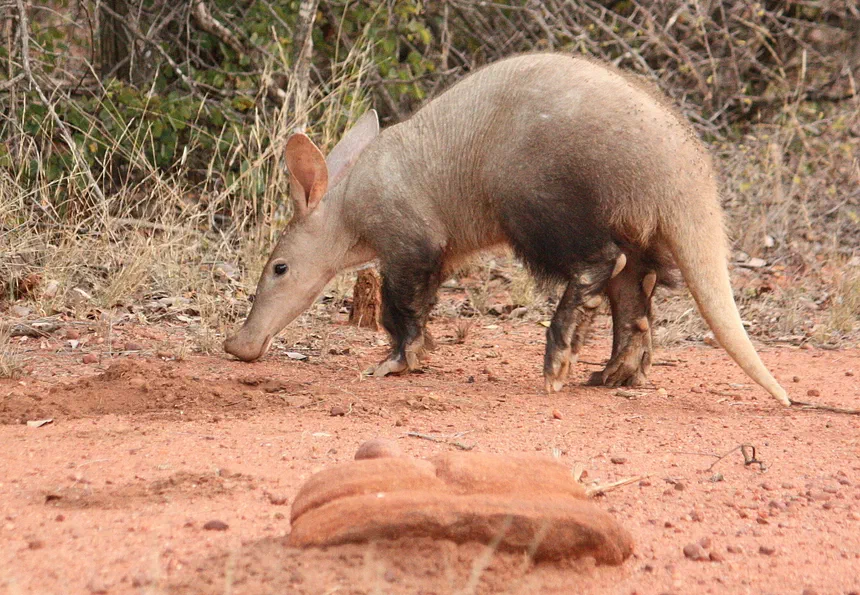
The aardvark (Orycteropus afer) is a stocky, burrowing mammal native to much of sub-Saharan Africa. Its name comes from an Afrikaans word meaning “earth pig,” a nod to its pig-like snout and its habit of digging in the soil. Despite that nickname, the aardvark is not related to pigs and is in fact the only living member of its own mammalian order, Tubulidentata.
Appearance and Identification
The aardvark has an unmistakable, almost patchwork appearance. Its arched back, thick tail, elongated tubular snout, and large upright ears give it a look unlike any other animal. The skin is tough and grayish-brown, sparsely covered with coarse hair that offers little protection but helps the animal detect contact in tight burrows.
Its limbs are powerful and built for digging, with strong, spade-like claws on the forefeet. The long, sticky tongue can extend well beyond the mouth to gather insects. Aardvarks have poor eyesight but an excellent sense of smell and acute hearing, which together help them navigate and forage in darkness.
Habitat and Range
Aardvarks are widely distributed across sub-Saharan Africa, occurring in a broad band from the savannas of the south to the grasslands and woodlands farther north. They favor open habitats with sandy or clay soils that are easy to excavate, avoiding very rocky ground and dense swamp.
The species is highly dependent on burrows, which it digs for shelter and refuge. These burrows can be extensive, and abandoned aardvark holes provide critical homes for many other animals, from warthogs and hyenas to birds and reptiles. In this way the aardvark acts as an important ecosystem engineer.
Diet
The aardvark is a specialized insectivore that feeds almost exclusively on ants and termites. Using its strong claws, it breaks open mounds and nests, then laps up the insects with its long, sticky tongue. A single animal can consume tens of thousands of insects in one night.
Aardvarks have unusual teeth without enamel, made up of many thin tubes of dentine, which is the feature that gives their order its name. Because their prey provides most of their moisture, aardvarks can go long periods without drinking. In some areas they also eat a wild fruit sometimes called the aardvark cucumber, helping to disperse its seeds.
Behavior
Aardvarks are primarily nocturnal and solitary. They spend the daytime resting in cool burrows and emerge after dark to forage, often covering several miles in search of insect colonies. When feeding, an aardvark moves in a zigzag pattern with its snout close to the ground, sniffing out prey.
If threatened, an aardvark’s first response is usually to flee to a burrow or to dig rapidly into the earth, sometimes disappearing underground in minutes. When cornered, it can defend itself with its powerful claws and by kicking. Aardvarks are generally shy and rarely seen, which contributes to how little the public knows about them.
Life Cycle and Reproduction
Aardvarks have a slow reproductive rate. After a gestation of roughly seven months, a female typically gives birth to a single young, usually in the safety of a burrow. Newborns are relatively hairless and stay hidden below ground for the first couple of weeks of life.
The young aardvark begins to accompany its mother on foraging trips after several weeks and is weaned within a few months, though it may remain with her until the next breeding season. Aardvarks generally reach sexual maturity around two years of age. In the wild they may live for roughly a decade or more, with captive individuals sometimes living longer.
Conservation Status
The aardvark is currently listed as Least Concern on the IUCN Red List, reflecting its wide range and presumed large overall population. It is not considered globally threatened, though it is naturally sparse and difficult to survey.
Local threats include habitat conversion for agriculture, hunting for meat in some regions, and the potential effects of climate change on the ant and termite populations it depends on. Because aardvark burrows shelter so many other species, declines in aardvark numbers could ripple through their ecosystems.
Frequently Asked Questions
Is an aardvark the same as an anteater? No. Although aardvarks and anteaters share a diet of ants and termites and some similar adaptations, they are not closely related. The aardvark belongs to its own unique order and is found only in Africa, while true anteaters live in the Americas.
Are aardvarks dangerous to people? Aardvarks are shy, secretive, and not aggressive toward humans. They prefer to escape rather than confront a threat, though their strong claws can inflict injury if the animal is cornered.
Why are aardvarks so rarely seen? They are nocturnal, solitary, and spend the day underground, so even in areas where they are common people seldom encounter them in the wild.
References
The conservation status and key facts in this profile are supported by these sources:
- Animal Diversity Web — Orycteropus afer (aardvark) (accessed 2026-07-28)
- GBIF — Orycteropus afer (Pallas, 1766) (accessed 2026-07-28)
Found an error, source problem, or image concern? Report this page.