Locust Facts & Information
Identification
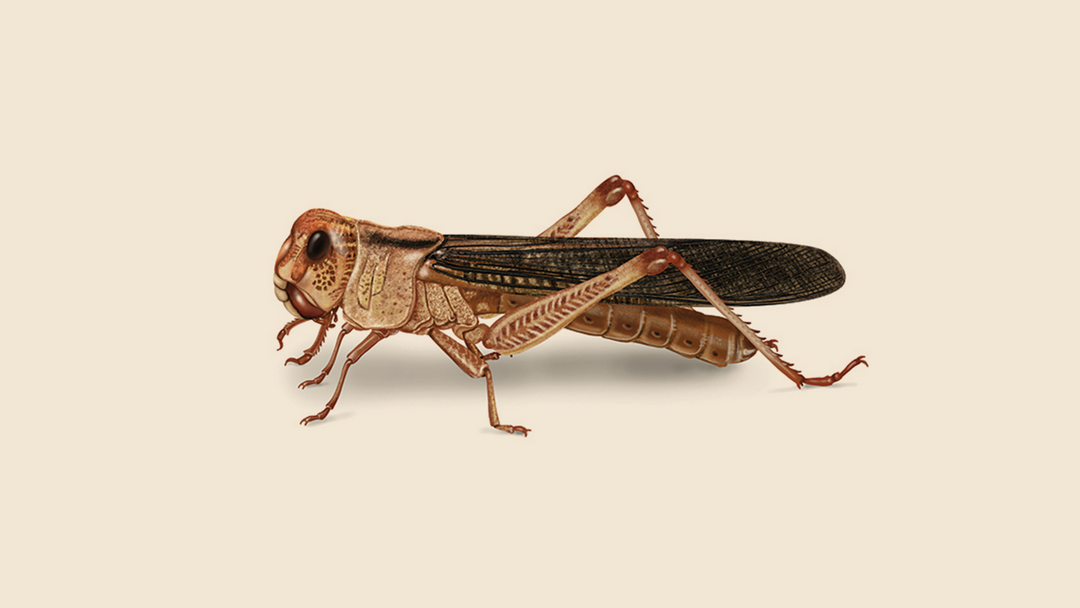
Appearance
Locust is a common name used incorrectly when identifying cicadas and other families of grasshoppers. The true locusts in the U.S. go by the common name short-horned grasshoppers. Locusts are quite diverse in appearance with more than 600 species found in North America, of which only a few are considered damaging to rangelands, crops and garden plants.
- Size : Typically, locusts are large insects with two antennae that are less than half the length of its body.
- Legs : They have long back legs used for leaping
- Wings : Two wings at both the front and back of the body
- Color : Range in color from very drab to very colorful.
- Head : Locusts have large eyes, heads and chewing mouthparts enabling them to consume large amounts of vegetation.
Habitat
Most locust species are found in grasslands; however some may be seen in forested or aquatic environments.
Reproduction & Life Cycle
The life cycle consists of egg, nymph (wingless state) and winged adults and is typically completed in one year. Mating between males and females may take up to an hour. Some locust species participate in a behavior known as mate guarding, whereby the male rides on back of the female for a period of a day or more. Females typically deposit their eggs in the ground in an egg cluster of 8-25 eggs. Eggs are normally laid in the late summer, and overwinter before hatching in the spring.