Kissing Bug Facts & Information
Identification
body
Triatoma spp.; Paratriatoma spp.
colour
size
What You Can Do
Some procedures to prevent kissing bugs include the following:
- Caulk around openings for utility lines, plumbing pipes, and cables.
- Change porch lights to “bug light” bulbs.
- Close exterior doors tightly.
- Inspect your pet’s fur and their cages or beds for these bugs.
- Move leaf and firewood piles away from the house.
- Repair any damaged screens on all windows, crawlspace vents, and attic vents.
- Repair cracks in your home’s foundation that would allow insects to enter.
- Replace missing or damaged weather stripping.
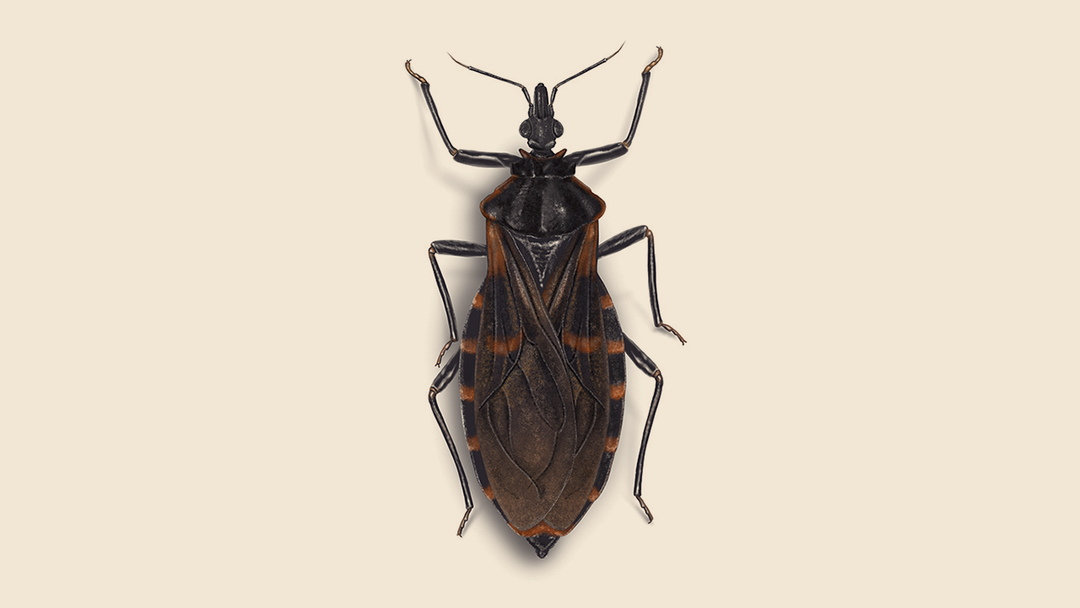
What does a kissing bug look like?
- Size: Kissing bugs can be 14 to 24 mm long.
- Characteristics: These pests are commonly called conenose bugs from their cone shaped heads.
- Coloring: They are dark colored, usually brown or black. Some species have red, yellow, or tan markings on the abdomen.
Where do kissing bugs live?
Kissing bugs live in many states across the country. They sometimes invade homes, especially in suburban and rural areas. Outdoors they can be found in dog houses, rodent nests, under porches, and in leaf piles.
What do kissing bugs eat?
Kissing bugs got their name early in the twentieth century because they are known to draw blood from the face of the victim. These bugs feed on blood from mammals such as:
- Opossums
- Raccoons
- Wood rats
What’s the life cycle of a kissing bug?
The stages of a kissing bug’s life cycle take place between 1-2 years. After feeding on blood, female kissing bugs lay eggs in the spring. The immature bugs (nymphs), which are smaller and don’t have wings, need a blood meal every time they shed their skin and grow larger.