Insects Guide
Harlequin Bug
What Is a Harlequin Bug? The harlequin bug (Murgantia histrionica) is a small, brightly patterned stink bug in the family Pentatomidae. Named for its jester-like coloring, it is a well-known pest of cabbage, broccoli, …
At a glance
What Is a Harlequin Bug?
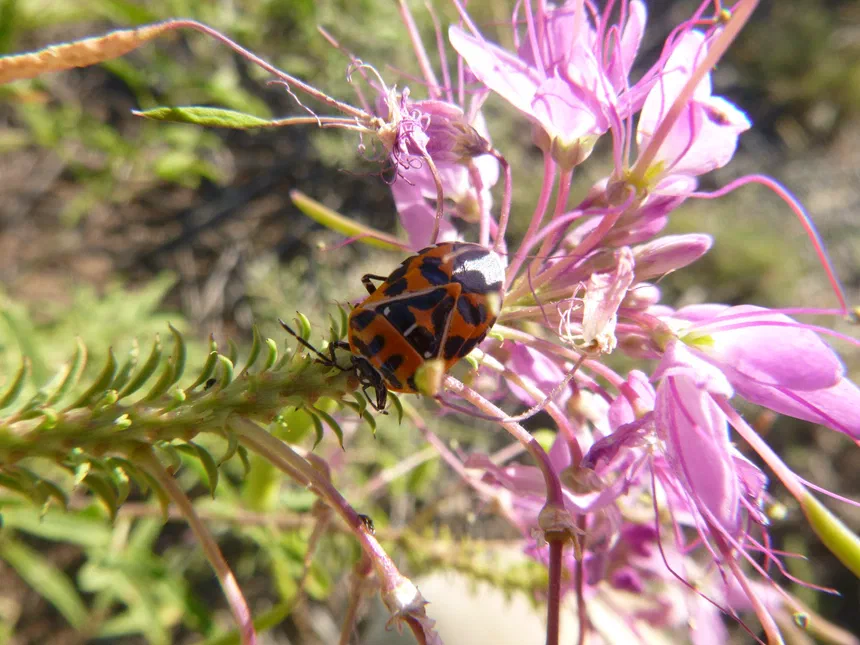
The harlequin bug (Murgantia histrionica) is a small, brightly patterned stink bug in the family Pentatomidae. Named for its jester-like coloring, it is a well-known pest of cabbage, broccoli, and other cole crops across the warmer parts of North and Central America.
Appearance and Identification
This shield-shaped insect is easy to recognize by its striking contrast of glossy black and vivid red, orange, or yellow. The bold markings form an irregular, mosaic-like pattern across the back that gives the bug its “harlequin” name. Adults typically measure roughly 8 to 11 millimeters in length and have the flattened, five-sided body outline typical of stink bugs. The coloration serves as a warning to predators that the insect is distasteful, a defense reinforced by the pungent chemicals it can release from scent glands. Nymphs are rounder and wingless but share the same eye-catching red-and-black scheme.
Habitat and Range
The harlequin bug thrives in warm climates and is most common across the southern United States, from coast to coast, and southward through Mexico and Central America. It cannot easily survive harsh winters, so its permanent range is limited by cold, though it may push northward during warm seasons. Typical habitats include vegetable gardens, agricultural fields, roadsides, and weedy open ground wherever its host plants grow. It is especially associated with cultivated and wild members of the mustard family.
Diet
The harlequin bug is strictly herbivorous and feeds by piercing plant tissue with a needle-like mouthpart and sucking out sap. It strongly favors plants in the cabbage or mustard family (Brassicaceae), including cabbage, broccoli, cauliflower, kale, collards, radish, and turnip, as well as many wild mustards. When preferred hosts are scarce, it may feed on other crops such as beans, squash, or tomatoes. Feeding drains fluids from leaves and stems, leaving pale blotches, wilting, and stunted growth that can seriously damage young plants.
Behavior
Harlequin bugs are active during the day and are often seen clustered on host plants, where several may feed together. Their vivid colors advertise their unpalatability, and when disturbed they can emit a foul-smelling defensive secretion characteristic of stink bugs. They are relatively slow-moving and rely more on chemical defense than on rapid escape. In cooler regions the adults seek shelter under plant debris, leaf litter, or in the crowns of host plants to pass the winter, becoming active again as temperatures rise.
Life Cycle and Reproduction
Reproduction begins in spring once overwintered adults emerge and resume feeding. Females lay distinctive barrel-shaped eggs that are usually white with two dark bands, arranged in neat double rows on the undersides of leaves. The eggs hatch into nymphs that pass through several molts, growing larger and developing wing pads before reaching adulthood. Development from egg to adult can take a few weeks in warm weather, and several overlapping generations may occur in a single growing season in the warmest parts of the range.
Conservation Status
The harlequin bug has not been formally assessed by the IUCN and carries no conservation concern. It is widespread and locally abundant, and in agricultural settings it is generally regarded as a pest rather than a species in need of protection. Populations are typically managed to reduce crop damage rather than conserved.
Frequently Asked Questions
Are harlequin bugs harmful to people? No. They do not bite or sting humans and are not dangerous, though they can release an unpleasant odor and are a nuisance in gardens.
Why are harlequin bugs so brightly colored? The bold red-and-black pattern is a warning signal, telling predators that the insect tastes bad and can produce foul defensive chemicals.
What plants do harlequin bugs damage most? They prefer cabbage-family crops such as cabbage, broccoli, kale, and collards, where heavy feeding can wilt and kill young plants.