Insects Guide
Fruit Fly
What Is a Fruit Fly? The common fruit fly, Drosophila melanogaster, is a tiny insect in the family Drosophilidae that is famous for hovering around ripening or fermenting fruit. Though often seen as a kitchen nuisance, …
At a glance
What Is a Fruit Fly?
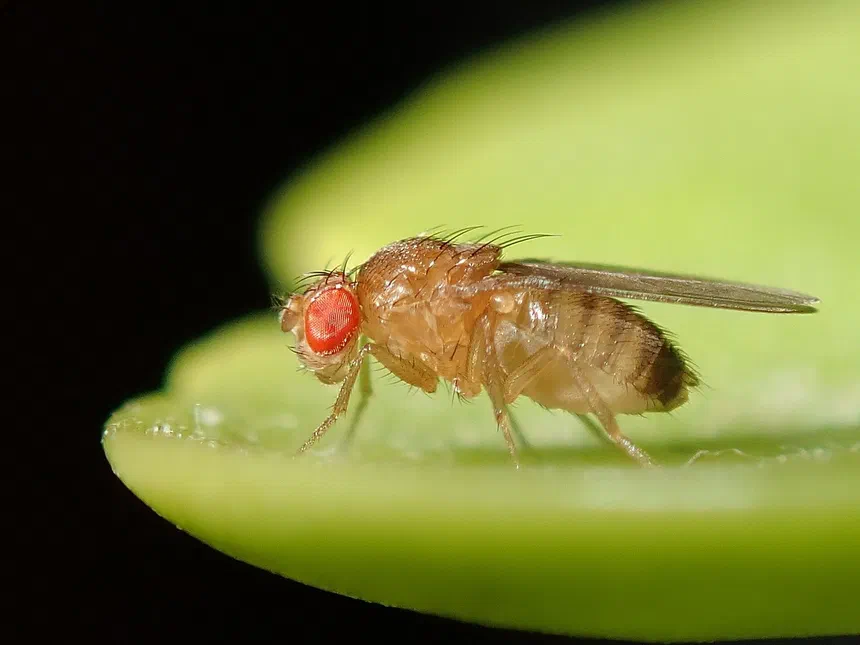
The common fruit fly, Drosophila melanogaster, is a tiny insect in the family Drosophilidae that is famous for hovering around ripening or fermenting fruit. Though often seen as a kitchen nuisance, it is one of the most studied animals on Earth and a cornerstone of modern genetics and biology research.
Appearance and Identification
Fruit flies are very small, typically measuring only about 2.5 to 4 millimeters in body length. Adults are usually tan to yellowish-brown, often with darker banding across the rear of the abdomen. One of their most recognizable features is a pair of bright red compound eyes, though laboratory strains sometimes show other eye colors due to genetic mutations. Their single pair of clear wings folds over the back at rest, and short bristles cover the body. Males and females can be distinguished by size and coloration: males tend to be slightly smaller and have a darker, more rounded tip to the abdomen.
Habitat and Range
Originally native to the tropical regions of sub-Saharan Africa, Drosophila melanogaster has spread across the globe by traveling alongside humans and their food. Today it is essentially cosmopolitan, thriving anywhere warm temperatures and fermenting plant material are available. Common settings include home kitchens, grocery stores, orchards, vineyards, compost piles, garbage areas, and food-processing facilities. The flies are especially abundant in warmer months and in climates that stay mild year-round.
Diet
Fruit flies are broadly omnivorous but focus on the microbes and sugars associated with decaying plant matter. Adults feed largely on the yeasts and bacteria that grow on overripe, rotting, or fermenting fruits and vegetables, as well as on sugary liquids such as juice, wine, and vinegar. The larvae burrow into soft, decomposing material and consume the microorganisms and nutrients there. It is largely this attraction to yeast and fermentation, rather than the fruit itself, that draws them to ripening produce.
Behavior
These insects are most active during daylight and are strongly guided by smell, using sensitive receptors to locate fermentation odors from a distance. They are weak but agile fliers, often seen making short, darting flights near food sources. Courtship involves a distinctive ritual in which the male follows the female, taps her, and vibrates one wing to produce a species-specific “song.” Fruit flies do not bite or sting and are not known to transmit disease to people in the way that some other flies do, though they can carry microbes on their bodies and contaminate exposed food.
Life Cycle and Reproduction
Drosophila melanogaster has a remarkably rapid life cycle, which is part of why it is so useful in the laboratory. A single female can lay hundreds of eggs over her lifetime, typically depositing them on or near suitable food. The eggs hatch within about a day into small white larvae, which feed and molt through several stages over roughly a week. The larvae then form pupae, from which adults emerge a few days later. Under warm conditions the entire cycle from egg to adult can be completed in about ten to fourteen days, allowing populations to grow explosively when food is plentiful. Adults generally live several weeks.
Conservation Status
The common fruit fly has not been evaluated by the IUCN and is not considered at any risk. It is one of the most abundant and widespread insects associated with human activity, and if anything its populations are secure thanks to the constant availability of food in human environments. Because it is so easy to rear, it remains a vital model organism used to study genetics, development, aging, disease, and neuroscience.
Frequently Asked Questions
Are fruit flies harmful to humans? They do not bite or sting, but by moving between garbage, decaying matter, and exposed food they can transfer microbes and contaminate what they land on, so it is best to keep them away from prepared food.
Why are fruit flies so important in science? Their short life cycle, large numbers of offspring, and well-mapped genetics make them ideal for research, and studies of Drosophila have led to major discoveries in heredity, development, and medicine.
How do I get rid of fruit flies at home? Removing overripe produce, cleaning up spills, taking out the trash, and keeping drains clean eliminates the food and breeding sites they depend on, which is the most effective long-term control.