Insects Guide
Firebrat
What Is a Firebrat? The firebrat (Thermobia domestica) is a small, wingless insect in the order Zygentoma, the same group that contains silverfish. It is best known as an indoor pest that favors unusually warm, humid …
At a glance
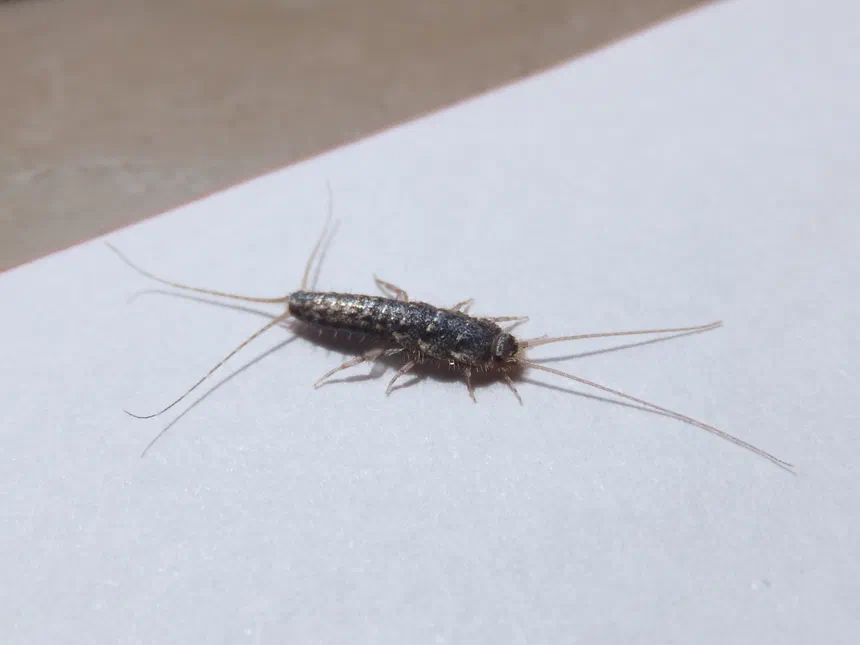
Image: Syrio — CC BY-SA 4.0 · source
What Is a Firebrat?
The firebrat (Thermobia domestica) is a small, wingless insect in the order Zygentoma, the same group that contains silverfish. It is best known as an indoor pest that favors unusually warm, humid corners of buildings, and it takes its name from its fondness for the heat near ovens, furnaces, and hot-water pipes.
Appearance and Identification
Firebrats have a slender, tapering, teardrop-shaped body covered in tiny scales that give the surface a mottled gray and brown appearance, often with a slightly metallic sheen. An adult reaches roughly 10 to 15 millimeters in body length, not counting the long appendages. Two thread-like antennae project forward from the head, and three long, bristle-like filaments (two cerci and a central terminal filament) trail from the rear, a hallmark of this insect group. The body is flattened and flexible, and the insect moves in quick, darting, fish-like wriggles. Firebrats are easily confused with the closely related common silverfish, but silverfish tend to be more uniformly silver-gray and prefer cooler, damper conditions.
Habitat and Range
As its scientific name (domestica) suggests, this species is strongly tied to human structures. It thrives in warm microhabitats, generally preferring temperatures around 32 to 41 degrees Celsius (about 90 to 106 degrees Fahrenheit) along with high humidity. Typical hiding places include the spaces around ovens, boilers, water heaters, bakeries, and the insulation surrounding hot pipes. Through commerce and shipping the firebrat has spread widely and is now considered cosmopolitan, occurring alongside people across much of the world. It is rarely found outdoors in temperate climates because it cannot tolerate cold.
Diet
Firebrats are omnivorous scavengers with a strong preference for carbohydrates. They feed on starches and sugars found in flour, cereal, crumbs, dried goods, book bindings, wallpaper paste, and the sizing and glue in paper and cardboard. They will also nibble on cotton, linen, and other plant-based fabrics. Because they can digest cellulose-rich materials, they sometimes damage stored books and papers, leaving irregular grazed patches or small holes.
Behavior
These insects are nocturnal and secretive, spending daylight hours tucked into cracks, crevices, and other dark shelters close to a heat source. When disturbed they flee rapidly. Firebrats are remarkably tolerant of dry conditions for their size, but they depend on nearby humidity and warmth to remain active and to reproduce. They are wingless and rely entirely on running to move between food and shelter. They do not bite, sting, or transmit disease, so their impact is limited to the contamination and minor damage of stored goods.
Life Cycle and Reproduction
Firebrats develop through simple (incomplete) metamorphosis, meaning the young resemble small versions of the adults rather than passing through a larval and pupal stage. After mating, females lay batches of eggs in sheltered cracks; egg development is fastest in warm conditions and can stall when temperatures drop. Nymphs molt repeatedly as they grow, and unusually among insects, firebrats continue to molt even after reaching sexual maturity, potentially shedding their skin dozens of times over a lifetime. Under ideal warmth and humidity a firebrat can mature in a few months, while cooler conditions greatly slow the process.
Conservation Status
The firebrat has not been evaluated by the IUCN and is not a species of conservation concern. As a widespread, human-associated insect it is abundant wherever suitable warm indoor conditions exist, and it is generally regarded as a nuisance pest rather than a vulnerable species.
Frequently Asked Questions
Are firebrats harmful to people? No. Firebrats do not bite, sting, or spread disease. Their nuisance value comes from contaminating dry foods and grazing on paper, book bindings, and starchy fabrics.
How are firebrats different from silverfish? Both are wingless, scaly, three-tailed insects, but firebrats are more mottled and gray-brown and prefer very warm, humid spots, whereas silverfish are more uniformly silver and favor cooler, damp areas.
Why do firebrats appear near ovens and pipes? They are heat-loving insects that reproduce best at high temperatures, so they gather in the warmest parts of a building, such as around ovens, boilers, and hot-water pipes.