Insects Guide
European Hornet
What Is a European Hornet? The European hornet (Vespa crabro) is the largest true hornet native to Europe and much of temperate Asia. A social wasp in the family Vespidae, it lives in annual colonies led by a single …
At a glance
What Is a European Hornet?
The European hornet (Vespa crabro) is the largest true hornet native to Europe and much of temperate Asia. A social wasp in the family Vespidae, it lives in annual colonies led by a single egg-laying queen. Despite its imposing size and loud buzzing flight, it is generally less aggressive than many smaller wasps and plays a useful role as a predator of other insects.
Appearance and Identification
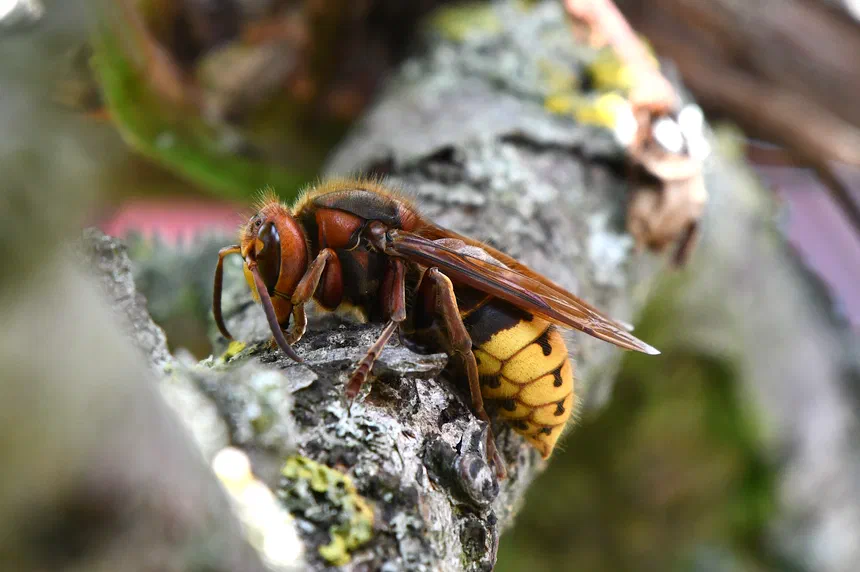
European hornets are robust, comparatively large vespines. Workers typically measure about 18 to 25 millimeters in length, while queens can reach roughly 35 millimeters. The body carries a mix of reddish-brown and yellow, with the head and thorax marked in brown and rust tones and the abdomen banded in yellow and dark brown. Compared with the common yellowjacket, the hornet’s coloring is warmer and browner, and its size is noticeably greater. The wings are a smoky reddish-orange. A distinctive trait is the pale, teardrop-shaped markings on an otherwise dark upper abdomen near the waist. Only females possess a sting, which they can use repeatedly.
Habitat and Range
The species is native across Europe, extending eastward through parts of Asia. In the mid-19th century it was accidentally introduced to eastern North America, where it is now well established. European hornets favor wooded and semi-wooded landscapes, including forests, woodland edges, hedgerows, orchards, parks, and suburban gardens. They nest in sheltered cavities such as hollow trees, wall voids, attics, barns, and outbuildings, and occasionally in the ground. Access to trees for sap and to open areas rich in prey helps a colony thrive.
Diet
European hornets are opportunistic predators and foragers. Adults hunt a wide range of insects, including flies, bees, other wasps, grasshoppers, and caterpillars, which they chew into a protein-rich pulp to feed developing larvae. The adults themselves rely heavily on sugary foods: they gnaw the bark of twigs and shrubs to reach flowing sap, and they feed on ripe or fallen fruit, nectar, and honeydew. This dual diet supports both larval growth and adult energy needs. Their habit of stripping bark from lilac, birch, and other plants can sometimes damage garden shrubs.
Behavior
These hornets are social insects that cooperate to build and defend a paper nest constructed from chewed wood fibers. They are notable for being active into the evening and are often drawn to outdoor and window lights after dark, a behavior unusual among wasps. While they will defend the nest vigorously if disturbed, foraging individuals away from the colony are usually not aggressive toward people. Workers communicate through the colony’s activity and pheromones, and they regulate nest temperature by fanning their wings. Their loud, deep buzz in flight is a familiar sign of their presence.
Life Cycle and Reproduction
European hornet colonies follow an annual cycle. In spring, a mated queen that overwintered in a sheltered spot emerges and begins a new nest alone, laying eggs and rearing the first workers. Once these workers mature, they take over foraging, nest expansion, and brood care while the queen focuses on laying eggs. Through summer the colony grows, sometimes reaching several hundred individuals. Late in the season, the colony produces new queens and males, which leave to mate. As autumn arrives, the founding queen, the workers, and the males die off. Only the newly mated queens survive, hibernating through winter to start fresh colonies the following year.
Conservation Status
The European hornet has not been formally assessed by the IUCN and is not considered globally threatened. It remains widespread and locally common across its native and introduced ranges. In some parts of Europe, however, it enjoys legal protection because of localized declines and its ecological value as a predator and pollinator. As a controller of pest insects, it is often regarded as beneficial when nesting away from human activity.
Frequently Asked Questions
Are European hornets dangerous? Their sting is painful, but they are not especially aggressive away from the nest. People allergic to insect venom should take extra care, as with any stinging wasp.
How is a European hornet different from a yellowjacket? European hornets are much larger, browner, and more reddish, and they often fly at night. Yellowjackets are smaller, brighter yellow, and typically active only during the day.
Do European hornets help or harm the garden? They are mostly beneficial, preying on many pest insects, though they can strip bark from shrubs and feed on ripe fruit.