Insects Guide
Antlion
What Is a Antlion? Antlions are insects in the family Myrmeleontidae, best known for the predatory larvae that dig funnel-shaped pits to trap ants and other small prey. The name applies to both the fierce, pit-building …
At a glance
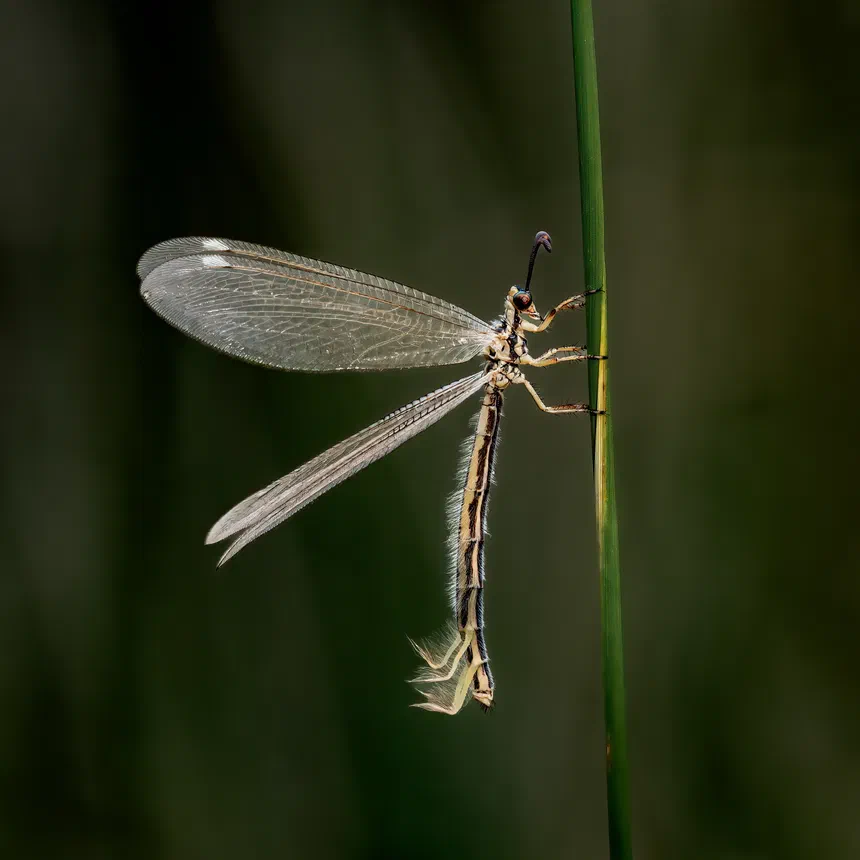
Image: Mike Duchstein — CC BY-SA 4.0 · source
What Is a Antlion?
Antlions are insects in the family Myrmeleontidae, best known for the predatory larvae that dig funnel-shaped pits to trap ants and other small prey. The name applies to both the fierce, pit-building larva and the delicate, winged adult, which superficially resembles a damselfly. The group belongs to the order Neuroptera, the net-winged insects.
Appearance and Identification
The adult antlion has a slender, soft body and two pairs of long, narrow wings covered by a fine network of veins. Wings are typically clear, sometimes marked with faint spots, and span up to roughly 10 centimeters in the largest species. A reliable field clue is the pair of short, gently clubbed antennae, which help separate antlions from the similar-looking damselflies, whose antennae are tiny and bristle-like. Coloring is usually muted, ranging from gray and brown to sandy tones with mottled markings that provide camouflage.
The larva looks entirely different. It is a squat, flattened grub with a broad abdomen and a pair of large, curved, pincer-like jaws that project forward from the head. These jaws are hollow, allowing the larva to inject digestive fluids and draw out the liquefied contents of its prey.
Habitat and Range
Antlions occur on every continent except Antarctica and are most diverse in warm, dry regions. The larvae favor sheltered spots with loose, dry substrate such as fine sand, powdery soil, or dust beneath overhangs, at the base of trees, or under the eaves of buildings, where their pits stay protected from rain and wind. Adults are usually found near this same habitat, resting on vegetation during the day. Because the pit-building strategy depends on dry, easily collapsed material, populations concentrate in sandy grasslands, dunes, dry woodlands, and semi-arid landscapes.
Diet
Both life stages are predatory, but the larva is the famous hunter. Not all antlion larvae build pits; some ambush prey from crevices or hunt actively across the surface. The pit-builders, however, are the most recognizable. A larva excavates a conical trap in loose sand, then buries itself at the bottom with only its jaws exposed. When an ant or other small arthropod stumbles over the rim, the crumbling walls carry it downward, and the larva may fling sand to trigger further slides. Once the prey is within reach, the jaws seize it and inject enzymes. Adults are shorter-lived and feed on nectar, pollen, or small soft-bodied insects, depending on the species.
Behavior
The larval antlion is patient and largely stationary, sometimes waiting days between meals. It can survive long fasts thanks to a slow metabolism, and it moves backward, which is one reason an old folk name for the larva is “doodlebug,” after the winding trails it leaves in sand. Adults are mostly active at dusk and after dark and are weak, fluttering fliers. Many are attracted to artificial lights at night.
Life Cycle and Reproduction
Antlions undergo complete metamorphosis with egg, larva, pupa, and adult stages. After mating, the female deposits eggs in sand or loose soil, often tapping the tip of her abdomen against the surface. The larva passes through several molts, and this stage can last a year or more, occasionally up to about three years in harsher climates, because growth depends on how much prey it captures. When ready, the larva spins a spherical silken cocoon underground, incorporating sand grains, and pupates inside. The emerging adult typically lives only a few weeks, long enough to mate and lay the next generation.
Conservation Status
The antlion family as a whole has not been assessed by the IUCN, and most species are not considered threatened. As a large, widespread group, antlions are generally secure, though individual species with narrow ranges or specialized habitats could be vulnerable to habitat loss. Because larvae depend on undisturbed patches of dry, loose soil, land development and heavy foot traffic can locally reduce suitable sites.
Frequently Asked Questions
Are antlions dangerous to people? No. Antlions are harmless to humans. The larval jaws are built for small insects, and adults do not bite or sting.
Why is the antlion larva called a doodlebug? The larva moves backward and leaves looping, doodle-like trails in sand as it searches for a good spot to dig its pit, which inspired the nickname.
Do all antlions build sand pits? No. The funnel pit is the most famous strategy, but many antlion species instead ambush or actively pursue prey without building a trap.
References
The conservation status and key facts in this profile are supported by these sources:
- Animal Diversity Web — Myrmeleontidae (antlions) (accessed 2026-08-06)
- GBIF — Myrmeleontidae (accessed 2026-08-06)
Found an error, source problem, or image concern? Report this page.