Horse Flies Tabanus spp.
Identification
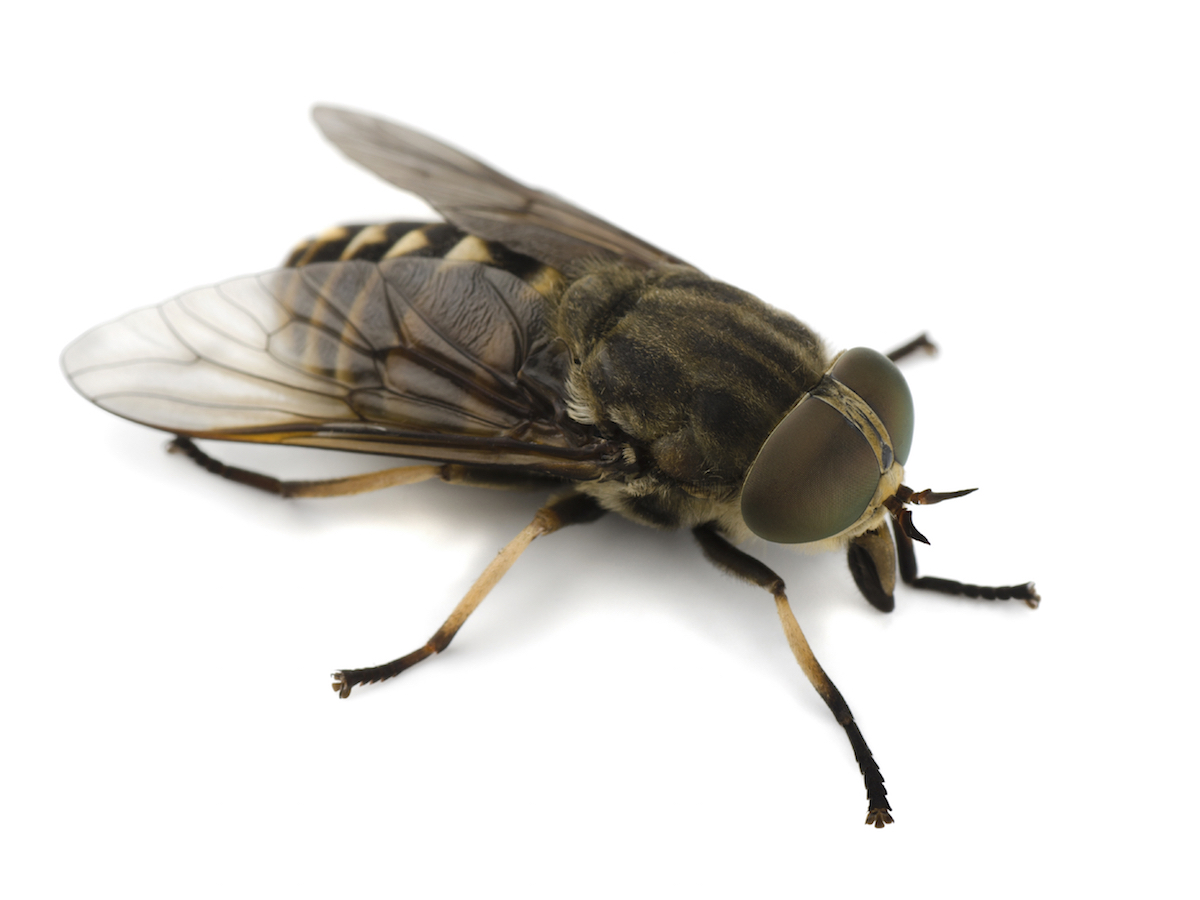
What is a Horse Fly?
The horse fly is a type of fly that likely received its common name because it is a notorious pest of horses and other mammals. Horse flies are commonly found in both suburban and rural areas near bodies of water, which serve as breeding sites , and where mammal hosts are most abundant.
Horse Flies Tabanus spp.
Where You Can Find Horse Flies
Horse flies can be found nearly anywhere, but they mostly occur in warm wet areas that are ideal for breeding. In general, larvae develop in wet soil close to bodies of water. Horse flies are found in most areas of the United States and North America with more than 160 various species.
Horse Fly Habits
Adult horse flies are fast, strong fliers that most often attack moving and dark objects. Horse flies often rest on paths and roads, especially in wooded areas, where they wait for potential hosts. Horse flies are attracted to light and will sometimes congregate at windows. They are most evident on windless, hot, sunny days.
Threats from Horse Flies
Adult horse flies typically feed on nectar, but females require a blood meal before they can reproduce effectively. Female horse fly bites,especially in large specimens, can be quite painful because their mouthparts are used for tearing and lapping, as opposed to mosquitoes which simply pierce the skin and suck blood.
Female horse flies are also persistent and will generally continue biting a host until they either succeed in procuring their blood meal or are killed. They are even known to chase their intended targets for short periods of time. Some species are vectors of disease organisms, but in the U.S., most horse fly-vectored diseases only involve livestock.
Why Do Horse Flies Bite?
Female horse flies bite because they feed on blood aggressively. A horse fly bite can be painful, since they use sharp cutting mouthparts to lacerate the skin in order to pool-feed blood with a spongelike tongue. Male horse flies do not consume blood, but rather feed on pollen and plant nectars.
How to Get Rid of Horse Flies?
Those who have experienced a horse fly bite know how unpleasant it is. This is why it’s so important to know how toavoid and get rid of horse flies.
To avoid future encounters with this pest, the NPMA experts recommend the following:
- During outside activity, wear light-colored clothing and insect repellant.
- If they are entering structures, the best method of horse fly control is exclusion, including screening all doors and windows.
Horse Fly Size & Appearance
Horse flies have a gray or blackish body and are 10 to 30 millimeters long. They usually have wings lacking dark areas, but some species have entirely dark wings. They have large eyes that are usually green or purple with horizontal stripes. Horse flies have six legs and are stout-bodied and without bristles. They also all have short antennae.